Ficus pritchardii
Seemmann
Masimasi, Nunu
wikimedia· cc-by
Wikimedia Commons - R. O. Gardner
wikimedia· cc-by
Wikimedia Commons - R. O. Gardner
Description
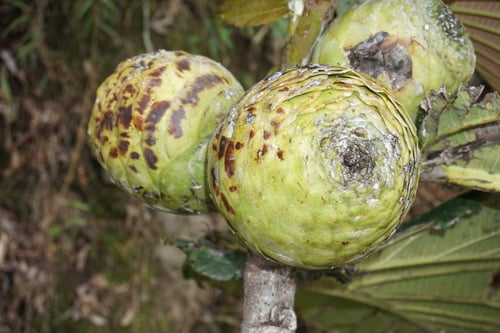
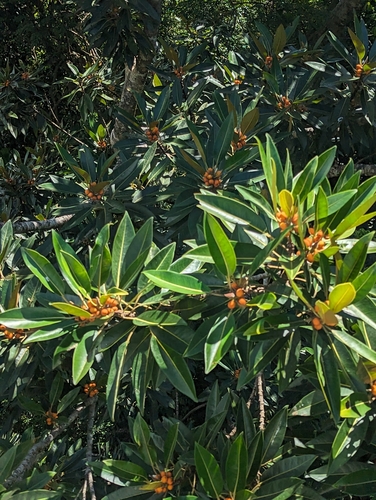
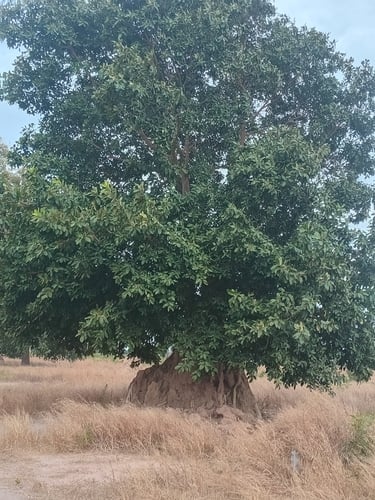
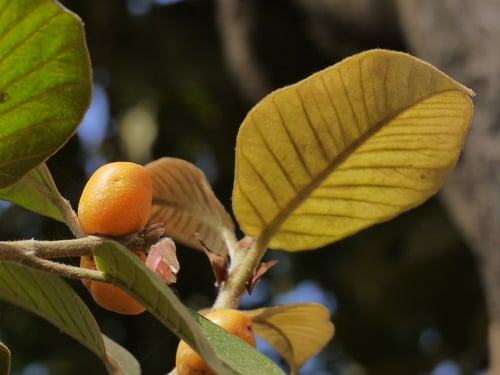
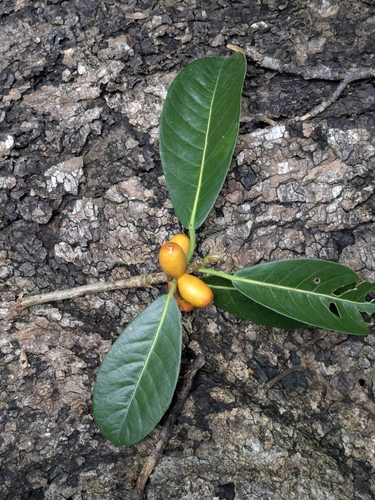
A fig. It is a tree. It grows 2-25 m tall. It has white latex. The flowering shoots are on the main trunk. They are on woody branches 0.5-2 m long and often near the base of the trunk. They form large clumps up to 1.5 m across. The figs are 3 cm across. They are green but ripen to red or purple-brown. The figs occur throughout the year.
Edible Uses
Fruit. The figs turn from green to dark red or purplish brown when mature and attain a diameter of 30 mm.
Medicinal Uses
The plant juices are reported to be applied to wounds.
Distribution
A tropical plant. In Fiji it grows from sea level to 1,150 m altitude. It can be in dense or in open forest.
Where It Grows
Fiji*, Pacific,
Cultivation
As far as noted, the inflorescences always arise from the main trunk and often very near its base; they are borne profusely on woody, slender, specialized branches 50 - 200m. long, or sometimes in dense, compact masses as much as 150cm. In diameter. The fruits may be found throughout the year. Fig trees have a unique form of fertilization, each species relying on a single, highly specialized species of wasp that is itself totaly dependant upon that fig species in order to breed. The trees produce three types of flower; male, a long-styled female and a short-styled female flower, often called the gall flower. All three types of flower are contained within the structure we usually think of as the fruit. The female fig wasp enters a fig and lays its eggs on the short styled female flowers while pollinating the long styled female flowers. Wingless male fig wasps emerge first, inseminate the emerging females and then bore exit tunnels out of the fig for the winged females. Females emerge, collect pollen from the male flowers and fly off in search of figs whose female flowers are receptive. In order to support a population of its pollinator, individuals of a Ficus spp. must flower asynchronously. A population must exceed a critical minimum size to ensure that at any time of the year at least some plants have overlap of emmission and reception of fig wasps. Without this temporal overlap the short-lived pollinator wasps will go locally extinct.
Notes
There are about 800-1000 Ficus species. They are mostly in the tropics. There are 120 Ficus species in tropical America.
Also Known As
Kaba, Kadanu, Laweto, Loroloro, Losi, Losilosi, Masi, Masimasi ni veikau, Neiviri, Vua e gauna, Vuaitamona
References (5)
- Altschul, S.V.R., 1973, Drugs and Foods from Little-known Plants. Notes in Harvard University Herbaria. Harvard Univ. Press. Massachusetts. no. 732
- GTZ 1996, A Guide to some Indigenous Fijian Trees. GTZ Suva. p 147
- Parham, H. B. R, 1940, Supplement to the Journal of the Polynesian Society No. 16. Fiji Plants: Their Name and Uses.
- Smith, A.C., 1981, Flora Vitiensis Nova: A New flora of Fiji, Hawai Botanical Gardens, USA Vol 2 p 194
- Walter, A. & Sam C., 2002, Fruits of Oceania. ACIAR Monograph No. 85. Canberra. p 279