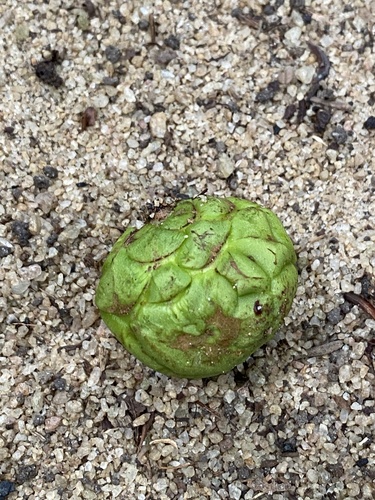
Ficus rumphii
Blume
False Buddha tree
iNaturalist· cc-by-nc-sa
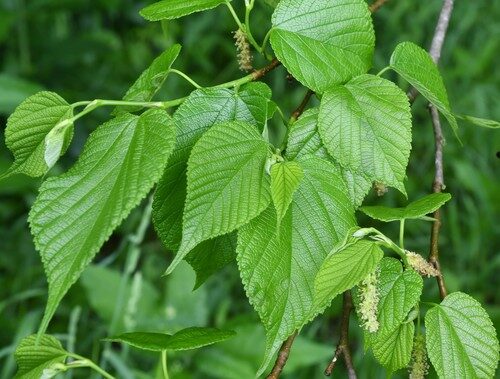
(c) Sutthikhun Phaengphongsai, some rights reserved (CC BY-NC-SA), uploaded by Sutthikhun Phaengphongsai
iNaturalist· cc-by-nc-sa
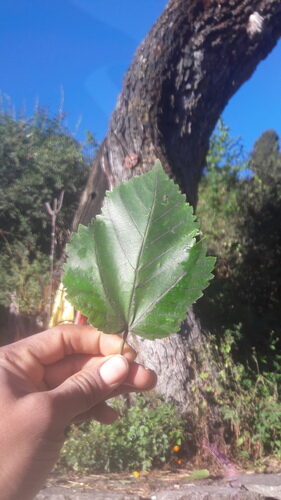
(c) Sutthikhun Phaengphongsai, some rights reserved (CC BY-NC-SA), uploaded by Sutthikhun Phaengphongsai
iNaturalist· cc-by-nc-sa
(c) Sutthikhun Phaengphongsai, some rights reserved (CC BY-NC-SA), uploaded by Sutthikhun Phaengphongsai
Summary
Source: WikipediaFicus rumphii is a banyan fig species in the family Moraceae. No subspecies are listed in the Catalogue of Life. The species can be found in: India, southern China, Indo-China and Malesia. In Vietnam it may be called lâm vồ or đa mít.
Description
A fig. It is a tree. It grows about 15 m tall. Usually it lives growing on and attached to other trees. The bark is grey and wrinkled when dry. The leafy growth at the base of the leaf is oval and 1.2-2.5 cm long. It leaves a scar which is easy to see. The leaf stalk is 6-8 cm long. The leaf blade is heart shaped or oval and 6-13 cm long by 6-11 cm wide. It is somewhat leathery. The base is broadly wedge shaped and it tapers to the tip. There are 4 veins near the base then 5-6 secondary veins on each side of the main vein. Normally there are a pair of figs in the axils of leaves. Sometimes they are in groups on older leafless branches. They have dark spots when young. They are dark purple when mature. They are round and without stalks. They are 1-1.5 cm across. There are only a few male flowers scattered amongst the other flowers.
Edible Uses
The young leaves are eaten, and ripe fruits are occasionally eaten. The flowers are cooked as a vegetable.
Traditional Uses
The young leaves are eaten. The ripe fruit are occasionally eaten. The flowers are cooked as a vegetable.
This uses section is brief — help expand it
Medicinal Uses
The latex and fruits are emetic and anthelmintic, and used to treat itch. The latex is given internally as a vermifuge and for the relief of asthma.
Distribution
A tropical plant. In China it grows along trails between 600-700 m altitude in Yunnan.
Where It Grows
Asia, SE Asia, Bangladesh, Bhutan, Cambodia, China, Hawaii, Himalayas, India, Indochina, Indonesia, Laos, Malaysia, Myanmar, Nepal, Northeastern India, Pacific, Pakistan, SE Asia, Sikkim, Thailand, USA, Vietnam,
Cultivation
Fig trees have a unique form of fertilization, each species relying on a single, highly specialized species of wasp that is itself totaly dependant upon that fig species in order to breed. The trees produce three types of flower; male, a long-styled female and a short-styled female flower, often called the gall flower. All three types of flower are contained within the structure we usually think of as the fruit. The female fig wasp enters a fig and lays its eggs on the short styled female flowers while pollinating the long styled female flowers. Wingless male fig wasps emerge first, inseminate the emerging females and then bore exit tunnels out of the fig for the winged females. Females emerge, collect pollen from the male flowers and fly off in search of figs whose female flowers are receptive. In order to support a population of its pollinator, individuals of a Ficus spp. must flower asynchronously. A population must exceed a critical minimum size to ensure that at any time of the year at least some plants have overlap of emmission and reception of fig wasps. Without this temporal overlap the short-lived pollinator wasps will go locally extinct.
Propagation
Seed - germinates best at a temperature around 20°c. Air layering. Tip cuttings around 4 - 12cm long, taken from lateral branches.
Other Uses
The bark yields a rough cordage. The soft wood is used as a fuel and for the production of charcoal.
Notes
There are about 800-1000 Ficus species. They are mostly in the tropics. There are 120 Ficus species in tropical America.
Synonyms
Also Known As
Asht, Bettaarali, Dumur, Gagjaira, Gaiaswat, Gai aswathwa, Gajna, Hay, Jakri, Jia putishu, Kabar, Kathepipal, Mawnglae, Mawnglaw, Mawnglok, Paharepipal, Pair, Pakar, Pakur, Payar, Pilkhan, Prap, Wagrans, Xin ye rong
References (24)
- Ambasta, S.P. (Ed.), 2000, The Useful Plants of India. CSIR India. p 224
- Bandyopadhyay, S., et al, 2012, A Census of Wild Edible Plants from Howrah District, West Bengal, India. Proceedings of UGC sponsored National Seminar 2012
- Bijdr. 437. 1825
- Burkill, I.H., 1966, A Dictionary of the Economic Products of the Malay Peninsula. Ministry of Agriculture and Cooperatives, Kuala Lumpur, Malaysia. Vol 1 (A-H) p 1031
- Chakraborty, S. & Chaturbedi, H. P., 2014, Some Wild Edible Fruits of Tripura- A Survey. Indian Journal of Applied research. (4) 9
Show all 24 references Hide references
- Chowdhury, M. & Mukherjee, R., 2012, Wild Edible Plants Consumed by Local Communities of Maldah of West Bengal, India. Indian J.Sci.Res.3(2) : 163-170
- Flora of China @ efloras.org Volume 5
- Flora of Pakistan. www.eFloras.org
- Gangte, H. E., et al, 2013, Wild Edible Plants used by the Zou Tribe in Manipur, India. International Journal of Scientific and Research Publications, Volume 3, Issue 5
- Guite, C., 2016, A study of wild edible plants associated with the Paite tribe of Manipur, India, International Journal of Current Research. Vol. 8, Issue, 11, pp. 40927-40932
- Hedrick, U.P., 1919, (Ed.), Sturtevant's edible plants of the world. p 309
- Heyne, K. p 574
- Kunwar, R.M. & Bussmann, R. W., 2006, Ficus (Fig) species in Nepal: a review of diversity and indigenous uses. Lyonia 11(1)
- Martin, F.W. & Ruberte, R.M., 1979, Edible Leaves of the Tropics. Antillian College Press, Mayaguez, Puerto Rico. p 206
- Masoodi, H. U. R. & Sundriyal, R. C., 2020, Richness of non-timber forest products in Himalayan communities—diversity, distribution, use pattern and conservation status. Journal of Ethnobiology and Ethnomedicine 16:56
- Natuhara, Y., et al, 2011, Uses of trees in paddy fields in Champasak Province, Southern Lao PDR. Landscape and Ecological Engineering. p 7
- Pasha, M. K. & Uddin, S. B., 2019, Minor Edible Fruits of Bangladesh. Bangladesh J. Plant Taxon. 26(2): 299–313
- PROSEA (Plant Resources of South East Asia) handbook, Volume 12 (1), 1999, Medicinal and poisonous
- Singh, H.B., Arora R.K.,1978, Wild edible Plants of India. Indian Council of Agricultural Research, New Delhi. p 60
- Singh, A. G., Panthi, M. P., & Tewari, D. D., 2012, Wild Plants Used as Vegetable in Rupandehi District of Nepal and their Ethnomedicinal Importance. J. Nat. Hist. Mus. Vol. 26, 2012, 111-125
- Terra, G.J.A., 1973, Tropical Vegetables. Communication 54e Royal Tropical Institute, Amsterdam, p 46
- Thokchom, R., et al, 2016, Documentation and assessment of wild medicinal and edible flowers of valley districts of Manipur. International Journal of Research in Applied, Natural and Social Sciences. 4(11):13-20
- Valder, P., 1999, The Garden Plants of China. Florilegium. p 286
- World Checklist of Useful Plant Species 2020. Royal Botanic Gardens, Kew