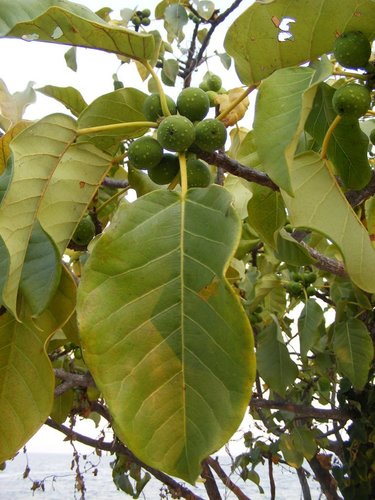
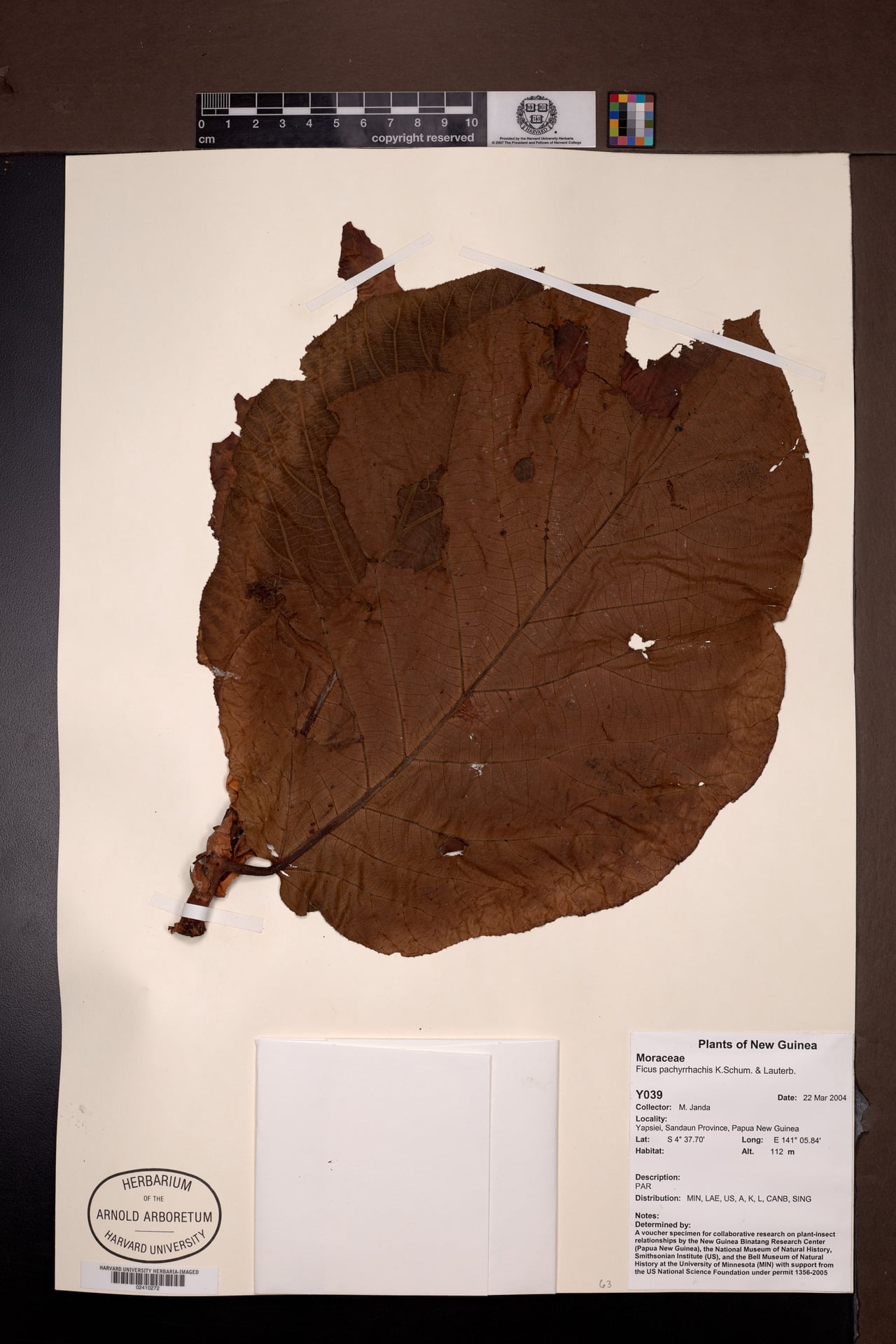
Ficus hirta
Vahl
Five-finger hairy fig, Rough leaf fig
iNaturalist· cc-by-nc
(c) Hugo To, some rights reserved (CC BY-NC)
iNaturalist· cc-by-nc
(c) bonds, some rights reserved (CC BY-NC)
iNaturalist· cc-by-nc
(c) kwokwokwo, some rights reserved (CC BY-NC)
Description
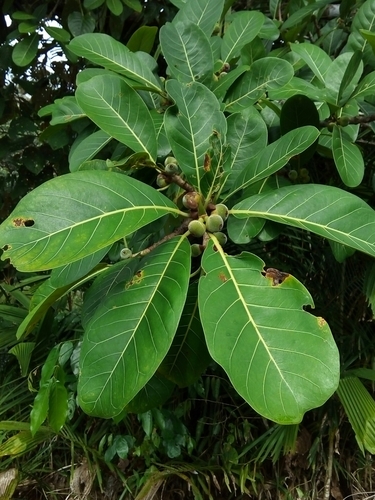
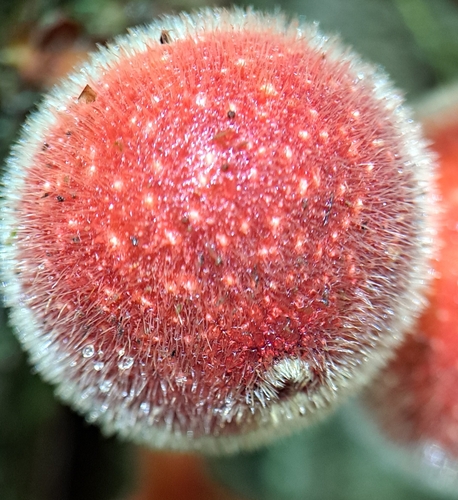
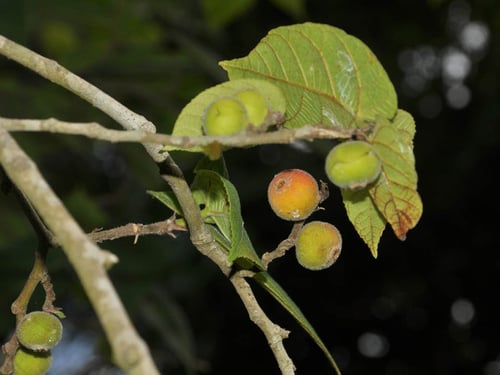
A fig. It is a shrub or small tree. It grows to 2-4 m high. The branches and leaves are hairy with yellow hairs. The leafy structure at the base of the leaf is red, oval and 1-3 cm long. The leaves are alternate. The leaves are 12-40 cm long by 8-35 cm wide. They are broadly oval. They often have 3-5 lobes. The leaves have small teeth around the edge and are roughly hairy underneath. The base is rounded. The fruit are fuzzy and berry like. They are yellow-orange to red when ripe. They are borne close to the stem. Some varieties have been described based on the size of the figs and the hairiness of the leaves.
Edible Uses
Ripe figs are eaten fresh and sold in local Chinese markets. Very young shoots and leaves are eaten raw as a salad with rice or cooked, and are used in fermenting soybean. Roots are used to make tea.
Traditional Uses
The ripe figs are eaten fresh. The very young shoots and leaves are eaten raw as a side salad with rice. They are also cooked. They are also used in fermenting soybean.
Medicinal Uses
Root tea is traditionally prepared.
Distribution
A tropical and subtropical plant. In Nepal it grows to about 1000 m altitude. In S China it grows in forests and near forest edges and on mountain slopes and open land near villages from 100-1400 m altitude. In Sikkim it grows between 400-1,000 m above sea level.
Where It Grows
Asia, Bhutan, Cambodia, China, Himalayas, India, Indochina, Indonesia, Laos, Malaysia, Myanmar, Nepal, Northeastern India, SE Asia, Sikkim, Thailand, Vietnam,
Cultivation
Plants are grown from seed or cuttings.
Propagation
Seed - germinates best at a temperature around 20°c. Air layering. Tip cuttings around 4 - 12cm long, taken from lateral branches.
Production
In NE Thailand fruit are available May to June.
Other Information
The fruit are eaten especially by children. It is sold in local markets in China.
Notes
There are about 800-1000 Ficus species. They are mostly in the tropics. There are 120 Ficus species in tropical America.
Synonyms
Also Known As
AAk-tay, Acalama axi, Bainamchyubawng, Boowah kontol monjet, Bulana biu, Cu ye rong, Dieng-soh-rompain, Gegedangan, Indew-ching, Ingthum, Ji zi o si, Kakalapaan, Khahatya, Khasray, Khasre khanu, Khongal dimoru, Khoroo, Khosa, Khwe-ka-dut, Kyasha-tha-phan, Lavadey, Maduea-khon, Mhow, Nawi-hawng, Pangsem, Pohon ara bebulu, Sa-zu-thei-pui, Sumsat, Takpi, Tajik, Wamo dousou, We zhi mao tao
References (32)
- Ambasta, S.P. (Ed.), 2000, The Useful Plants of India. CSIR India. p 222
- Dobriyal, M. J. R. & Dobriyal, R., 2014, Non Wood Forest Produce an Option for Ethnic Food and Nutritional Security in India. Int. J. of Usuf. Mngt. 15(1):17-37
- Enum. pl. 2:201. 1805
- Facciola, S., 1998, Cornucopia 2: a Source Book of Edible Plants. Kampong Publications, p 155
- Flora of China @ efloras.org Volume 5
Show all 32 references Hide references
- Ghorbani, A., et al, 2012, A comparison of the wild food plant use knowledge of ethnic minorities in Naban River Watershed Nature Reserve, Yunnan, SW China. Journal of Ethnobiology and Ethnomedicine; 8:17
- Ghosh, C. & Das A. P., 2011, Some useful and poisonous tea garden weeds from the Darjiling District of West Bengal, India. Pleione 5(1): 91 - 114
- Hedrick, U.P., 1919, (Ed.), Sturtevant's edible plants of the world. p 308
- Jeeva, S., 2009, Horticultural potential of wild edible fruits used by the Khasi tribes of Meghalaya. Journal or Horticulture and Forestry Vol. 1(9) pp. 182-192
- Kar, A., et al, 2013, Wild Edible Plant Resources used by the Mizos of Mizoram, India. Kathmandu University Journal of Science, Engineering and Technology. Vol. 9, No. 1, July, 2013, 106-126
- Kunwar, R.M. & Bussmann, R. W., 2006, Ficus (Fig) species in Nepal: a review of diversity and indigenous uses. Lyonia 11(1)
- Li, D. et al, 2017, Ethnobotanical survey of herbal tea plants from the traditional markets in Chaoshan, China. Journal of Ethnopharmacology. 205 (2017) 195-206
- Luo, B., et al, 2019, Wild edible plants collected by Hani from terraced rice paddy agroecosystem in Honghe Prefecture, Yunnan, China. Journal of Ethnobiology and Ethnomedicine 15:56
- Manandhar, N.P., 2002, Plants and People of Nepal. Timber Press. Portland, Oregon. p 233
- McMakin, P.D., 2000, Flowering Plants of Thailand. A Field Guide. White Lotus. p 55
- Mozhui, R., et al, 2011, Wild edible fruits used by the tribals of Dimapur district of Nagaland, India. Pleione 5(1): 56 - 64.
- Ochse, J.J. et al, 1931, Vegetables of the Dutch East Indies. Asher reprint. p 500
- Patiri, B. & Borah, A., 2007, Wild Edible Plants of Assam. Geethaki Publishers. p 135
- Sarma, H., et al, 2010, Updated Estimates of Wild Edible and Threatened Plants of Assam: A Meta-analysis. International Journal of Botany 6(4): 414-423
- Savita, et al, 2006, Studies on wild edible plants of ethnic people in east Sikkim. Asian J. of Bio Sci. (2006) Vol. 1 No. 2 : 117-125
- Sawian, J. T., et al, 2007, Wild edible plants of Meghalaya, North-east India. Natural Product Radiance Vol. 6(5): p 417
- Shi, Y. et al, 2014, An ethnobotanical study of the less known wild edible figs (genus Ficus) native to Xishuangbanna Southwest China. Journal of Ethnobiology and Ethnomedicine. 10:68
- Singh, V. B., et al, (Ed.) Horticulture for Sustainable Income and Environmental Protection. Vol. 1 p 216
- Sukarya, D. G., (Ed.) 2013, 3,500 Plant Species of the Botanic Gardens of Indonesia. LIPI p 285
- Suksri, S., et al, 2005, Ethnobotany in Bung Khong Long Non-Hunting Area, Northeast Thailand. Kasetsart J., (Nat. Sci) 39: 519-533
- Sundriyal, M., et al, 1998, Wild edibles and other useful plants from the Sikkim Himalaya, India. Oecologia Montana 7:43-54
- Sundriyal, M., et al, 2004, Dietary Use of Wild Plant Resources in the Sikkim Himalaya, India. Economic Botany 58(4) pp 626-638
- Taram, M., et al, 2018, Wild Food Plant Resources of Komkar Adi Tribe of Upper Siang District in Arunachal Pradesh, India. Bulletin of Arunachal Forest Research, Vol. 33(2), 27-35
- Teron, R. & Borthakur, S. K., 2016, Edible Medicines: An Exploration of Medicinal Plants in Dietary Practices of Karbi Tribal Population of Assam, Northeast India. In Mondal, N. & Sen, J.(Ed.) Nutrition and Health among tribal populations of India. p 153
- Terra, G.J.A., 1973, Tropical Vegetables. Communication 54e Royal Tropical Institute, Amsterdam, p 46
- Turreira Garcia, N., et al, 2017, Ethnobotanical knowledgeof the Kuy and Khmer people in Prey Lang, Cambodia. Cambodian Journal of Natural History 2017 (1): 76-101
- Wild edible plants of Himachal Pradesh