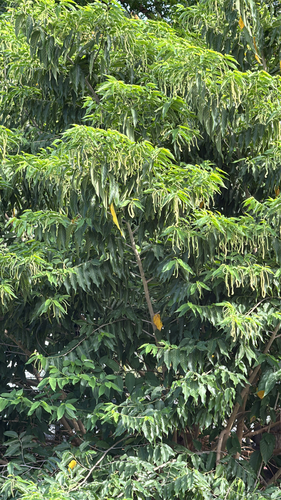
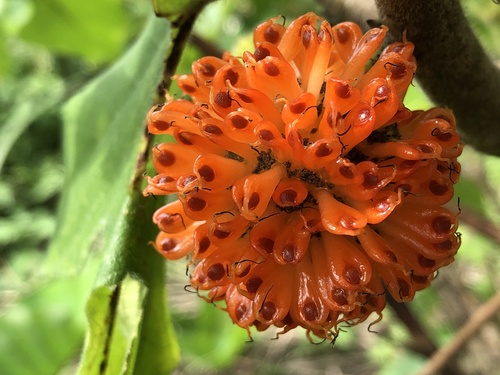
Ficus arnottiana
(Miq.) Miq.
Indian rock fig
iNaturalist· cc-by
(c) Siddarth Machado, some rights reserved (CC BY), uploaded by Siddarth Machado
iNaturalist· cc-by-nc
(c) Om Dhuttargaonkar, some rights reserved (CC BY-NC), uploaded by Om Dhuttargaonkar
iNaturalist· cc-by-sa
(c) Dinesh Valke, some rights reserved (CC BY-SA)
Summary
Source: WikipediaFicus arnottiana, commonly known as the Indian rock fig, rock peepal or wavy-leaved fig tree, is a species of fig tree, native to the Indian subcontinent with a preference to rocky habitats. The species was named in honor of the Scottish botanist George Arnott Walker-Arnott.
Description
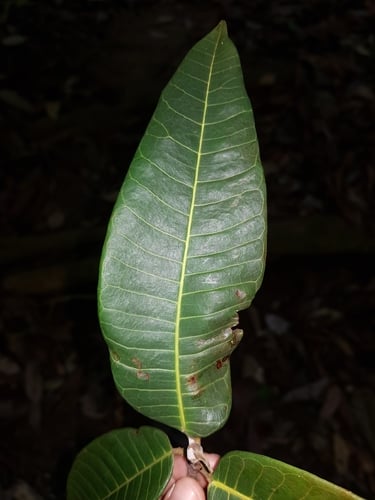
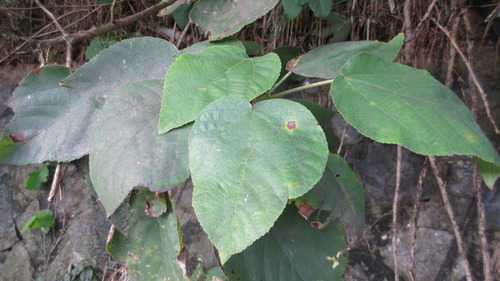
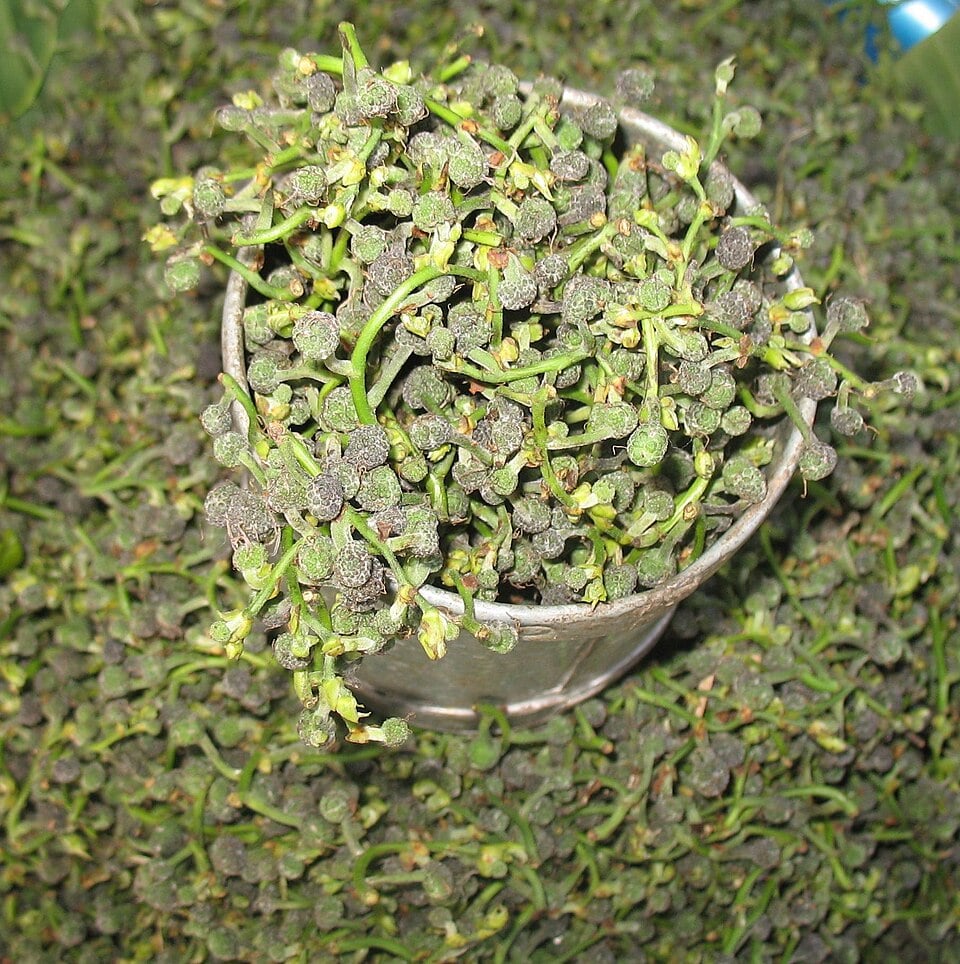
A fig. It is a shrub or small tree. It grows 10 m tall. It loses its leaves during the year. The leaves are simple and alternate or in spirals. The leaf stalk is 3-10 cm long. The leaf blade is 6-20 cm long by 5-13 cm wide. It is oval with a deeply heart shaped base. The fruit are figs that occur in pairs or crowded near the tips. They are yellow-brown when ripe and 5-7 mm across.
Edible Uses
The fruit is eaten fresh. The leaves are boiled, dried, and used as tea.
Traditional Uses
The leaves are boiled and dried and then used for tea.
This uses section is brief — help expand it
Distribution
A tropical plant. It grows in rock crevices between 1000-1500 m altitude in India.
Where It Grows
Asia, India, Northeastern India,
Notes
There are about 800-1000 Ficus species. They are mostly in the tropics. There are 120 Ficus species in tropical America.
Synonyms
Also Known As
Amakanniyan, Ban pipal, Bassari, Bettadaarali, Kagoli, Kallaravi, Kallarayal, Khadak payar, Paraspipal, Pilkhan, Pimpli, Pipal, Plaksha, Plokhyo
References (4)
- Ambasta, S.P. (Ed.), 2000, The Useful Plants of India. CSIR India. p 221
- Ann. Mus. Bot. Lugduno-Batavum 3:287. 1867-1868 ("1867")
- Kuvar, S. D. & Shinde, R. D., 2019, Wild Edible Plants used by Kokni Tribe of Nasik District, Maharashtra. Journal of Global Biosciences. Volume 8, Number 2, 2019, pp. 5936-5945
- Malhotra, C.L.., et al, 1985, Additional Notes on the wild edible plants of India J. Econ. Tax. Bot. Vol 6. No.2 pp 481-482