Ficus annulata
Bl.
iNaturalist· cc-by-nc-sa
(c) filibot.web, some rights reserved (CC BY-NC-SA)
Summary
Ficus annulata is a large evergreen tree reaching 25 m tall and 20 m wide, growing at a medium rate. Wasp-pollinated flowers produce a notable display and attract wildlife. The tree grows in light, medium, and heavy soils with good drainage across mildly acidic to mildly alkaline pH ranges. It requires full sun and prefers consistently moist soil. Hardy to UK zone 10.
Description
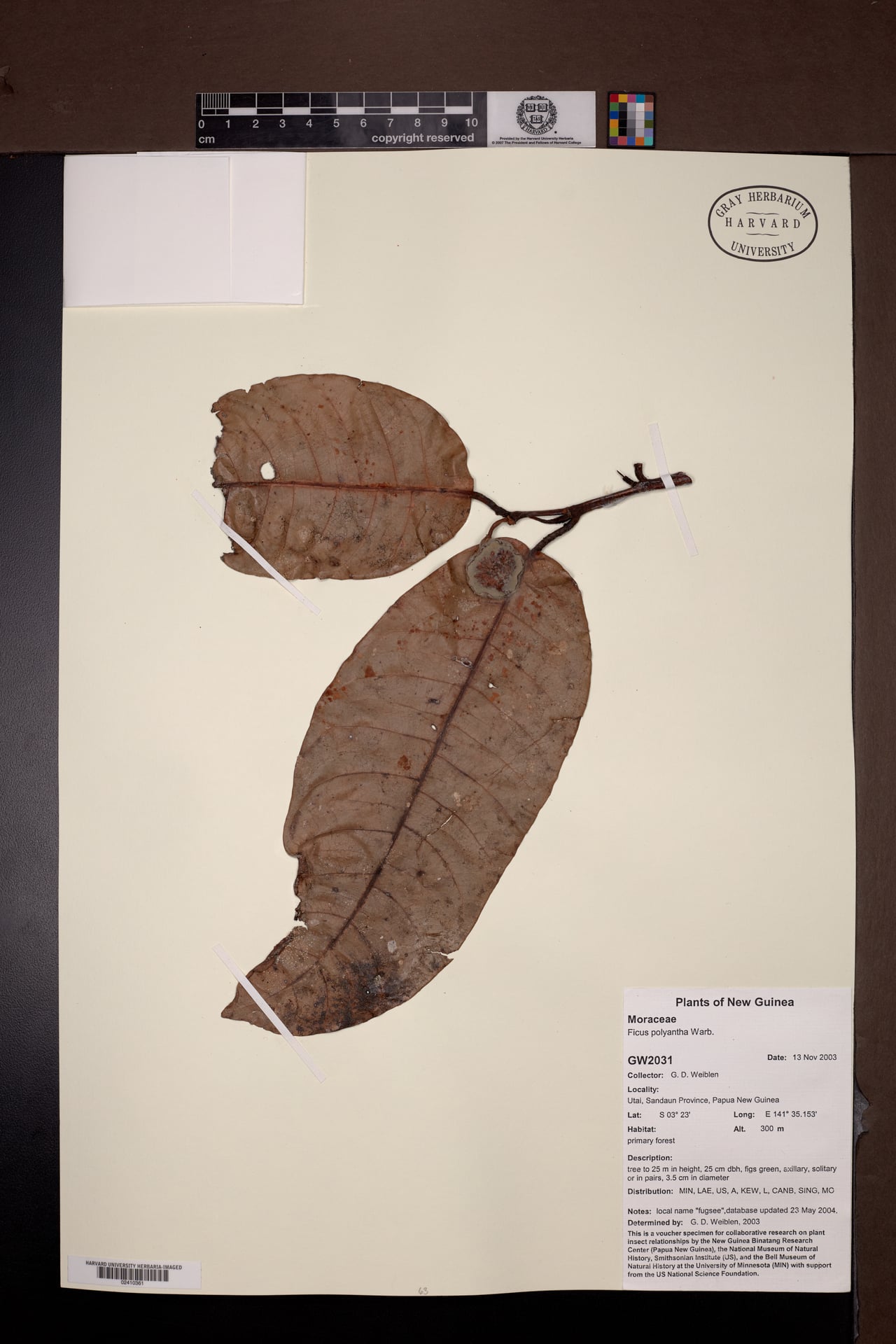
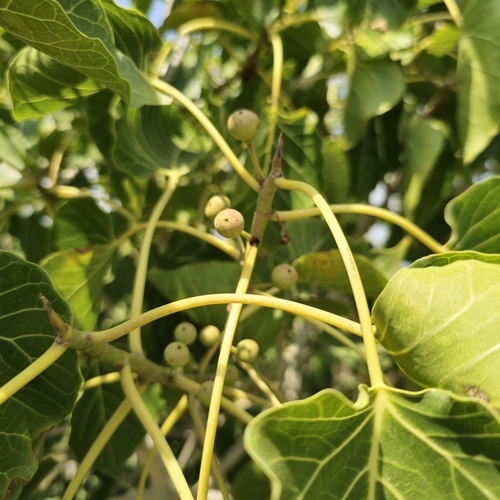
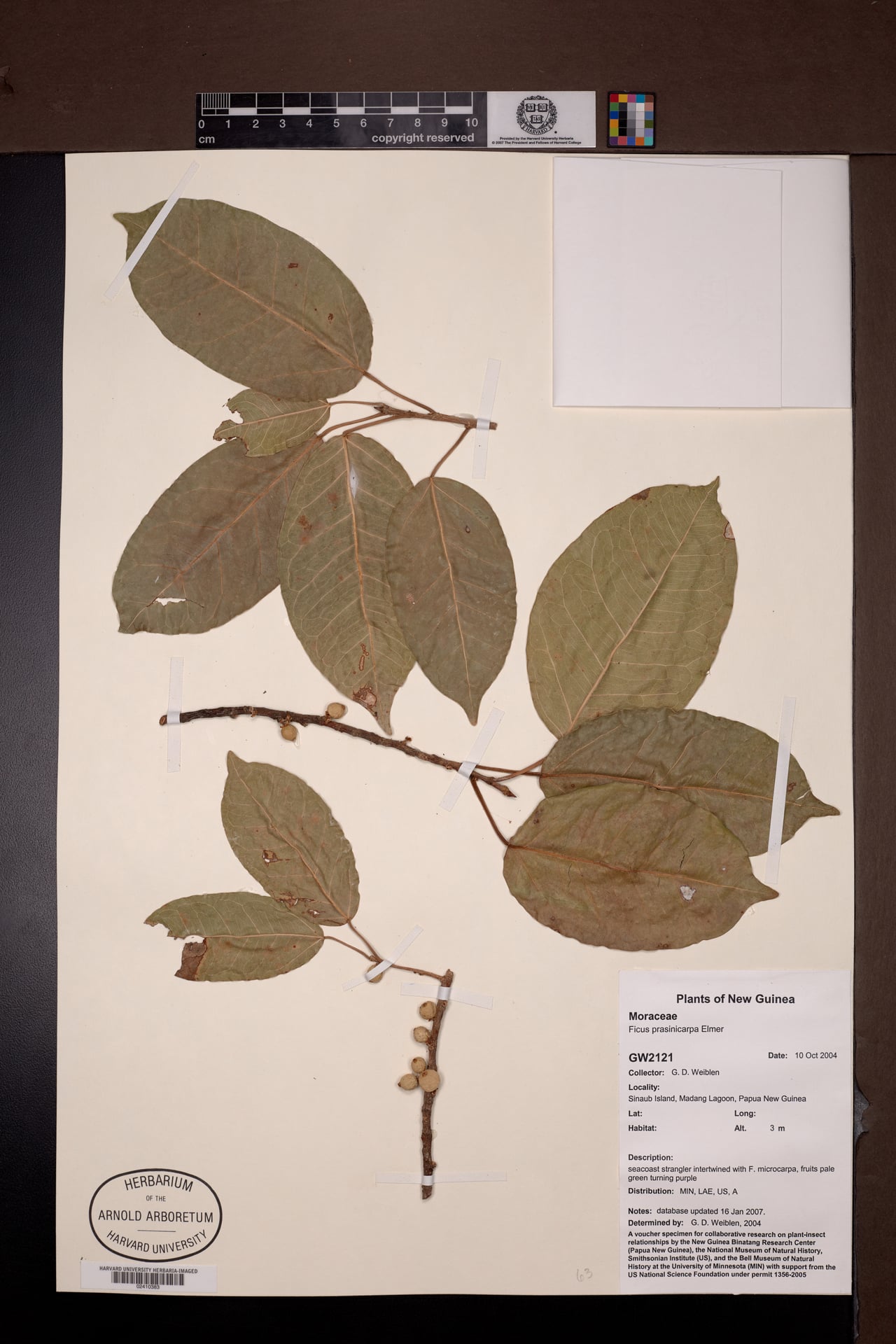
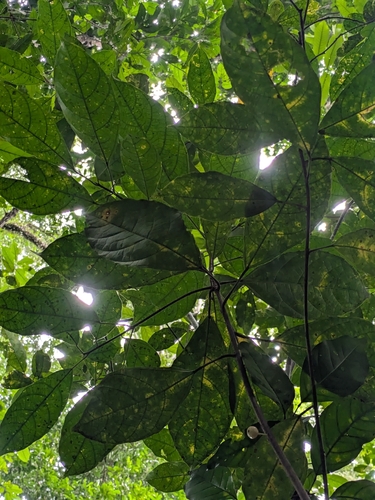
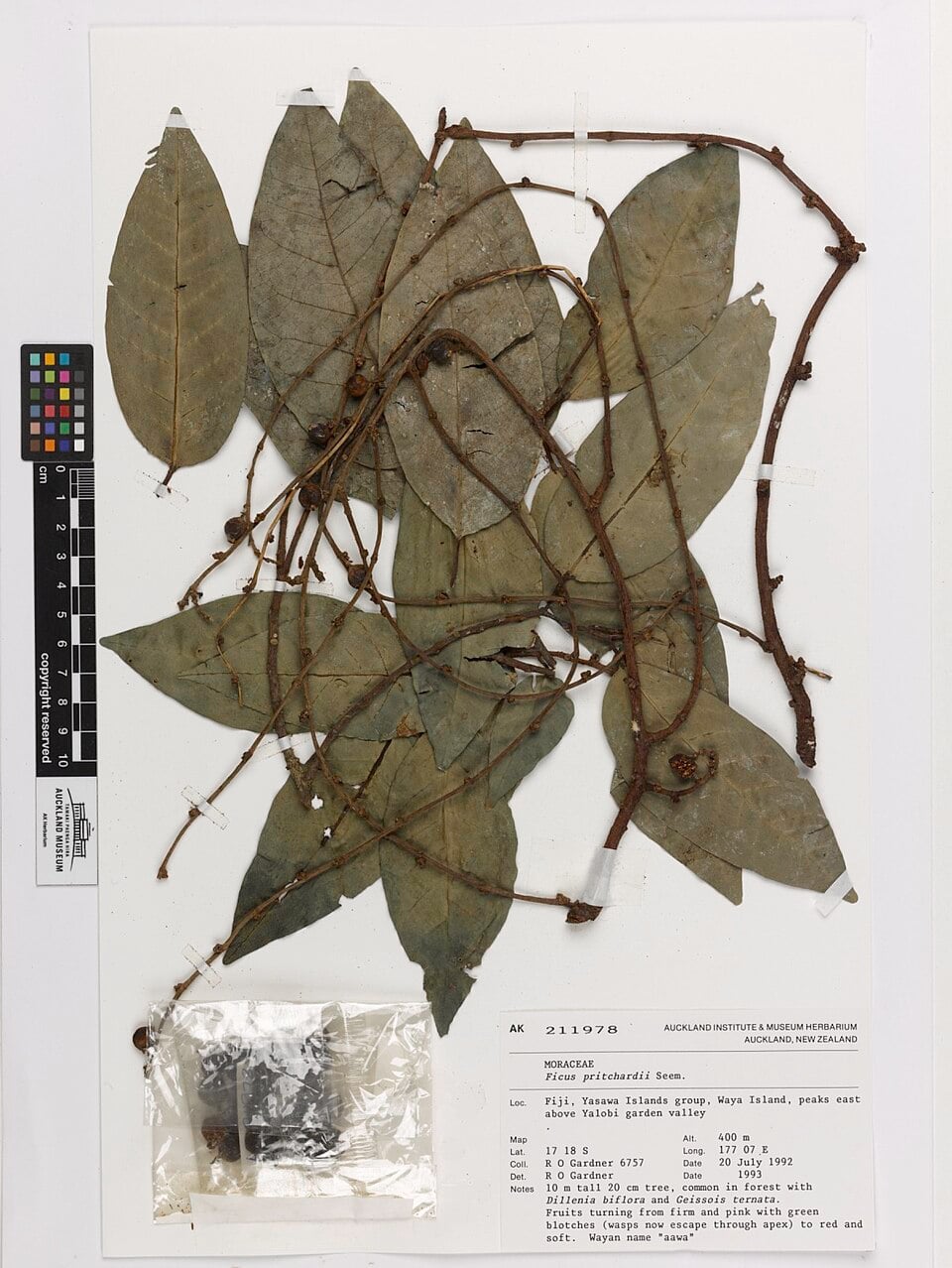
A fig. It is a large tree. It grows attached to other trees when young. The leafy growth at the base of the leaf is sword shaped and 2.5-6 cm long. The leaf blade is narrow and oval. It is 13-28 cm long by 5-8 cm wide. It is thinly leathery. It is dark green above and pale green underneath. The base is wedge shaped and it tapers to a short tip. There are 2 veins at the base then 12-17 secondary side veins on each side of the main vein. These are easy to see underneath the leaf. The figs are in pairs in the axils of leaves. They are orange red when mature. They have scattered white spots. They are oval and 2-2.5 cm long by 1.5-2 cm wide. The fruit stalk is strong and 1-1.5 cm long.
Edible Uses
The leaves are cooked and eaten as a vegetable.
Traditional Uses
The fruit are eaten raw.
This uses section is brief — help expand it
Medicinal Uses
None known.
Distribution
A tropical plant. It grows in mountain forests between 500-1300 m altitude in Yunnan in S China. In Borneo it grows up to 600 m above sea level.
Where It Grows
Asia, Brunei, China, Indochina, Indonesia, Laos, Malaysia, Myanmar, Pacific, Philippines, SE Asia, Thailand, Vietnam,
Cultivation
Found in the wild on sandy to clay soils. Fig trees have a unique form of fertilization, each species relying on a single, highly specialized species of wasp that is itself totaly dependant upon that fig species in order to breed. The trees produce three types of flower; male, a long-styled female and a short-styled female flower, often called the gall flower. All three types of flower are contained within the structure we usually think of as the fruit. The female fig wasp enters a fig and lays its eggs on the short styled female flowers while pollinating the long styled female flowers. Wingless male fig wasps emerge first, inseminate the emerging females and then bore exit tunnels out of the fig for the winged females. Females emerge, collect pollen from the male flowers and fly off in search of figs whose female flowers are receptive. In order to support a population of its pollinator, individuals of a Ficus spp. must flower asynchronously. A population must exceed a critical minimum size to ensure that at any time of the year at least some plants have overlap of emmission and reception of fig wasps. Without this temporal overlap the short-lived pollinator wasps will go locally extinct.
Propagation
Propagate from seed.
Other Uses
A latex obtained from the plant can be used to produce high-quality rubber.
Notes
There are about 800-1000 Ficus species. They are mostly in the tropics. There are 120 Ficus species in tropical America.
Synonyms
Also Known As
Ara susu, Huan wen rong, Kara, Kayu ara, Naung-tha-phan, Nizhangde, Than-thay
References (6)
- Flora of China.
- Jin, Chen et al, 1999, Ethnobotanical studies on Wild Edible Fruits in Southern Yunnan: Folk Names: Nutritional Value and Uses. Economic Botany 53(1) pp 2-14
- Martin, F.W. & Ruberte, R.M., 1979, Edible Leaves of the Tropics. Antillian College Press, Mayaguez, Puerto Rico. p 206
- Slik, F., www.asianplant.net
- Terra, G.J.A., 1973, Tropical Vegetables. Communication 54e Royal Tropical Institute, Amsterdam, p 46
Show all 6 references Hide references
- World Checklist of Useful Plant Species 2020. Royal Botanic Gardens, Kew