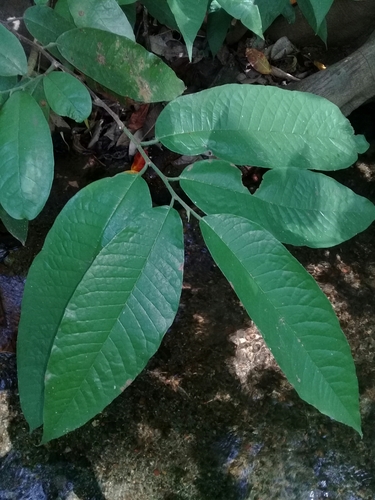
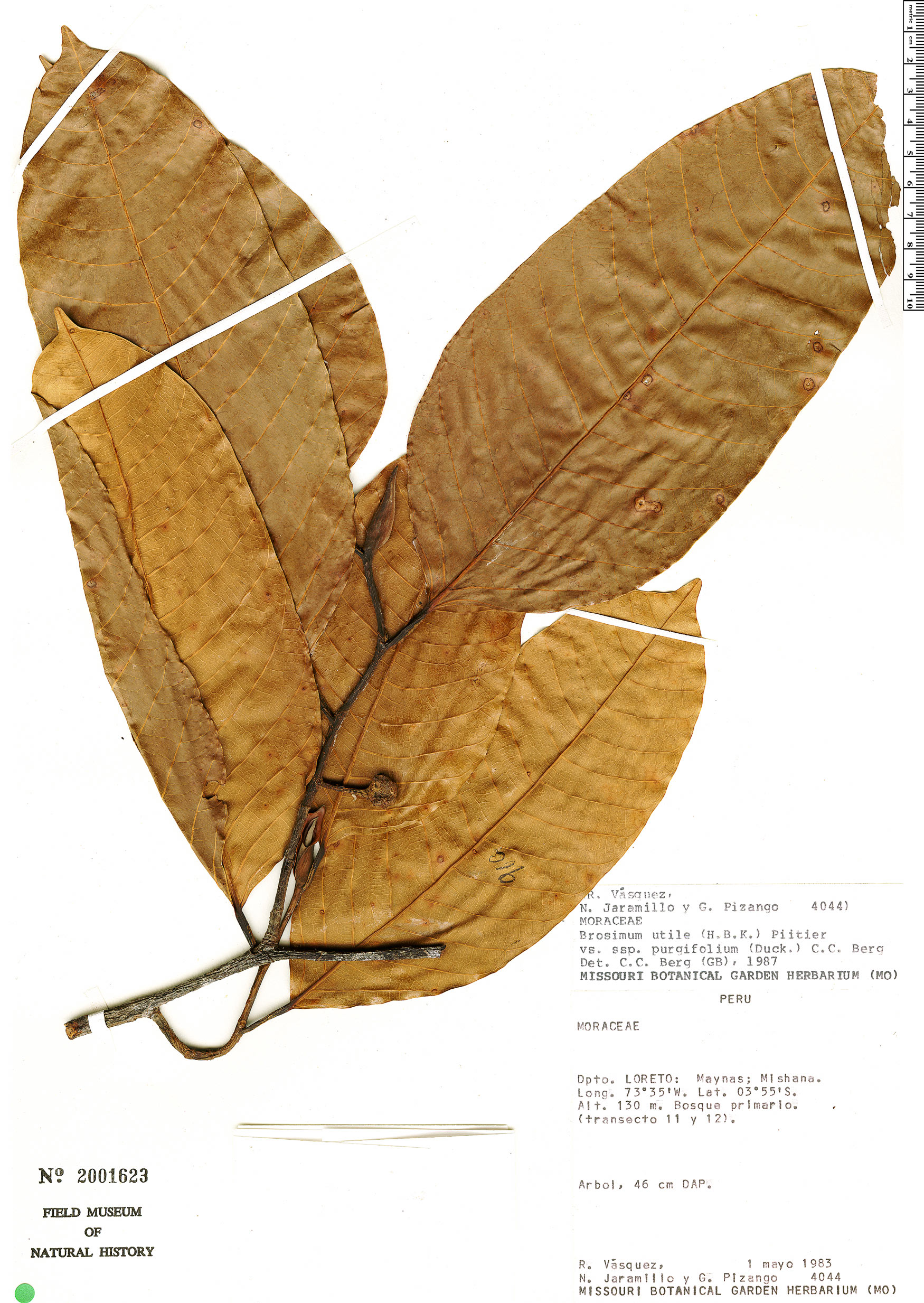
Ficus glandulifera
(Wall. ex Miq.) King
Vo man
iNaturalist· cc-by-nc
(c) Mohd Abdul Muin Md Akil, some rights reserved (CC BY-NC), uploaded by Mohd Abdul Muin Md Akil
iNaturalist· cc-by-nc-sa
(c) Smithsonian Institution, National Museum of Natural History, Department of Botany, some rights reserved (CC BY-NC-SA)
iNaturalist· cc-by-sa
(c) Manoj Karingamadathil, some rights reserved (CC BY-SA)
Description
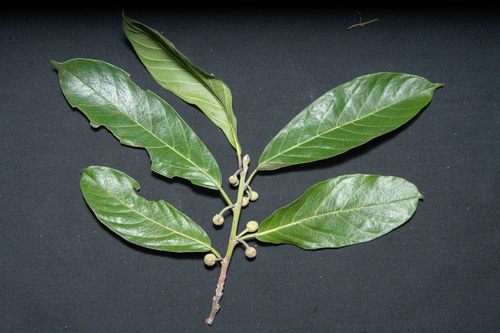
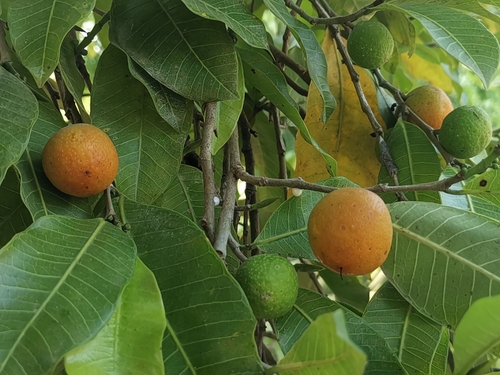
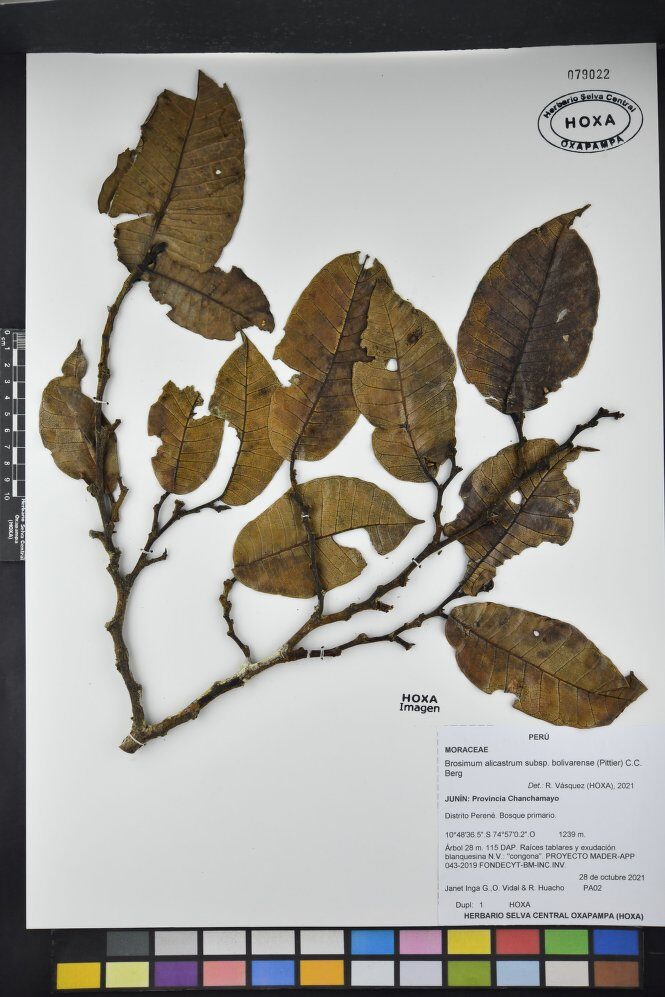
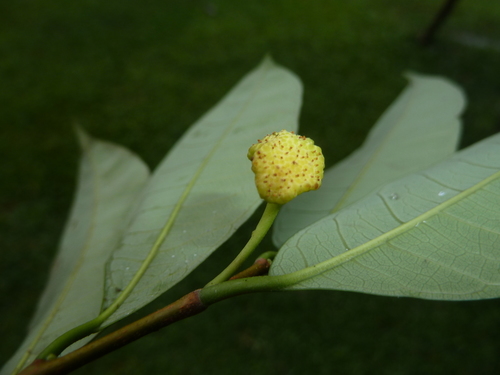
A fig. It is a small to medium sized tree. The bark is pinkish brown. The twigs are slender and reddish. The leaves are simple and alternate. They are oval and 4-14 cm long by 2.5-6 cm wide. They are narrowed towards the tip. Veins join near the edge of the leaf. The leaf stalk is 1.5-3 cm long. The fruit are figs carried in the axils of leaves near the ends of branches. Often 1 or 2 figs occur together. They are 10 mm long by 8 mm wide. There are 3 bracts at the base. The male flowers are arranged near the opening of the fig. The figs are edible.
Edible Uses
The small figs can be eaten, though they are small and not particularly attractive.
Traditional Uses
The small figs can be eaten but are small and not attractive.
This uses section is brief — help expand it
Distribution
A tropical plant. They occur in evergreen forest in northern Vietnam.
Where It Grows
Asia, Indochina, Indonesia, Laos, Malaysia, Myanmar, Pacific, Papua New Guinea, PNG, Philippines, SE Asia, Solomon Islands, Thailand, Vietnam, Vanuatu,
Notes
There are about 800-1000 Ficus species. They are mostly in the tropics. There are 120 Ficus species in tropical America. The species in Solomon Islands may be Ficus glandifera Summerhill.
Synonyms
Also Known As
Karai, Lemak-lemak, Lenkan mang, Tanggilam, Tenpan
References (5)
- Forest Inventory and Planning Institute, 1996, Vietnam Forest Trees. Agriculture Publishing House p 545
- French, B.R., 2010, Food Plants of Solomon Islands. A Compendium. Food Plants International Inc. p 80 (As Ficus glandulifera)
- Lebot, V. & Sam, C., Green desert or ‘all you can eat’? How diverse and edible was the flora of Vanuatu before human introductions?. Terra australis 52 p 408
- Slik, F., www.asianplant.net
- Summerhill, 1932, Ficus glandifera J. Arnold Arbor. 13:99