Morus mesozygia
Stapf
African mulberry
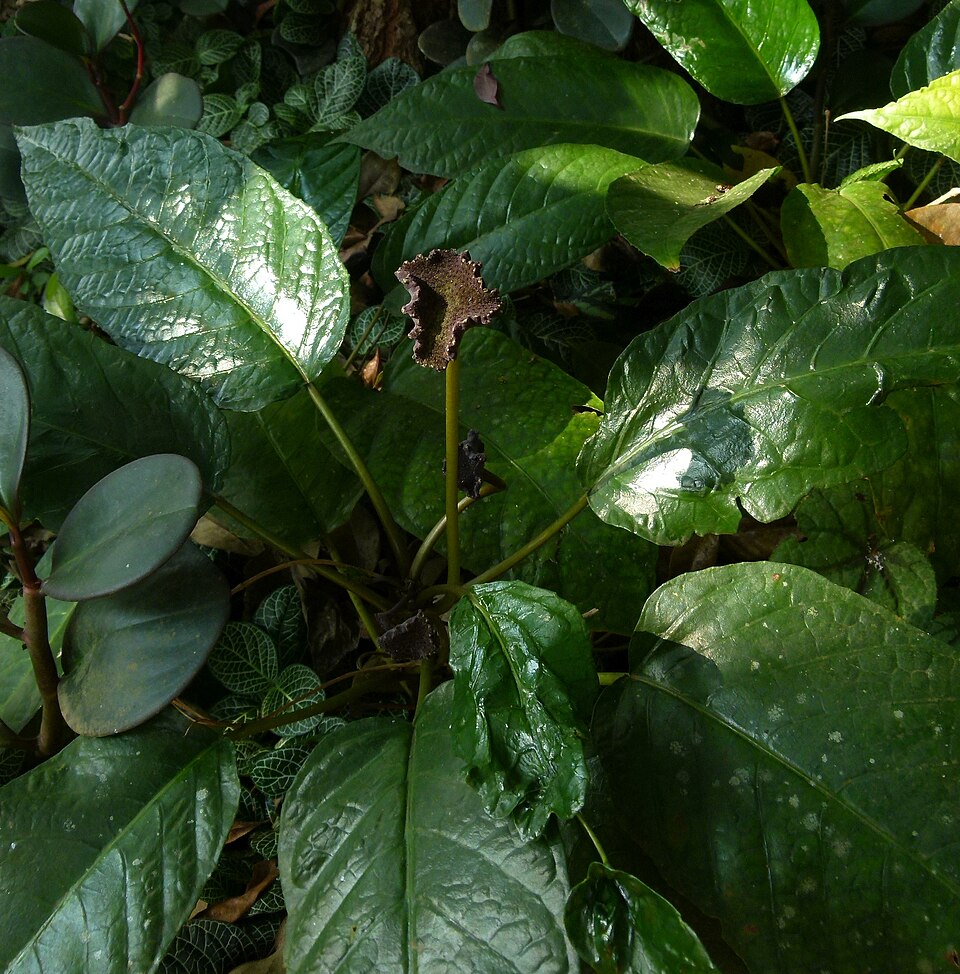
iNaturalist· cc-by-nc
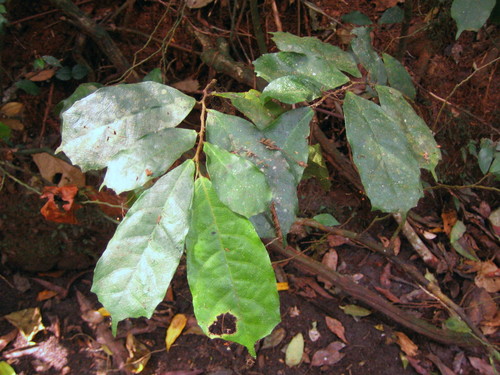
(c) Carel Jongkind, some rights reserved (CC BY-NC), uploaded by Carel Jongkind
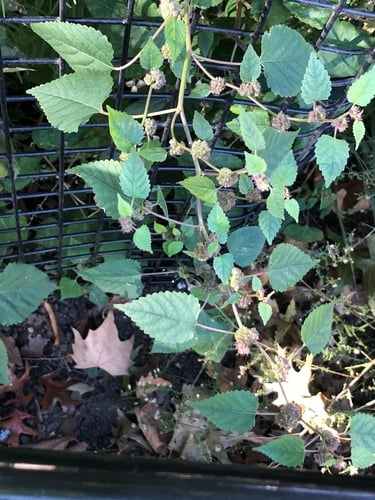
iNaturalist· cc-by-nc
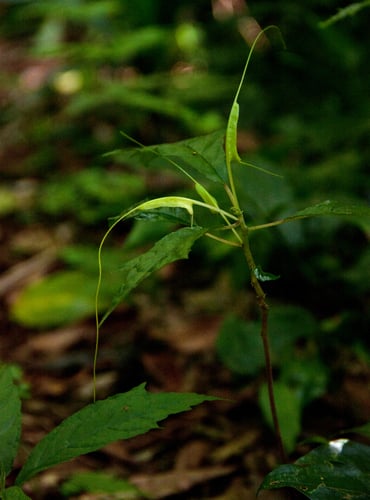
(c) Graeme White, some rights reserved (CC BY-NC), uploaded by Graeme White
Description
Morus mesozygia is a deciduous Tree growing to 30 m (98ft) by 30 m (98ft) at a fast rate. See above for USDA hardiness. It is hardy to UK zone 10. The flowers are pollinated by Bees. Suitable for: light (sandy), medium (loamy) and heavy (clay) soils and prefers well-drained soil. Suitable pH: mildly acid, neutral and basic (mildly alkaline) soils. It cannot grow in the shade. It prefers moist soil.
Edible Uses
The infructescense is edible and tastes like white grapes. The infructescence is up to 1cm in diameter.
Medicinal Uses
Antidiarrhoeal Antirheumatic Aphrodisiac DysenteryIn African traditional medicine all plant parts are used in decoctions, baths, massages and enemas as treatments against conditions such as rheumatism, lumbago, intercostal pain, neuralgia, colic, stiffness, debility, diarrhoea and dysentery. The root is used as an aphrodisiac. Sap from young shoots is dropped into the nose for the treatment of syphilis. The heartwood contains the flavonoids morin, dihydromorin and pinobanksin, the leaves a glycoside of morin. Resistance of the wood to the woodrot fungi Coriolus versicolor, Lentinus squarrosul us and Poria species is related to the presence of dihydromorin.
Known Hazards
Sawdust from the wood may cause dermatitis and irritation to the nose and throat.
Distribution
Tropical Africa - Senegal to Sudan and Ethiopia, south to Angola, Zambia, Zimbabwe, Mozambique and Swaziland.
Where It Grows
AFRICA: Ethiopia, Kenya, Tanzania, Uganda, Senegal, Mozambique, Zambia, South Africa (Kwa. Zulu-Natal)
Cultivation
Requires a well-drained soil. Growth is usually fast: a height increment of almost 2 metres in the first year has been recorded in unshaded nursery beds. A dioecious species, both male and female forms need to be grown if fruit and seed are required.
Propagation
Seed - best results come from sowing freshly harvested seed. Pre-treatment is not necessary, but germination is accelerated by soaking the seeds in water for 12 hours. Sow in a sunny position in a nursery seedbed or in individual containers. Germination starts 5 - 12 days after sowing. Cuttings.
Other Uses
Charcoal Containers Fencing Fibre Fuel Furniture Latex Pioneer Roofing Soil stabilization Weaving Wood. Agroforestry Uses: Planted as a shade tree in coffee, cocoa and banana plantations. A pioneer species in the wild, germinating in open, sunny places and helping to restore conditions suitable for mature primary forest. Under natural conditions, seedlings are most common in very exposed sites, such as large forest gaps with substantial soil erosion. Because it is also fast-growing and is a popular, multi-purpose tree, it really sounds like a very good species for restoring native woodland and also for establishing woodland gardens. Other Uses: The fibrous bark has been made into cloth and sandals. The latex has been used as a rubber adulterant. The heartwood is yellow when freshly cut, darkening to brown on exposure; it is distinctly demarcated from the 5 - 10cm wide band of grey to white sapwood. The texture is fine to medium; the grain is straight to interlock with a mottled or ribbon-like figure; lustre is moderate. The wood is moderately heavy to heavy; strong; hard to very hard but somewhat brittle. There are conflicting reports on durability, it is normally said to be very durable, but there are also reports that it is vulnerable to attacks by fungi, pinhole borers, marine borers, longhorn borers and termites. The air drying characteristics are satisfactory, once dry, the wood is stable in service. It works moderately easily with most hand and machine tools, but with some blunting of cutting edges; it saws well, but stellite-tipped sawteeth are recommended; in planing interlocked grain may cause trouble, and quartersawn surfaces should be planed at a reduced angle (15°) to avoid picking up; pre boring is recommended for nailing; the nail and screw holding properties are good; it glues well and takes a good finish. Slicing properties are good, but peeling properties are poor. The wood is especially suitable for sliced veneer, high-class furniture, flooring, staircases, joinery and turnery, but also for interior trim, sporting goods, agricultural implements, toys, novelties, carvings, boxes, crates, vats, posts, poles, piles, mine props and shingles. In Ghana, it is used for construction, furniture, joinery, mortars and pestles. In DR Congo it is traditionally used for dug-out canoes. Stems from coppiced trees are used as walking sticks, ramrods for guns and palisades. The wood is used as fuelwood and for charcoal making.
Synonyms
Also Known As
African mulberry, Liguncumence, Tongaland mulberry, Wonton, Ossel, Olape, Kesse, Difou, Ewe aiye, Bonde, Ochik, Mududula, Nula, Po-di-bitcho-branco, Nepone