Morus celtidifolia
H. B. Kunth
Hackberry leaf mulberry, Brazilian amora
iNaturalist· cc-by-nc
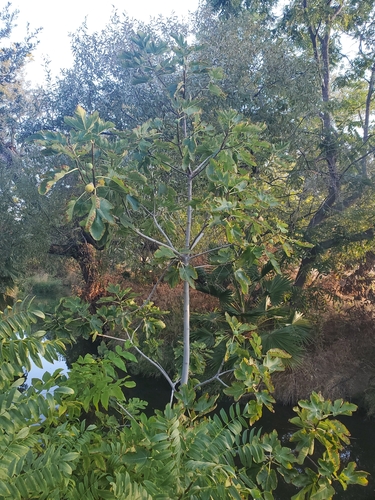
(c) Pepe Paulín, some rights reserved (CC BY-NC), uploaded by Pepe Paulín
iNaturalist· cc-by-nc
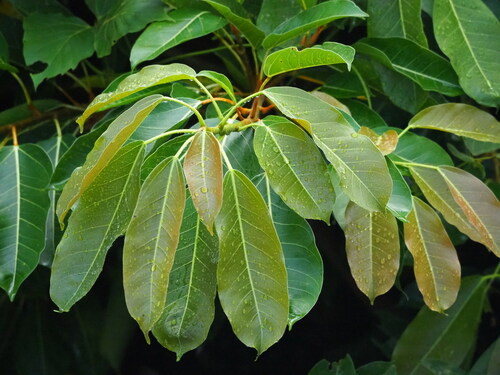
(c) Bob O'Kennon, some rights reserved (CC BY-NC), uploaded by Bob O'Kennon
iNaturalist· cc-by-nc
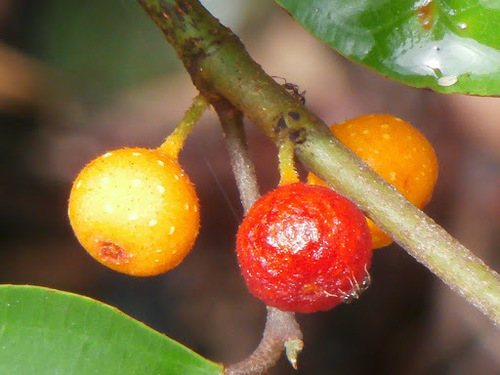
(c) ellen hildebrandt, some rights reserved (CC BY-NC), uploaded by ellen hildebrandt
Summary
Source: WikipediaMorus celtidifolia, the Texas mulberry, is a plant species native to South America, Central America, Mexico, and the southwestern United States, ranging from Argentina north as far as Arizona and Oklahoma. In the US, it grows in canyons and on slopes, usually near streams, from 200–2,200 metres (660–7,220 feet) in elevation. It is very often referred to as "Morus microphylla," including in Flora of North America, but recent studies suggest that these names are synonymous with M. celtidifolia holding priority. Morus celtidifolia is a shrub or tree, sometimes reaching 7.5 m (25 ft) in height. It has much smaller leaves than the other two species in the US (M. alba and M. rubra), the blade usually less than 7 centimetres (2+3⁄4 inches) long. The edible fruits are red, purple, or nearly black, and are consumed by wildlife, and, historically, by Native Americans. In ancient (probably prehistoric) times, the Havasupai people introduced the species to the Grand Canyon.
Description
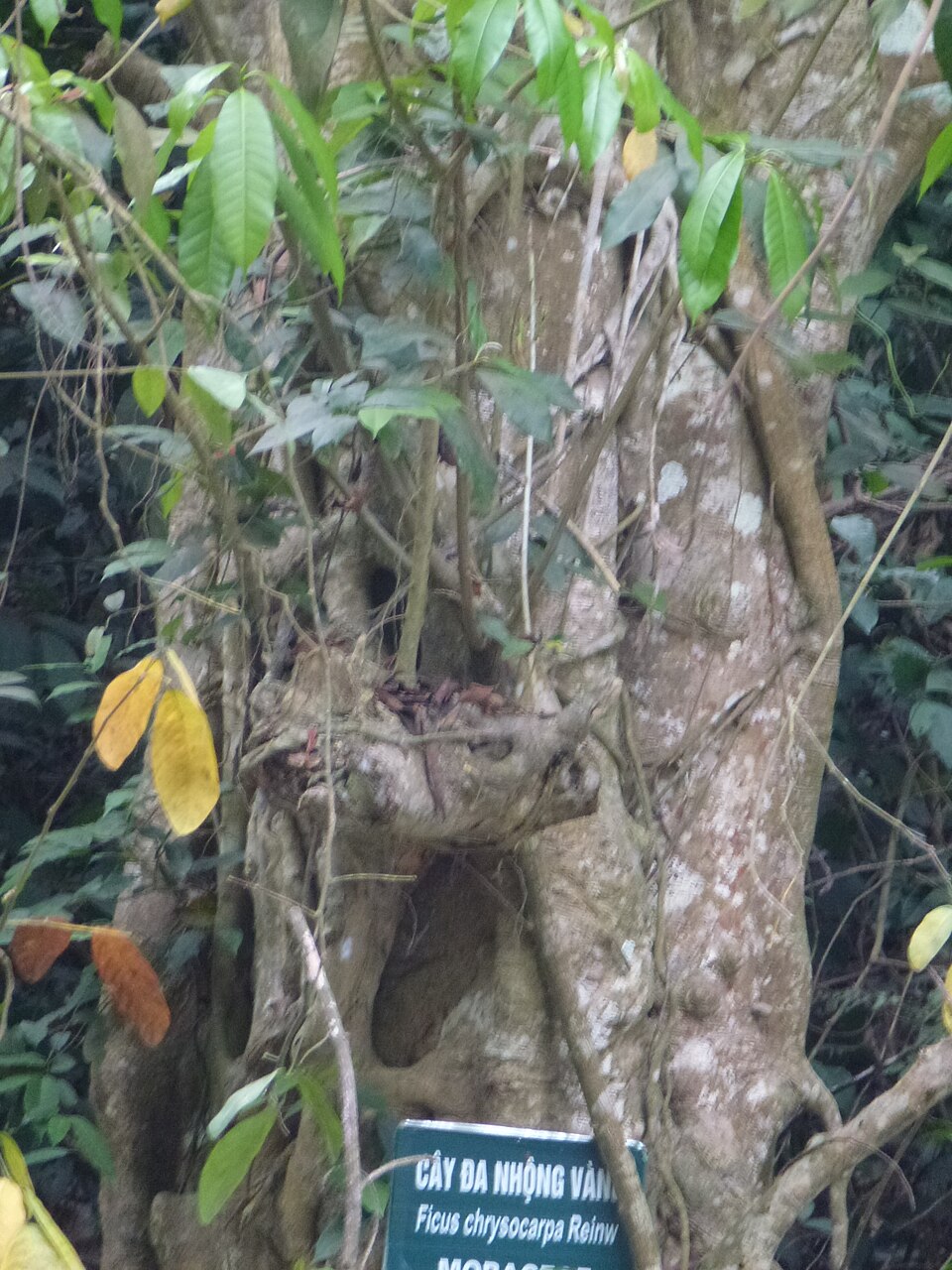
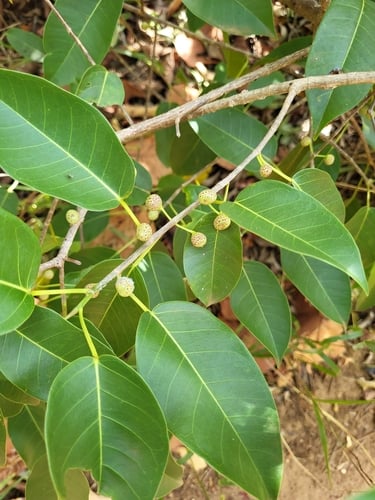
A tree. It grows 10-20 m tall. The leaves are oval and have teeth along the edge. The flowers are on showy groups. The fruit is a cluster of small fleshy fruit. They are like a blackberry,
Edible Uses
Fruit - raw or cooked. Insipid. The red to black fruits are 12mm or more long, comprised of a few to numerous, very juicy, small drupes.
Traditional Uses
The fruit are eaten raw.
This uses section is brief — help expand it
Distribution
A tropical plant. In Ecuador it grows between 2,000-2,500 m above sea level.
Where It Grows
Bolivia, Brazil, Central America, Colombia, Costa Rica, Ecuador, El Salvador, Peru, Mexico*, North America, Peru, South America, USA,
Cultivation
The inflorescence is usually dioecous, therefore both female and male forms of the plant need to be grown if fruit and seed are required. Occasional plants have both male and female flowers in the inflorescence.
Other Uses
The wood is heavy and is of dark orange or dark brown colour. It is suitable for small turnery and other articles. The wood is valued for building purposes in Ecuador.
Synonyms
Also Known As
Amacapolcuahuitl, Mora, Moral, Morera
References (15)
- Astrada, E., et al, 2007, Ethnobotany in the Cumbres de Monterrey National Park, Nuevo Leon, Mexico. Journal of Ethnobiology and Ethnomedicine 3:8
- Estrada-Castillon, E., et al, 2014, Ethnobotany in Rayones, Nuevo Leon, Mexico. Journal of Ethnobiology and Ethnomedicine, 10:62
- Fouqué, A., 1972, Espèces fruitières d'Amérique tropicale. Institut français de recherches fruitierès outre-mer
- Grandtner, M. M., 2008, World Dictionary of Trees. Wood and Forest Science Department. Laval University, Quebec, Qc Canada. (Internet database http://www.wdt.qc.ca)
- Grandtner, M. M. & Chevrette, J., 2013, Dictionary of Trees, Volume 2: South America: Nomenclature, Taxonomy and Ecology. Academic Press p 421
Show all 15 references Hide references
- Hedrick, U.P., 1919, (Ed.), Sturtevant's edible plants of the world. p 420
- Kermath, B. M., et al, 2014, Food Plants in the Americas: A survey of the domesticated, cultivated and wild plants used for Human food in North, Central and South America and the Caribbean. On line draft. p 549
- F. W. H. A. von Humboldt et al., Nov. gen. sp. 2:27[folio]; 2:33[quarto]. 1817
- Quintana, C. M., 2010, Wild Plants in the Dry Valleys Around Quito Ecuador. An Illustrated Guide. Publicationes del Harbario, QCA p 145
- Rangel-Landa, S., et al, 2017, Sociocultural and ecological factors influencing management of edible and non-edible plants: the case of Ixcatlan, Mexico. Journal of Ethnobiology and Ethnomedicine. 13:59
- Roa, J. A. G. & Boada, D. S. G., 2018, Fundación para el Fortalecimiento de la Fruticultura y Plantas Alimenticias no Convencionales en Colombia.
- Segura, S., et al, 2018, The edible fruit species in Mexico. Genet Resour Crop Evol (2018) 65:1767–1793
- Wiersema, J. H. & Leon, B., 2013, World Economic Plants. A Standard Reference CRC Press. 2nd Ed. p 455
- World Checklist of Useful Plant Species 2020. Royal Botanic Gardens, Kew
- www.colecionandofrutas.org