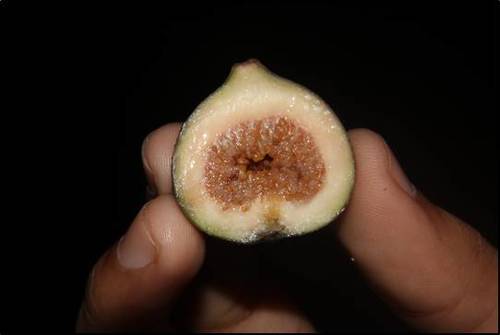
Ficus fraseri
Miq.
Sandpaper Fig, Fraser's fig
iNaturalist· cc-by-sa
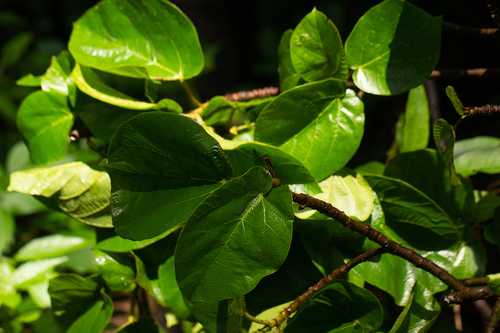
(c) Greg Tasney, some rights reserved (CC BY-SA), uploaded by Greg Tasney
iNaturalist· cc-by-nc
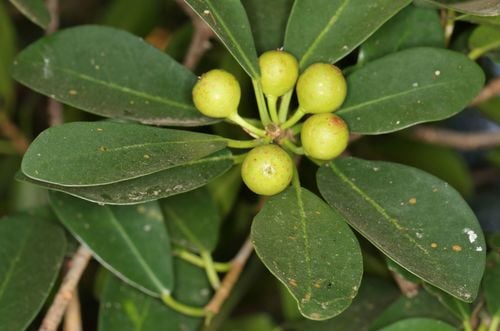
(c) Rick Nelson, some rights reserved (CC BY-NC)
iNaturalist· cc-by-nc
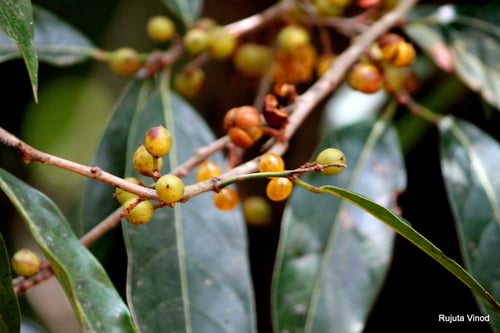
(c) firn, some rights reserved (CC BY-NC)
Summary
Source: WikipediaFicus fraseri, the white sandpaper fig or shiny sandpaper fig, is one of several fig species commonly known as sandpaper figs. It is native to the northern and eastern coasts of Australia, and to New Caledonia and Vanuatu. Other common names are "figwood" and "watery fig". It grows as either a shrub or tree with height ranging from around 6 to 15 metres. Its leaves are 6 to 14 cm long and 2.5 to 6.5 cm wide on petioles that are 1 to 2 cm long. The rounded figs are 1 to 1.5 cm long and start out yellow in colour, maturing to orange-red between May and February in the species' native range. They are edible, but insipid. In Australia, the species occurs from Tuggerah Lake in New South Wales, northwards to the Atherton Tableland in Queensland, and rarely in the Northern Territory. The grey-headed flying fox feeds on the figs. Although rarely seen in cultivation, it is a fast-growing, ornamental species that can be easily propagated from seed.
Description
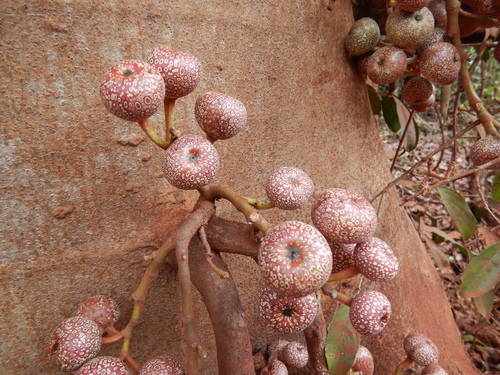
A fig. It is a tree up to 10-15 m high. It spreads 3-5 m wide. It loses its leaves during the year. The leaves are simple and 8-13 cm long by 2.5-3.5 cm wide. They are sandpapery on both sides. They are dark green above and paler underneath. The leaf stalk is 0.5-1 cm long. The fruit are 13-17 mm long by 15-20 mm wide. They occur singly or in pairs. When ripe they turn from orange-red to black. The fruit are edible.
Edible Uses
The fruit are edible, though they have little taste.
Traditional Uses
The fruit are edible but have little taste.
This uses section is brief — help expand it
Distribution
A tropical plant. It grows in the subtropics and warm temperate zones. They grow naturally in rainforests. It grows from sea level to 800 m above sea level.
Where It Grows
Australia*, New Caledonia, Pacific, Vanuatu,
Cultivation
Plants can be grown from seed or cuttings. The seed are removed from the fig and mixed with sand before sowing as they are very small. Take the seed from ripe orange-brown fruit.
Notes
There are about 800-1000 Ficus species. They are mostly in the tropics. There are 120 Ficus species in tropical America.
Synonyms
Also Known As
Adhala-dhabara, Nadoumaama, Nowash
References (19)
- Bourret, D., 1981, Bonnes-Plantes de Nouvelle-Caledonie et des Loyaute. ORSTOM. p 38 (As Ficus proteus)
- Cooper W & Cooper W T, 1994, Fruits of the Rain Forest. RD Press p 130
- Cooper, W. and Cooper, W., 2004, Fruits of the Australian Tropical Rainforest. Nokomis Editions, Victoria, Australia. p 324
- Djunbunji Newsletter Edition 2 2011. p 5
- Elliot, W.R., & Jones, D.L., 1992, Encyclopedia of Australian Plants suitable for cultivation. Vol 4. Lothian. p 284
Show all 19 references Hide references
- Flora of Australia, Volume 3, Hamamelidales to Casuarinales, Australian Government Publishing Service, Canberra (1989) p 59
- Gillaumin, R., 1954, Les Plantes utiles des Nouvelles-Hebrides (fin et complement) In: Journal d'agriculture tropicale et de botanique appliquee Vol. 1, No. 10-12 pp 453-460 (As Ficus stenocarpa)
- Hibbert, M., 2002, The Aussie Plant Finder 2002, Florilegium. p 102
- Jackes, B.R., 2001, Plants of the Tropics. Rainforest to Heath. An Identification Guide. James Cook University. p 66
- Jones D, L, 1986, Ornamental Rainforest Plants in Australia, Reed Books, p 218
- Lazarides, M. & Hince, B., 1993, Handbook of Economic Plants of Australia, CSIRO. p 114
- Low, T., 1991, Wild Food Plants of Australia. Australian Nature FieldGuide, Angus & Robertson. p 83
- Massal, E. and Barrau, J., 1973, Food Plants of the South Sea Islands. SPC Technical Paper No 94. Noumea, New Caledonia. p 35 (As Ficus stenocarpa)
- Melzer, R. & Plumb, J., 2011, Plants of Capricornia. Belgamba, Rockhampton. p 204
- Nicholson, N & H., 1996, Australian Rainforest Plants, Terania Rainforest Publishing. NSW. p 32
- Recher, P, 2001, Fruit Spirit Botanical Gardens Plant Index. www.nrg.com.au/~recher/ seedlist.html p 6
- Townsend, K., 1994, Across the Top. Gardening with Australian Plants in the tropics. Society for Growing Australian Plants, Townsville Branch Inc. p 212
- Williams, J.B., Harden, G.J., and McDonald, W.J.F., 1984, Trees and shrubs in rainforests of New South Wales and Southern Queensland. Univ. of New England, Armidale. p 64, 67
- Yallakool Reserve Plant List July 1, 2009 Off internet