Ficus caulocarpa
(Miq.) Miquel
Salwit, Da ye chi rong
iNaturalist· cc0
no rights reserved, uploaded by 葉子
iNaturalist· cc-by-nc
(c) 陳界良, some rights reserved (CC BY-NC)
Summary
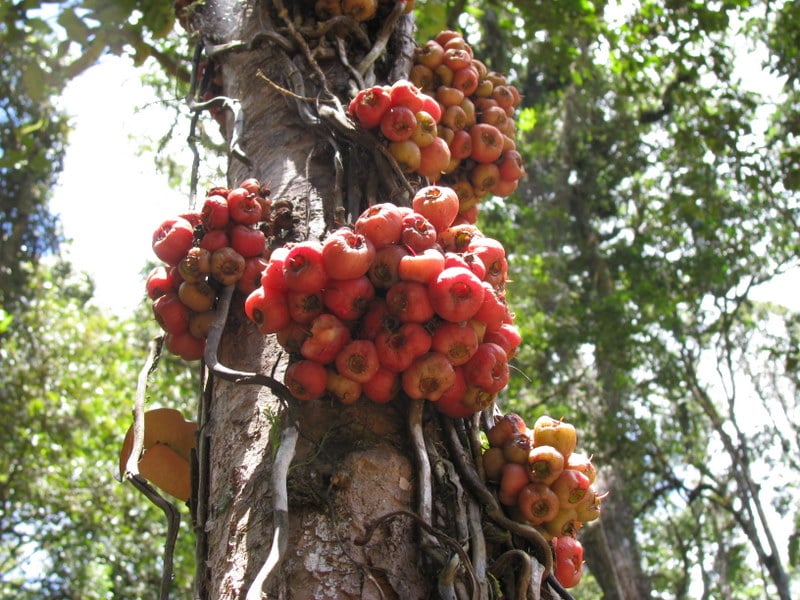
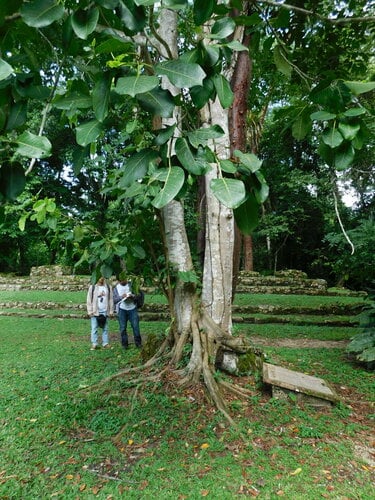
Source: WikipediaFicus caulocarpa is a flowering plant in the genus Ficus in the family Moraceae. It is native to southeastern Asia, from India and Sri Lanka easy to Taiwan and the Philippines, and also New Guinea. It is an often shrubby, multistemmed tree growing to 20 m tall. The leaves, of which three complete sets are produced each year (triannually deciduous), are entire and glabrous, and up to 22 cm long by 8.5 cm broad.
Description
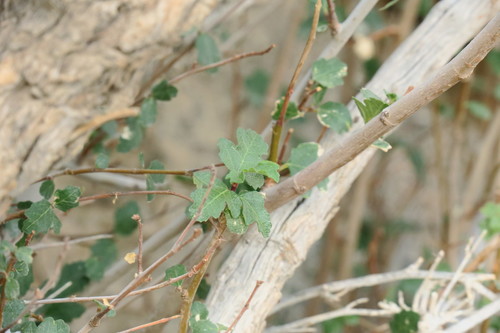
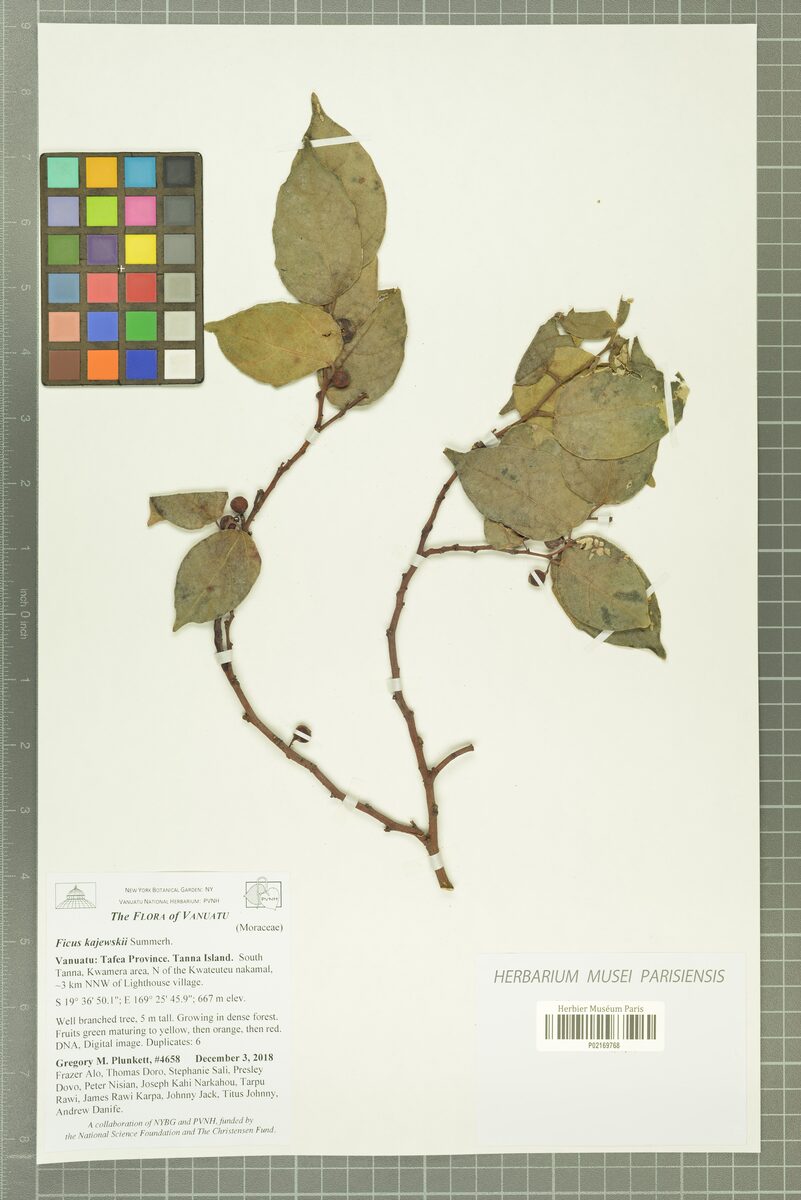
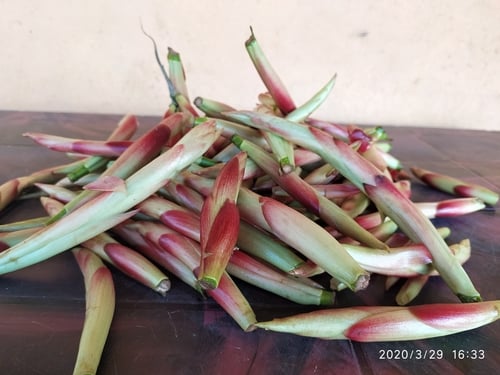
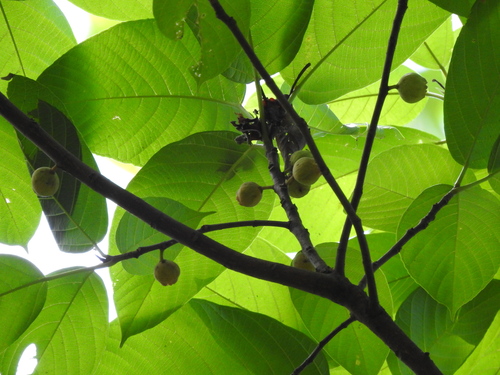
A fig. It is a large tree. It loses its leaves during the year. Trees are of one sex. The bark is greyish brown. The branches are pale brown. The leafy growth at the base of the leaf is sword shaped and 2-4 cm long. The leaf stalk is 2-4 cm long and thin. The leaf blade is oblong and 15-20 cm long by 7-9.5 cm wide. The base is rounded and the tip tapers to a short sharp point. There are 9-15 secondary veins each side of the midrib. The figs occur as 2-8 in a group and they are yellow and white when mature. They occur in the axils of leaves or on small branches without leaves. They are 5-8 mm across. The fruit stalk is 5-7 mm long. The male and female flowers occur in the same fig. The male flowers are few and are near the hole.
Edible Uses
The fruit are eaten.
Distribution
A tropical plant. In the Philippines it is in Luzon and Bontoc.
Where It Grows
Asia, China, Indochina, Indonesia, Japan, Malaysia, Myanmar, Pacific, Papua New Guinea, PNG, Philippines, SE Asia, Sri Lanka, Taiwan, Thailand,
Notes
There are about 800-1000 Ficus species. They are mostly in the tropics. There are 120 Ficus species in tropical America.
Synonyms
References (4)
- Ann. Mus. Bot. Lugduno-Batavum 3:235. 1867-1868 ("1867")
- Brown, Philippines,
- Flora of China.
- Kuo, W. H. J., (Ed.) Taiwan's Ethnobotanical Database (1900-2000), http://tk.agron.ntu.edu.tw/ethnobot/DB1.htm