Ficus dicranostyla
Mildbr.
iNaturalist· cc-by-nc
(c) Binta Balde, some rights reserved (CC BY-NC)
iNaturalist· cc-by-nc
(c) Binta Balde, some rights reserved (CC BY-NC)
iNaturalist· cc-by-nc
(c) Binta Balde, some rights reserved (CC BY-NC)
Summary
Source: WikipediaFicus dicranostyla is a shrub or tree species within the family Moraceae. It occurs in Tropical Africa and it is one of the two species of Ficus within the section Oreosycea of Ficus subgenus Pharmacosycea. It was named by Johannes Mildbraed.
Description
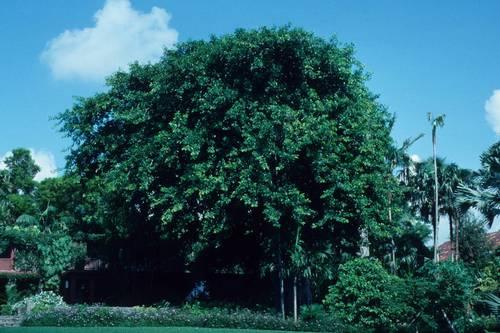
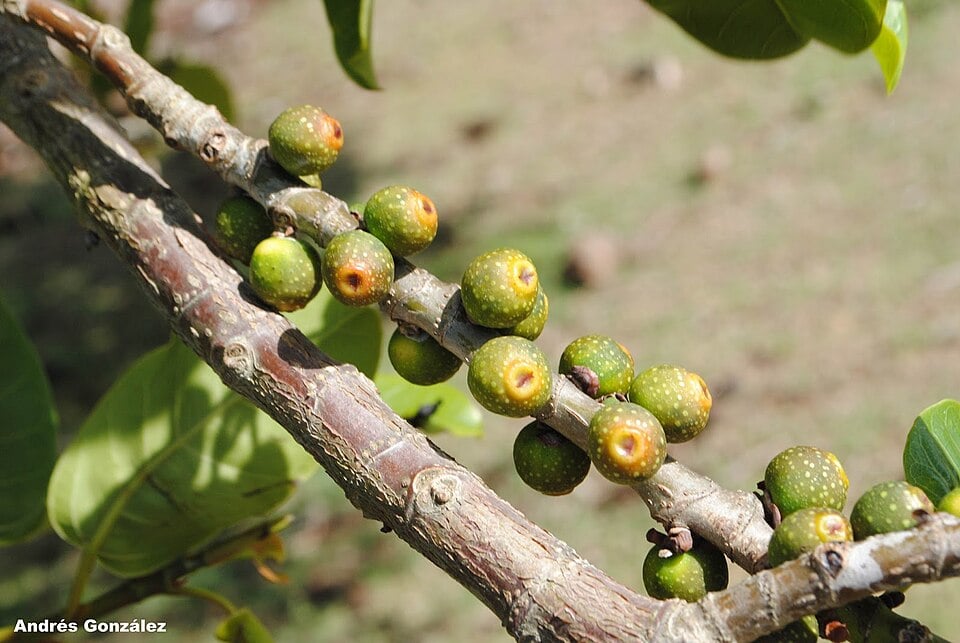
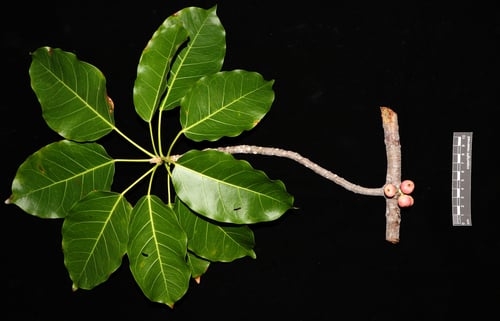
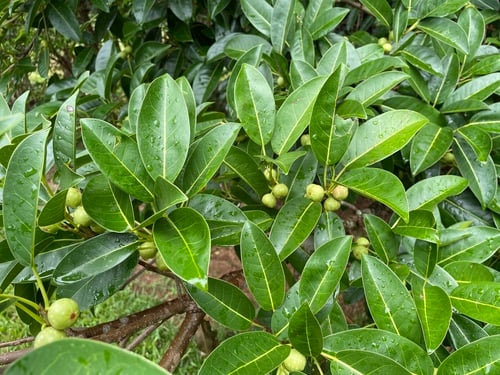
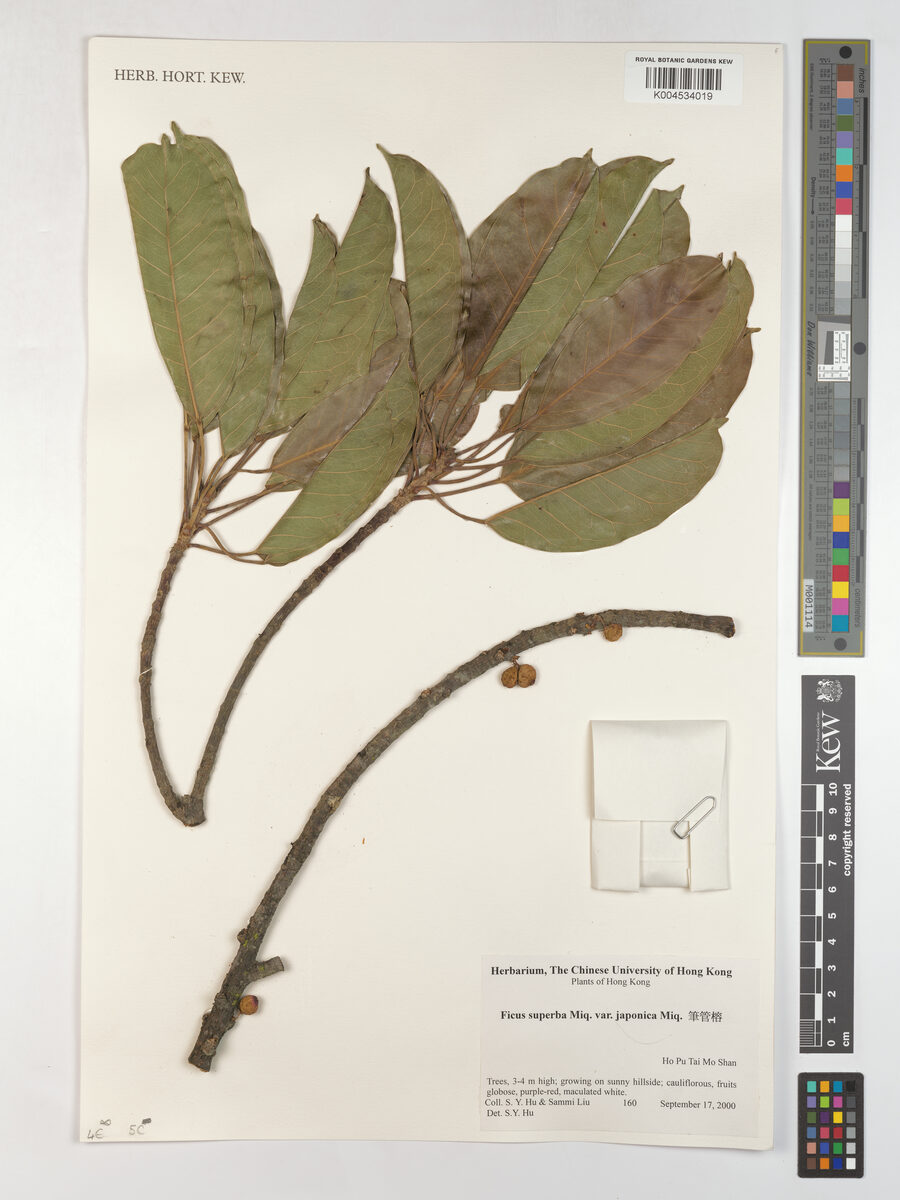
A fig. It is a bush 6 m high or a tree 20 m high. The trunk can be 1 m across and high before branching. The leaves are narrowly oval and rounded at the base and tapering to the tip. They are 10-16 cm long by 5-8 cm wide. The figs occur singly in the axils of leaves. They are 12 mm across.
Edible Uses
The leaves, fruit, and leaves as a vegetable are edible portions of this plant.
Medicinal Uses
The plant has traditional medicinal uses.
Distribution
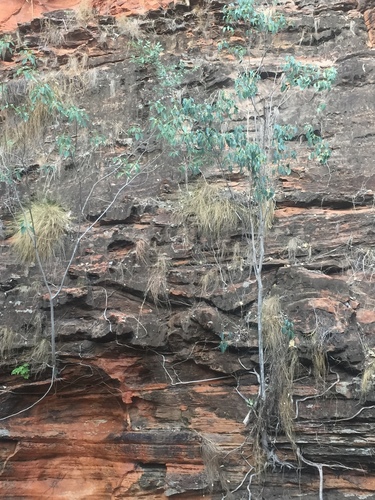
A tropical plant. It grows in the savannah in West Africa. It is often on termite mounds. It can grow up to 1,500 m above sea level.
Where It Grows
Africa, Benin, Burkina Faso, Congo DR, East Africa, Ethiopia, Guinea, Guinée, Guinea-Bissau, Mali, Nigeria, Senegal, Sierra Leone, Sudan, Togo, Uganda, West Africa, Zambia,
Cultivation
The wasp pollinator is Dolichoris flabellata Wiebes.
Other Uses
Info from to be entered
Notes
There are about 800-1000 Ficus species. They are mostly in the tropics. There are 120 Ficus species in tropical America.
Also Known As
Anak, Bito, D'jambo, Djambo-surei, Ebu, Ebule, Gansan, Hilwotou, Munapuo, Namimatoro, Olam, Owi, Owii, Sur, Suredje, Surei, Touana
References (13)
- Batawila, K., et al, 2007, Diversite et gestion des legumes de cueillete au Togo. African Journal of Food, Agriculture, Nutrition and Development 7( 3& 4): 66
- Bonou, A., et al, 2013, Valeur economique des Produits Forestiers Non Ligneux (PFNL) au Benin. Editions Universitaires Europeennes p 97
- Burkill, H. M., 1985, The useful plants of west tropical Africa, Vol. 4. Kew.
- Catarino, L. et al, 2019, Edible Leafy Vegetables from West Africa (Guinea-Bissau): Consumption, Trade and Food Potential. Foods 2019, 8, 493
- Diarra, N. et al, 2016, Etude ethnobotanique des plantes alimentaires utilisées en période de soudure dans les régions Sud du Mali. Int. J. Biol. Chem. Sci. 10(1): 184-197
Show all 13 references Hide references
- Ferns, Useful tropical plants.
- Goode, P., 1989, Edible Plants of Uganda. FAO p 41
- Grubben, G. J. H. and Denton, O. A. (eds), 2004, Plant Resources of Tropical Africa 2. Vegetables. PROTA, Wageningen, Netherlands. p 561
- Jardin, C., 1970, List of Foods Used In Africa, FAO Nutrition Information Document Series No 2.p 78
- Masters, T., 2021, Traditional food plants of the upper Aswa River catchment of northern Uganda—a cultural crossroads. Journal of Ethnobiology and Ethnomedicine (2021) 17:24
- Oryema, C., et al, 2013, Edible wild fruit species of Gulu District, Uganda. International Journal of Biology and Biological Sciences Vol 2(4) pp 068-082
- Segnon, A. C. and Achigan-Dako, E. G., 2014, Comparative analysis of diversity and utilization of edible plants in arid and semi-arid areas in Benin. Journal of Ethnobiology and Ethnomedicine. 10:80
- www.figweb.org