Ficus maclellandii
King
Azalea leaf fig
iNaturalist· cc-by-nc
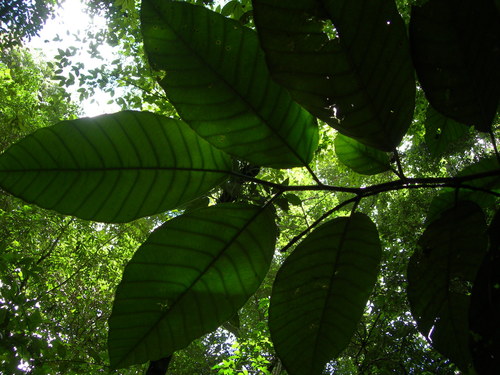
(c) Martin Reith, some rights reserved (CC BY-NC), uploaded by Martin Reith
iNaturalist· cc-by-nc
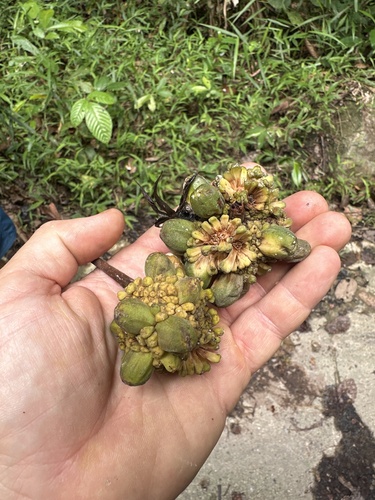
(c) Martin Reith, some rights reserved (CC BY-NC), uploaded by Martin Reith
iNaturalist· cc-by-nc
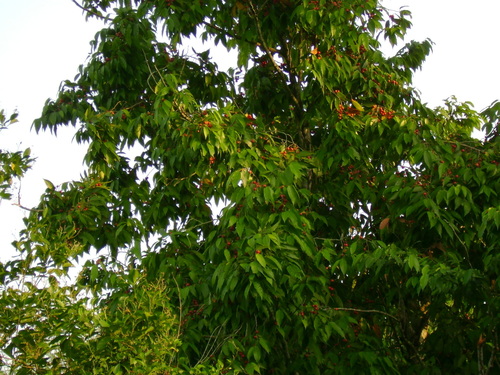
(c) rachelteo, some rights reserved (CC BY-NC)
Summary
Source: WikipediaFicus maclellandii (common name Alii fig or banana-leaf fig) is a species of fig plant in the family Moraceae. It is native to India, Southeast Asia and China. It is an evergreen often grown as a houseplant in temperate climates. The leaves are 8–13 cm and uniquely dimorphic; with narrow leaves on the lower, sterile branches and broader leaves on the higher branches.
Description
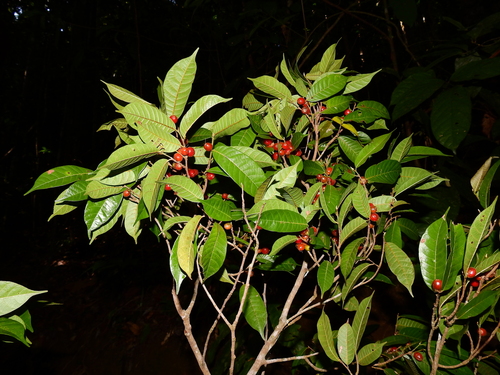
A fig. It is a tree. It grows 15-20 m tall. The bark is grey and smooth. The branches have lumps on them. The leaves are 8-13 cm long. They have 2 forms. The lower branches have more narrow leaves. The figs are in the axils of leaves. They are purplish red when ripe. They are round and 6-8 mm across.
Edible Uses
The leaf buds are eaten fresh or can be baked, dried, and stored for later use.
Traditional Uses
The leaf buds are used as a fresh vegetable or baked then dried and stored.
This uses section is brief — help expand it
Distribution
It is a tropical plant. It grows in thin forests and near streams. In China it grows between 400-1,200 m above sea level. In Yunnan.
Where It Grows
Asia, Bangladesh, Bhutan, China, Hawaii, Himalayas, India, Malaysia, Myanmar, Northeastern India, SE Asia, Sikkim, Thailand, Vietnam,
Cultivation
It can be grown from cuttings.
Synonyms
Also Known As
Du juan ye rong, Pak yi
References (1)
- Shi, Y. et al, 2014, An ethnobotanical study of the less known wild edible figs (genus Ficus) native to Xishuangbanna Southwest China. Journal of Ethnobiology and Ethnomedicine. 10:68 (As var. rhododendrifolia)