Ficus capreifolia
Delile
Riverine sandpaper fig
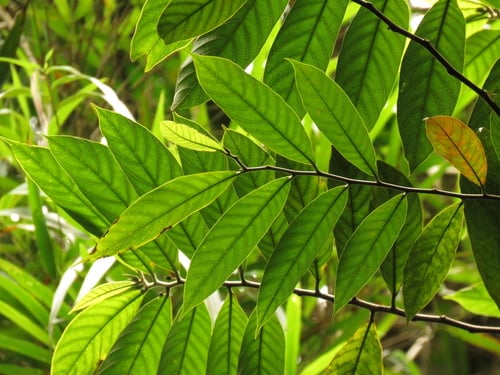
iNaturalist· cc-by-nc
(c) Ricky Taylor, some rights reserved (CC BY-NC), uploaded by Ricky Taylor
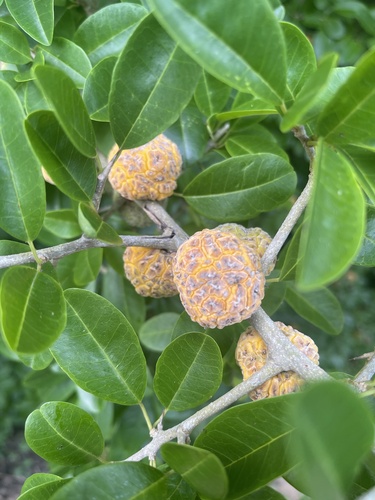
iNaturalist· cc-by-nc
(c) Ricky Taylor, some rights reserved (CC BY-NC)
Summary
Source: WikipediaThe river sandpaper fig (Ficus capreifolia) is a fig shrub or small tree of the western and eastern Afrotropics. It is typically found around pans or flood plains, or along riparian fringes in tropical or subtropical savanna regions, but is absent from the tropical rainforest zone. Despite its regular scrambling habit it may attain a height of 7 to 10 m (23 to 33 ft). The bark is pale and smooth, and the branches are slender. Their rough-textured, pear-shaped, yellowish-green figs are up to 2 cm (0.79 in) in diameter and grow on short stalks from the leaf axils. The elongate leaves are rough on both surfaces.
Description
A fig. It is a shrub. It grows up to 4-7 m tall. The bark is pale whitish and smooth. The stems are slender and it has few branches. The branches are often long and whip-like. The leaves are oval and 11 cm long by 4.5 cm wide. They are dark green and have a very rough surface. They resemble sandpaper. The base is narrowly lobed and it tapers to the tip. The edges often have teeth. The fig fruit occur singly and are pear shaped. They are up to 10 cm long. They are grey green and have a rough skin. They are produced on fairly long stalks in the axils of leaves.
Edible Uses
The ripe figs are eaten raw. The leaves, seeds, and fruit can be used as vegetables.
Traditional Uses
The figs are eaten. The ripe fruit are eaten raw.
This uses section is brief — help expand it
Medicinal Uses
The leaf sap and a decoction of the root are taken for the treatment of schistosomiasis, and the leaf sap or the powdered root is sprinkled on syphilitic ulcers. A dichloromethane extract from the leaf has shown fungicidal activity against Cladosporium cucumerinum, due to the presence of the furanocoumarin psoralen. The extract also showed inhibitory activity on the enzyme acetylcholinesterase. A methanol extract of the twig has shown radical scavenging activity.
Known Hazards
The latex from the bark is recorded to be urticant (causing a rash).
Distribution
A tropical plant. They grow along watercourses in the Savannah. It grows in swamps. It can form tangled thickets along river banks. It grows between 45-1,600 m above sea level. In Zimbabwe it grows up to 910 m above sea level. It can grow in arid places.
Where It Grows
Africa, Angola, Benin, Botswana, Burkina Faso, Cameroon, Central Africa, Central African Republic, CAR, Congo DR, Congo R, Côte d'Ivoire, East Africa, Eswatini, Ethiopia, Gabon, Gambia, Ghana, Guinea, Guinée, Ivory Coast, Kenya, Malawi, Mozambique, Namibia, Nigeria, Senegal, Sierra Leone, Somalia, South Africa, Southern Africa, Sudan, Swaziland, Tanzania, Togo, Uganda, West Africa, Zambia, Zimbabwe,
Cultivation
The pollinating wasp is Kradibia gestroi afrum (Wiebes).
Propagation
Seed - easy. Cuttings root easily.
Other Uses
The bark, stripped off in long lengths, is used for making rope and string. Split twigs are used for plaiting baskets. The rough leaves are used as sandpaper for polishing wooden objects such as sticks, spears, bows, tool handles and earrings. The leaf and the latex from the bark are used for tanning. The wood is soft. Unspecified plant parts are used for construction of house roofs and as fuel.
Notes
There are about 800-1000 Ficus species. They are mostly in the tropics. There are 120 Ficus species in tropical America.
Synonyms
Also Known As
Arabi-safarra, Emunparauta, Inkhiwane, Laweydi, Lugo, Mukaramadzi, Munharauta, Palli, Rimerhi rimabetchehi, Rough-leaved fig, Towsi, Willow wild fig, Wu badonri
References (30)
- Abbiw, D.K., 1990, Useful Plants of Ghana. West African uses of wild and cultivated plants. Intermediate Technology Publications and the Royal Botanic Gardens, Kew. p 47
- Ann. Sci. Nat. Bot. ser. 2, 20:94. 1843 "capreaefolia"
- Asfaw, Z. and Tadesse, M., 2001, Prospects for Sustainable Use and Development of Wild Food Plants in Ethiopia. Economic Botany, Vol. 55, No. 1, pp. 47-62
- Burkill, H. M., 1985, The useful plants of west tropical Africa, Vol. 4. Kew.
- Busson, 1965,
Show all 30 references Hide references
- Dale, I. R. and Greenway, P. J., 1961, Kenya Trees and Shrubs. Nairobi. p 315
- Dalziel, J. M., 1937, The Useful plants of west tropical Africa. Crown Agents for the Colonies London.
- FAO, 1988, Traditional Food Plants, FAO Food and Nutrition Paper 42. FAO Rome p 281
- Fowler, D. G., 2007, Zambian Plants: Their Vernacular Names and Uses. Kew. p 48
- Gilbert, T., et al, 2017, Diversity and local transformation of indigenous edible fruits in sahelian domain of Cameroon. Journal of Animal & Plant Sciences Vol. 26 (2): 5289-5300
- Grubben, G. J. H. and Denton, O. A. (eds), 2004, Plant Resources of Tropical Africa 2. Vegetables. PROTA, Wageningen, Netherlands. p 561
- Jardin, C., 1970, List of Foods Used In Africa, FAO Nutrition Information Document Series No 2.p 136
- Long, C., 2005, Swaziland's Flora - siSwati names and Uses http://www.sntc.org.sz/flora/
- Lulekal, E., et al, 2011, Wild edible plants in Ethiopia: a review on their potential to combat food insecurity. Afrika Focus - Vol. 24, No 2. pp 71-121
- Mannheimer, C. A. & Curtis. B.A. (eds), 2009, Le Roux and Muller's Field Guide to the Trees and Shrubs of Namibia. Windhoek: Macmillan Education Namibia. p 20
- Mutie, F. G., 2020, Conservation of Wild Food Plants and Their Potential for Combatting Food Insecurity in Kenya as Exemplified by the Drylands of Kitui County. Plants 2020, 9, 1017
- Mutie, F. M., et al, 2023, Important Medicinal and Food Taxa (Orders and Families) in Kenya, Based on Three Quantitative Approaches. Plants 2023, 12, 1145
- Ogle & Grivetti, 1985,
- Palgrave, K.C., 1996, Trees of Southern Africa. Struik Publishers. p 105
- Peters, C. R., O'Brien, E. M., and Drummond, R.B., 1992, Edible Wild plants of Sub-saharan Africa. Kew. p 149
- Roodt, V., 1998, Trees & Shrubs of the Okavango Delta. Medicinal Uses and Nutritional value. The Shell Field Guide Series: Part 1. Shell Botswana. p 196
- Royal Botanic Gardens, Kew (1999). Survey of Economic Plants for Arid and Semi-Arid Lands (SEPASAL) database. Published on the Internet; http://www.rbgkew.org.uk/ceb/sepasal/internet [Accessed 4th May 2011]
- Ruiters-Welcome, A. K., 2019, Food plants of southern Africa. Ph.D. thesis. Univ. of Johannesburg p 79
- Schmidt, E., Lotter, M., & McCleland, W., 2007, Trees and shrubs of Mpumalanga and Kruger National Park. Jacana Media p 76
- Swaziland's Flora Database http://www.sntc.org.sz/flora
- Vivien, J., & Faure, J.J., 1996, Fruitiers Sauvages d'Afrique. Especes du Cameroun. CTA p 214
- Welcome, A. K. & Van Wyk, B.-E., 2019, An inventory and analysis of the food plants of southern Africa. South African Journal of Botany 122 (2019) 136–179
- World Checklist of Useful Plant Species 2020. Royal Botanic Gardens, Kew
- www.figweb.org
- www.zimbabweflora.co.zw 2011
More from Moraceae
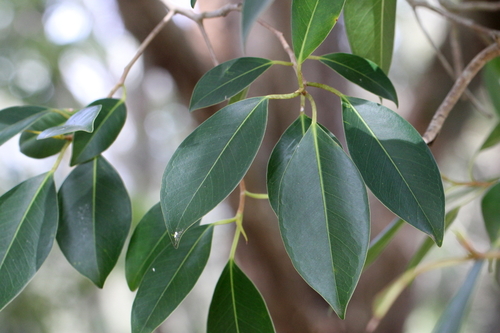
Ficus watkinsiana
Strangling Fig, Watkin’s Fig, Nipple Fig, Bellinger River fig, Green-leaved Moreton Bay Fig
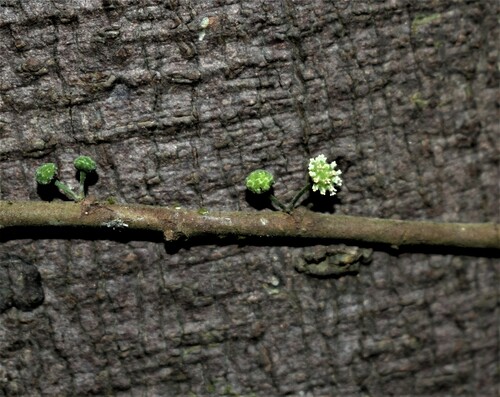
Helicostylis elegans
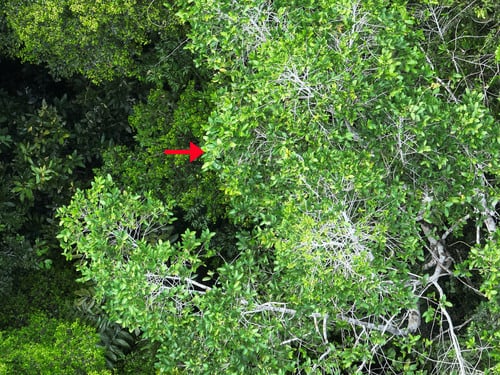
Helicostylis scabra
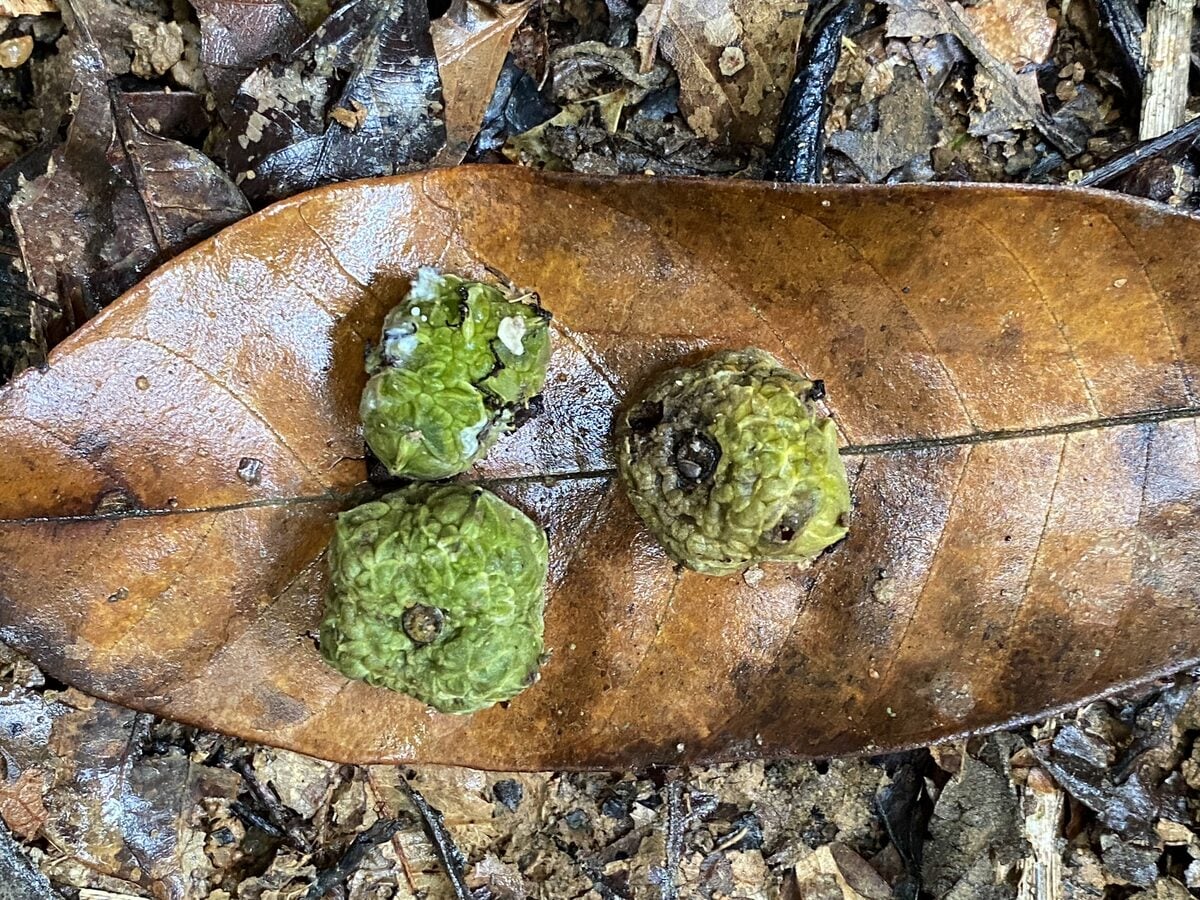
Helicostylis tomentosa - (Poepp. & Endl.) Rusby
Letterhout, Letter Wood
Helicostylis tovarensis
Tovar helicostylis
Maclura africana
African asage-orange, Thorny mulberry