Ficus asperifolia
Miq.
Sandpaper tree
iNaturalist· cc-by
(c) Carel Jongkind, some rights reserved (CC BY), uploaded by Carel Jongkind
iNaturalist· cc-by-nc
(c) Carel Jongkind, some rights reserved (CC BY-NC)
Summary
Source: WikipediaFicus asperifolia is a species of shrub or small sized gynodioecious fig tree belonging to the family Moraceae. It grows up to 6 m high and often has climbing branches.
Description
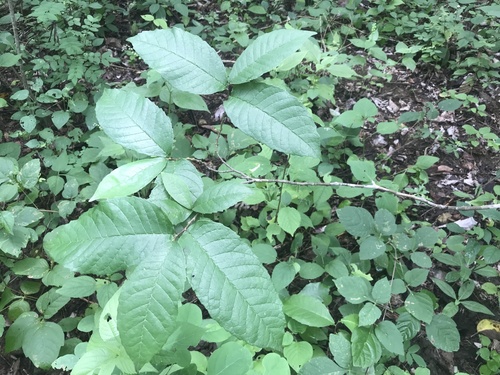
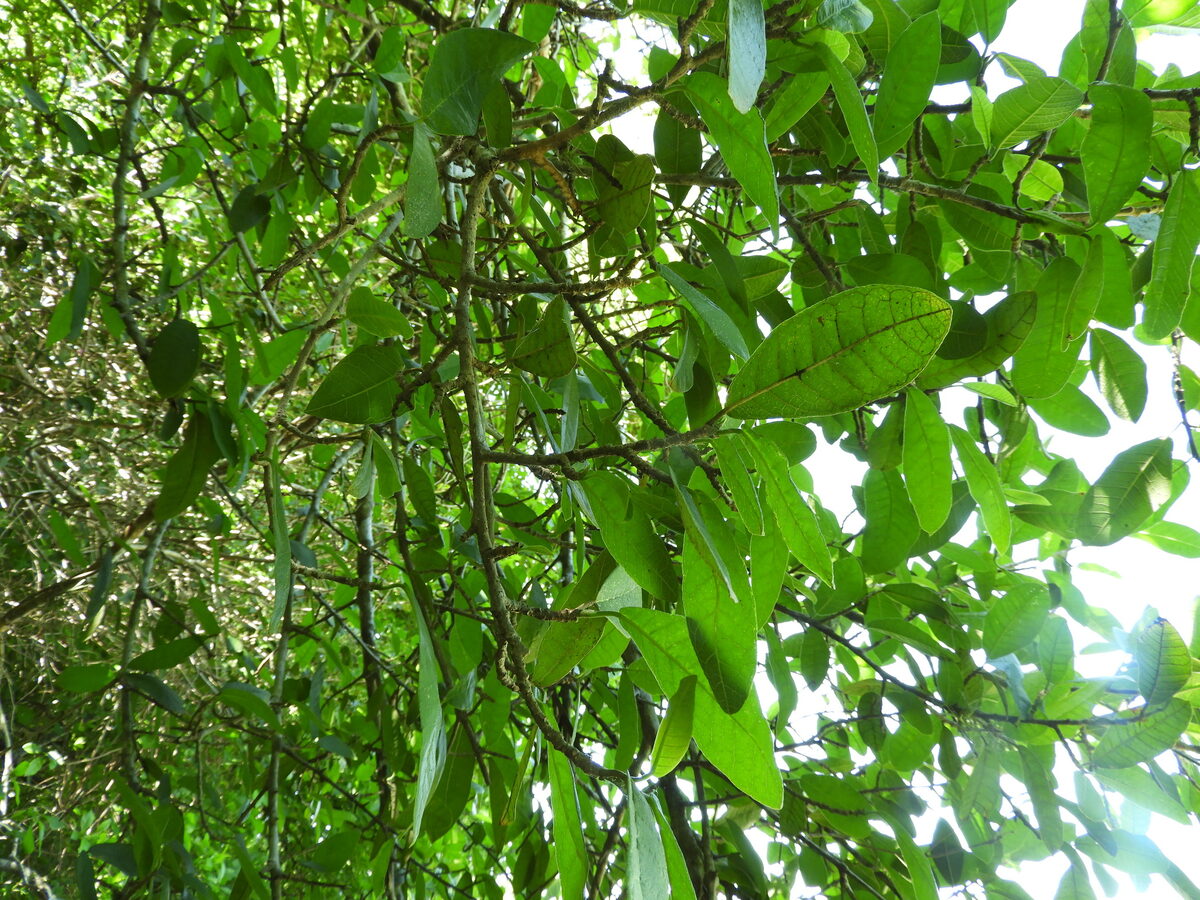
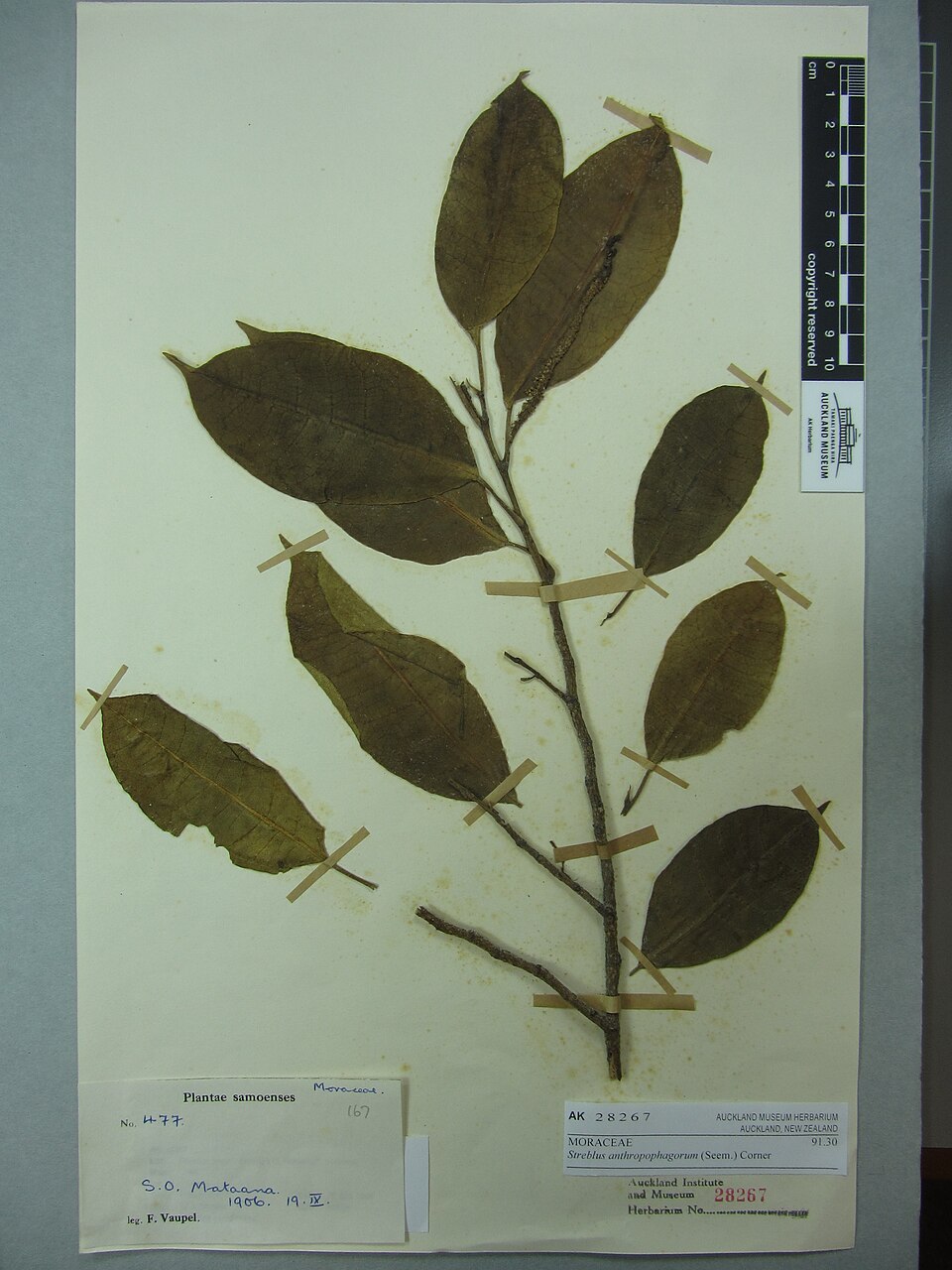
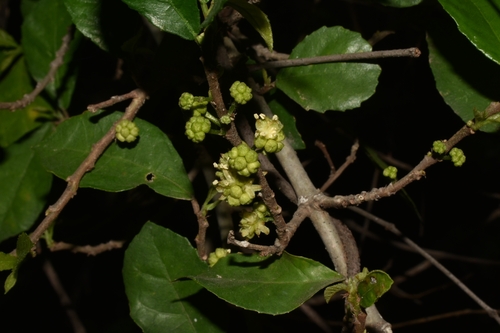
A fig. It is a scrambling shrub. It grows 2-4 m high. It can be a creeper 8 m long. The leaves are in 2 lines on opposite sides of the stems. They are alternate. They are 3-23 cm long by 1-12 cm wide. They are papery and usually have unequal sides. The figs occur as 1-3 together. They are in the axils of leaves. They are 2-3 cm across. They are dark red or orange.
Edible Uses
In Cameroon dried fruit of the species are used in traditional medine to treate infertility, extracts of the species are also used to aid the wound healing process.
Medicinal Uses
Like the forest sandpaper fig (Ficus exasperata), this species is commonly employed in African traditional medicine, being used in the treatment of a wide range of conditions. Root decoctions are used in the treatment of urinary tract ailments, gonorrhoea, asthma and tuberculosis. The root is chewed in case of cough. The root is an ingredient in a prescription to expel worms. The root bark is used against eye problems. The body is rubbed with root scrapings as a tonic. The wood ash or charcoal is applied on lesions caused by leprosy. Decoctions of the bark are used in the treatment of coughs, worms, haemorrhoids and abnormal enlargement of the spleen. They are also used as ingredients in the treatment of heart problems. A cold bark extract is drunk in case of dizziness. A maceration of the bark, combined with Senna occidentalis and Setaria megaphylla is taken to facilitate childbirth or to heal gonorrhoea. Sap from the stem bark is used to stop bleeding, as a treatment of wounds, sores, abscesses, eye ailments, stomach-ache and for the removal of spines, but some traditional healers consider it corrosive to the skin and dangerous to ingest. The ash of burnt stem bark is sprinkled on wounds. Scrapings from the bark are made into an embrocation with stimulant and tonic properties. The stem bark is locally applied on the body for the treatment of malaria. The leaves and young stems are abortifacient, analgesic, antidote, diuretic, emetic, oxytocic and stomachic. A decoction is taken for the treatment of dysentery; diseases of the kidneys and urinary tract; respiratory conditions such as coughs, colds, flu and asthma; hypertension. The young leaf is chewed and swallowed in case of gastric ulcers. The fresh leaf is used as an ingredient of preparations for the treatment of heart diseases. The leaves are cooked with bananas and eaten as a treatment for gonorrhoea; the cooking water is also drunk for this purpose. The leaf juice or a decoction of the leaf is applied as an enema for the treatment of stomach-ache, and as an antidote to poison. The leafy shoot is used in preparations applied externally against jaundice. Leaf pulp or sap is externally applied for the treatment of eye ailments, rash, wounds, leprous sores, fungal infections, itching, oedema, ringworm, rheumatism, and lumbar and intercostal pain. The powder of the dried leaf is sprinkled on burns. The leaves are used as a mouthwash against thrush, inflammation of the gums and other mouth and throat ailments. The head is rubbed with warmed leaves for the treatment of headaches; tumours are also rubbed with warmed leaves. In case of severe headache, the patient’s head is washed with a decoction of the leaf. The abrasive leaf surface is used to scarify the skin to promote penetration of medicines, and to scour the tongue and throat for the treatment of mouth and throat ailments. The leaf is also used to scratch itching parts of the body and is ingested for mechanical treatment of diarrhoea and intestinal worms. The fruit is eaten as a treatment of coughs and venereal diseases. The dried and powdered fruit is added to porridge for the treatment of sterility in women. Water with the seed powder is drunk as a tonic in case of fever.
Distribution
A tropical plant. It grows in damp sites and near river banks in West and Central Africa. It grows in evergreen forests and along rivers. It grows from sea level to 1,800 m altitude.
Where It Grows
Africa, Angola, Asia, Benin, Burkina Faso, Cameroon, Central Africa, Central African Republic, CAR, Congo DR, Congo R, Côte d'Ivoire, East Africa, Gabon, Ghana, Guinea, Guinée, Guinea-Bissau, Indochina, Ivory Coast, Kenya, Laos, Nigeria, Rwanda, SE Asia, Senegal, Sierra Leone, Sudan, Tanzania, Togo, Uganda, West Africa, Zambia,
Cultivation
The pollinating wasp is Kradibia gestroi afrum (Wiebes).
Other Uses
The coarse leaves are sometimes used as a sandpaper.
Notes
There are about 800-1000 Ficus species. They are mostly in the tropics. There are 120 Ficus species in tropical America.
Synonyms
Also Known As
Cilenga, Eka, Ibbi gehi, Ibbi gorki, Ka, Kagami, Kalume-ka-lukenga, Kitabataba, Munyamata, Mupenuamu, Nyoin, Oget, Umuseena, Zierre
References (22)
- Abbiw, D.K., 1990, Useful Plants of Ghana. West African uses of wild and cultivated plants. Intermediate Technology Publications and the Royal Botanic Gardens, Kew. p 47 (As Ficus urceolaris)
- Achigan-Dako, E, et al (Eds), 2009, Catalogue of Traditional Vegetables in Benin. International Foundation for Science.
- Burkill, H. M., 1985, The useful plants of west tropical Africa, Vol. 4. Kew.
- Cat. afr. pl. 1:1010. 1900 (As Ficus urceolaris)
- Dansi, A., et al, 2008, Traditional leafy vegetables and their use in the Benin Republic. Genet Resour Crop Evol (2008) 55:1239–1256
Show all 22 references Hide references
- East African Herbarium records, 1981,
- Eilu, G. & Bukenya-Ziraba, R., 2004, Local Use of Climbing Plants of Budongo Forest Reserve, Western Uganda. Journal of Ethnobiology 24(2): 307-327
- Flora Zambesiaca. http://apps.kew.org/efloras
- Fowler, D. G., 2007, Zambian Plants: Their Vernacular Names and Uses. Kew. p 48
- Gilbert, T., et al, 2017, Diversity and local transformation of indigenous edible fruits in sahelian domain of Cameroon. Journal of Animal & Plant Sciences Vol. 26 (2): 5289-5300
- Jardin, C., 1970, List of Foods Used In Africa, FAO Nutrition Information Document Series No 2.p 78, 136 (Also as Ficus urceolaris)
- London J. Bot. 7:231, 564, t. 15B. 1848
- Malaisse, F., 1997, Se nourrir en floret claire africaine. Approche ecologique et nutritionnelle. CTA., p 63
- Martin, F.W. & Ruberte, R.M., 1979, Edible Leaves of the Tropics. Antillian College Press, Mayaguez, Puerto Rico. p 206
- Oryema, C., et al, 2013, Edible wild fruit species of Gulu District, Uganda. International Journal of Biology and Biological Sciences Vol 2(4) pp 068-082 (Also as Ficus urceolaris)
- Peters, C. R., O'Brien, E. M., and Drummond, R.B., 1992, Edible Wild plants of Sub-saharan Africa. Kew. p 149
- Segnon, A. C. & Achigan-Dako, E. G., 2014, Comparative analysis of diversity and utilization of edible plants in arid and semi-arid areas in Benin. Journal of Ethnobiology and Ethnomedicine 2014, 10:80
- Terashima, H., et al, 1992, Ethnobotany of the Lega in the Tropical Rainforest of Eastern Zaire (Congo): Part Two, Zone de Walikale, African Study Monographs, Suppl. 19:1-60 (As Ficus urceolaris)
- Vivien, J., & Faure, J.J., 1996, Fruitiers Sauvages d'Afrique. Especes du Cameroun. CTA p 212
- von Katja Rembold, 2011, Conservation status of the vascular plants in East African rain forests. Dissertation Universitat Koblenz-Landau p 166
- World Checklist of Useful Plant Species 2020. Royal Botanic Gardens, Kew
- www.figweb.org