Fernaldia pandurata
(A. DC.) R. E. Woodson
Loroco
iNaturalist· cc-by-nc
(c) Nestor Herrera, some rights reserved (CC BY-NC)
iNaturalist· cc-by-nc
(c) Nestor Herrera, some rights reserved (CC BY-NC)
iNaturalist· cc-by-nc
(c) Nestor Herrera, some rights reserved (CC BY-NC)
Description
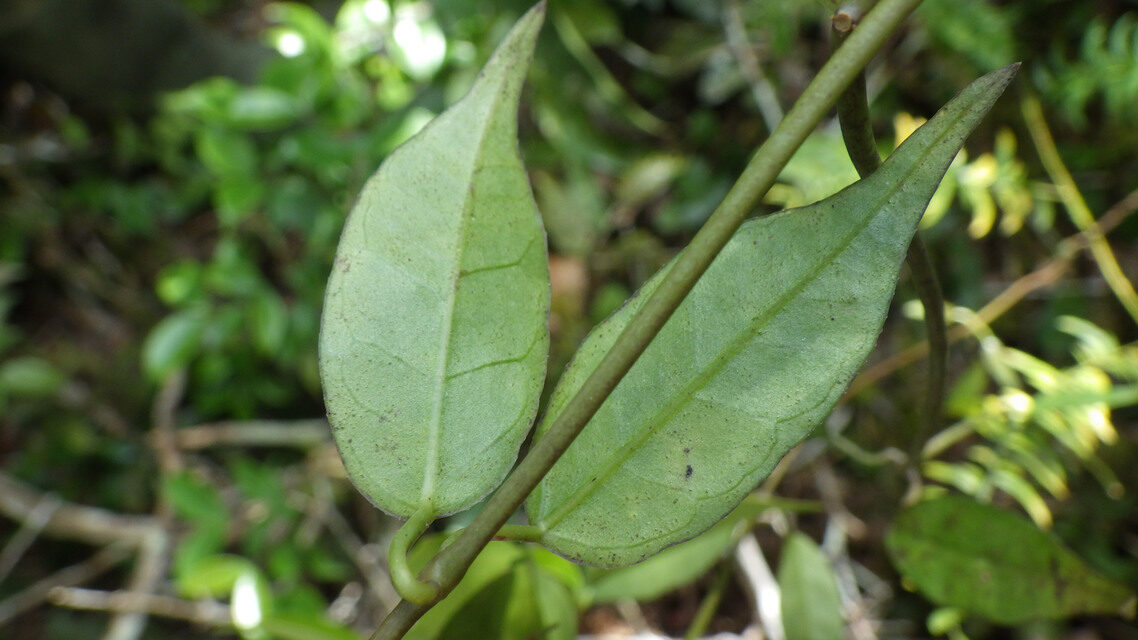
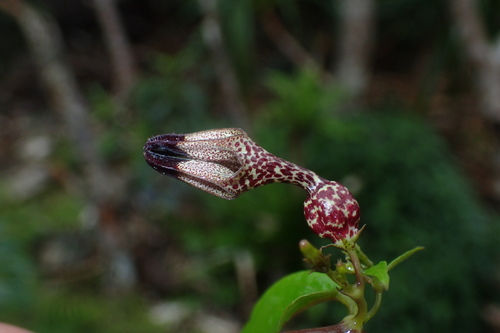
A vine. It is vigorous and slightly woody. It has fine hairs. The leaves are opposite. The leaf stalks are 1-2 cm long. The leaf blades are 4-13 cm long by 1.5-8 cm wide. They are thin and dull green. They are oblong to oval and the base can be rounded or heart shaped. The flowers are greenish white. They are on crowded stalks with 8-18 along one stalk. The fruit is a seed pod 9-14 cm long. They are very slender and occur in pairs. They are brown when mature and split open to release long silky hairs and many slim seeds.
Edible Uses
Echites panduratus is an important source of food in Guatemala, Honduras, and El Salvador. The plant's buds and flowers are used for cooking in a variety of ways, including in pupusas.
Traditional Uses
The flower buds are eaten usually cooked. They are added to a range of dishes. They can be boiled, steamed, roasted, stir-fried or dried. The flowers are used in pizzas. The tender tips of the vines are used as greens.
Known Hazards
The roots are said to be very poisonous and are used to poison noxious animals.
Distribution
A tropical plant. It grows naturally up to 900 m altitude in Central America.
Where It Grows
America, Central America, Costa Rica, El Salvador, Guatemala, Honduras, Mexico, Nicaragua, North America,
Cultivation
Plants are grown from new shoots that arise from the roots. It can be grown from seeds.
Other Information
It is cultivated and also grows wild. They are available canned or frozen in Central American markets.
Synonyms
Also Known As
Doroco, Quilite
References (15)
- Ann. Missouri Bot. Gard. 19:48. 1932
- Benvenuti, S. & Mazzoncini, M., 2021, The Biodiversity of Edible Flowers: Discovering New Tastes and New Health Benefits. Frontiers in Plant Science Article 569499.
- Chizmar Fernandez, C., et al, 2009, Plantas comestibles de Centroamerica. Instituto de Biodiversidad, Costa Rica. p 44
- Facciola, S., 1998, Cornucopia 2: a Source Book of Edible Plants. Kampong Publications, p 22
- FAO, 1993, Valor Nutritivo Y Usis en Alimantacion humana de Algunis Cultivos Autoctonos Subexplotados de Mesoamerica. FAO, Santiago, Chile. p 66
Show all 15 references Hide references
- Hellmuth, N. M., 2013, Maya Ethnobotany. Complete Inventory of plants. Associacion FLAAR Mesoamerica. Thirteenth edition. p 48
- Hermandez Bermejo, J.E., and Leon, J. (Eds.), 1994, Neglected Crops. 1492 from a different perspective. FAO Plant Production and Protection Series No 26. FAO, Rome. p 12
- http://research.famsi.org/botanyworking_plant_list.php (As Urechites karwinskii)
- Kermath, B. M., et al, 2014, Food Plants in the Americas: A survey of the domesticated, cultivated and wild plants used for Human food in North, Central and South America and the Caribbean. On line draft. p 365
- Martin, F.W. & Ruberte, R.M., 1979, Edible Leaves of the Tropics. Antillian College Press, Mayaguez, Puerto Rico. p 175
- Morton, J.F., Alvarez, E., and Quinonez, C., 1990, Loroco, Fernaldia pandurata (Apocynaceae): A popular Edible Flower of Central America. Economic Botany 44(3) pp 301-310
- Turreira-Garcia, N., et al, 2015, Wild edible plant knowledge, distribution and transmission: a case study of the Achi Mayans of Guatemala. Journal of Ethnobiology and Ethnomedicine. 11:52
- USDA, ARS, National Genetic Resources Program. Germplasm Resources Information Network - (GRIN). [Online Database] National Germplasm Resources Laboratory, Beltsville, Maryland. Available: www.ars-grin.gov/cgi-bin/npgs/html/econ.pl (10 April 2000)
- Wiersema, J. H. & Leon, B., 2013, World Economic Plants. A Standard Reference CRC Press. 2nd Ed. p 298
- World Checklist of Useful Plant Species 2020. Royal Botanic Gardens, Kew (As Echites panduratus)