Ancylobotrys petersiana - (Klotzsch) Pierre
(Klotzsch) Pierre
Mbohoya, Mwungo-wungo.
gbif· cc-by
Meise Botanic Garden
gbif· cc-by-nc-sa
MBG
gbif· cc-by
Meise Botanic Garden
Description
Ancylobotrys petersiana is an evergreen Climber growing to 6 m (19ft) by 6 m (19ft) at a fast rate. See above for USDA hardiness. It is hardy to UK zone 10 and is frost tender. Suitable for: light (sandy), medium (loamy) and heavy (clay) soils and prefers well-drained soil. Suitable pH: mildly acid, neutral and basic (mildly alkaline) soils. It can grow in semi-shade (light woodland) or no shade. It prefers dry or moist soil and can tolerate drought.
Edible Uses
Fruit - raw. The pulpy flesh is delicious. The flavour has been likened to guavas. The fruit is more or less round, with numerous seeds embedded in the soft pulp. It is eaten when both ripe and nearly ripe. The ripe fruit is eaten skin and all, but the semi-ripe fruit must be first peeled. The pulp of the fruit is soaked in water, squeezed and filtered. The juice is then sweetened with sugar and drunk after being cooled. It is also frozen and eaten as iced blocks. The fruit is around 5cm in diameter, yellow or light orange when fully ripe. Fruit can be stored for about 2 weeks.
Distribution
Eastern Africa - Somalia and Kenya, south to S. Africa.
Where It Grows
AFRICA: Somalia to South Africa.
Cultivation
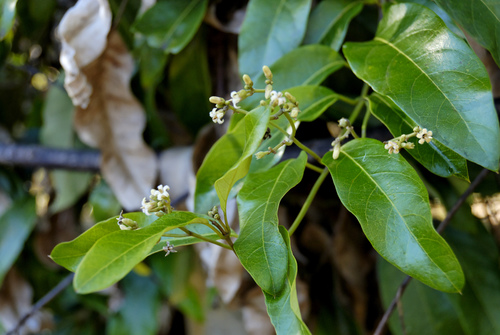
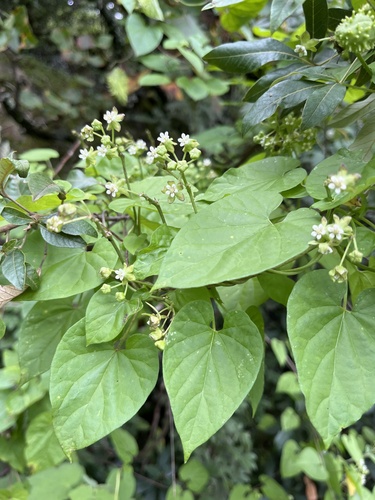
The plant produces sweetly-scented white flowers.
Propagation
Seed and Root suckers.
Other Uses
Latex String. Other uses rating: Low (2/5). Other Uses: The stem produces a white latex, which is tapped and used for making balls. The stems are flexible and used for ropes.
Synonyms
Also Known As
Other Names: Macava, Macera, Mbohoya, Mbooya, Mtoria, Mtowe, Muhonga, Muhonga-udide, Mutiele, Mutongazi, Mutungazi, Rava, Vibooya, Vitoja, Vitoria.