Ancylobothrys scandens
(Schum. & Thonn.) Pichon
Obomene
wikimedia· cc0
Wikimedia Commons - NMNH
Description
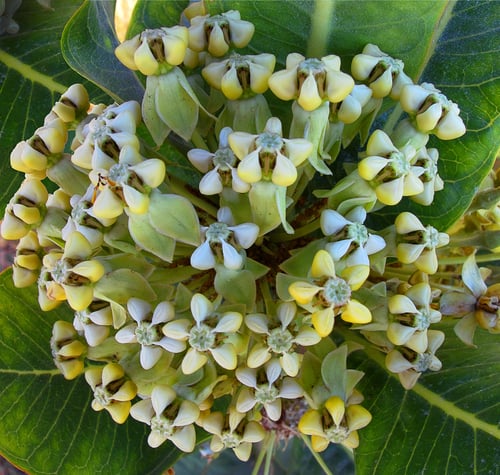
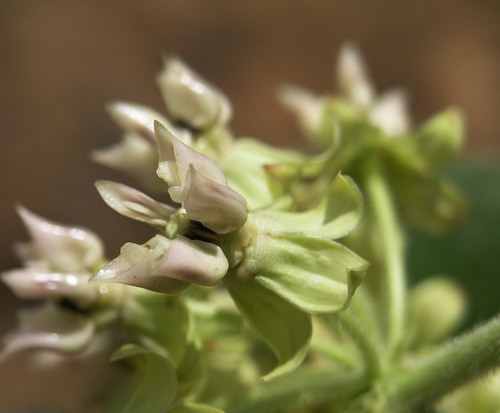
A climber. It can be 20 m long and 50 cm around. The leaves are oblong or broadly sword shaped. They are dark green and shiny above. The flowers are in dense clusters without stalks. The fruit is round and about 4-5 cm across.
Edible Uses
Fruit - raw. A somewhat apricot-like flavour. The fruit is a yellow, orange, or red, subglobose berry 2 - 5cm in diameter, containing 2 - 10 relatively large seeds.
Distribution
It is a tropical plant. It grows in coastal regions in central Africa.
Where It Grows
Africa, Angola, Burundi, Cameroon, Central Africa, Central African Republic, CAR, Congo, Côte d'Ivoire, Ghana, Guinea, Guinée, Ivory Coast, Nigeria, West Africa,
Cultivation
Flowering and fruiting are probably usually scattered over the year.
Production
Plants flower in August.
Synonyms
References (10)
- Abbiw, D.K., 1990, Useful Plants of Ghana. West African uses of wild and cultivated plants. Intermediate Technology Publications and the Royal Botanic Gardens, Kew. p 46
- Bircher, A. G. & Bircher, W. H., 2000, Encyclopedia of Fruit Trees and Edible Flowering Plants in Egypt and the Subtropics. AUC Press. p 27
- Burkill, H. M., 1985, The useful plants of west tropical Africa, Vol. 1. Kew.
- Dalziel, J. M., 1937, The Useful plants of west tropical Africa. Crown Agents for the Colonies London.
- Global Plants JSTOR
Show all 10 references Hide references
- Harris, D. J., 2002, The vascular plants of the Dzanga-Sangha Reserve, Central African Republic. National Botanic Garden of Belgium, 2002. – 274 pages p 49
- Jardin, C., 1970, List of Foods Used In Africa, FAO Nutrition Information Document Series No 2.p 120
- Peters, C. R., O'Brien, E. M., and Drummond, R.B., 1992, Edible Wild plants of Sub-saharan Africa. Kew. p 57
- Vivien, J., & Faure, J.J., 1996, Fruitiers Sauvages d'Afrique. Especes du Cameroun. CTA p 53
- World Checklist of Useful Plant Species 2020. Royal Botanic Gardens, Kew