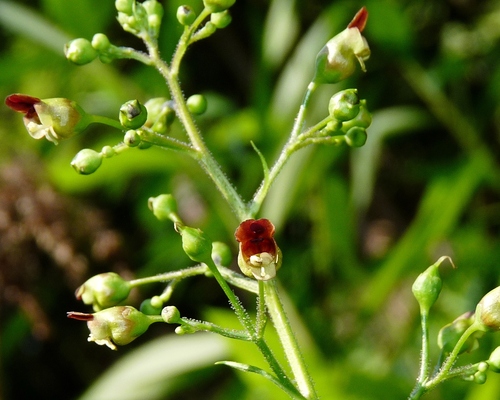
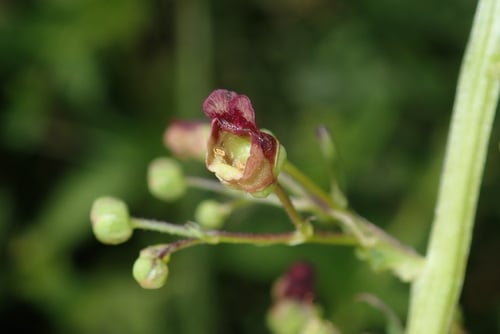
Verbascum thapsus
L.
Great Mullein, Common mullein, Aaron's Rod, Flannel Plant, Hag Taper, Mullein, Torches, Velvet Plant
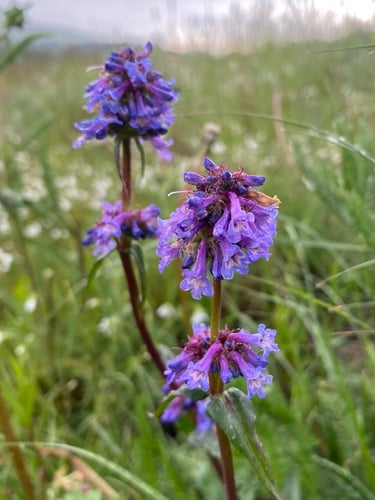
iNaturalist· cc-by-nc
(c) adrienne alms, some rights reserved (CC BY-NC), uploaded by adrienne alms
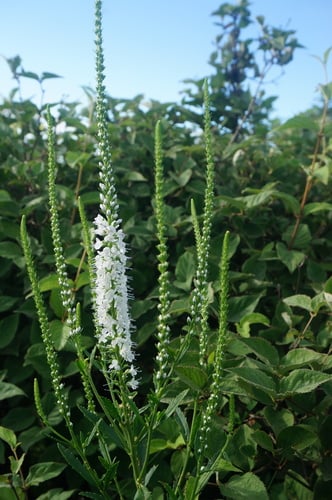
iNaturalist· cc-by-nc
(c) Svetlana Nesterova, some rights reserved (CC BY-NC), uploaded by Svetlana Nesterova
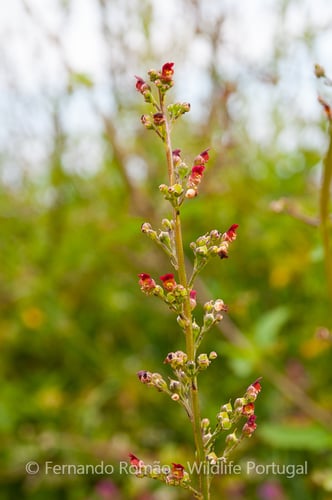
iNaturalist· cc-by
(c) Wendy McCrady, some rights reserved (CC BY), uploaded by Wendy McCrady
Description
Verbascum thapsus is a BIENNIAL growing to 1.8 m (6ft) at a fast rate. See above for USDA hardiness. It is hardy to UK zone 3 and is not frost tender. It is in flower from June to August, and the seeds ripen from August to September. The species is hermaphrodite (has both male and female organs) and is pollinated by Flies, Lepidoptera (Moths & Butterflies). The plant is self-fertile. Suitable for: light (sandy), medium (loamy) and heavy (clay) soils and prefers well-drained soil. Suitable pH: mildly acid, neutral and basic (mildly alkaline) soils and can grow in very alkaline soils. It cannot grow in the shade. It prefers dry or moist soil. The plant can tolerates strong winds but not maritime exposure.
Edible Uses
An aromatic, slightly bitter tea can be made by infusing the dried leaves in boiling water for 5 - 10 minutes. A sweeter tea can be made by infusing the fresh or dried flowers.
Medicinal Uses
Anodyne Antiseptic Astringent Demulcent Emollient Expectorant Homeopathy Narcotic Odontalgic Vulnerary. Great mullein is a commonly used domestic herbal remedy, valued for its efficacy in the treatment of pectoral complaints. It acts by reducing the formation of mucus and stimulating the coughing up of phlegm, and is a specific treatment for tracheitis and bronchitis. The leaves and the flowers are anodyne, anti-inflammatory, antiseptic, antispasmodic, astringent, demulcent, diuretic, emollient, expectorant and vulnerary[4, 7, 13, 21, 46, 53, 165, 222]. An infusion is taken internally in the treatment of a wide range of chest complaints and also to treat diarrhoea. The plant combines well with other expectorants such as coltsfoot (Tussilago farfara) and thyme (Thymus vulgaris). Externally, a poultice of the leaves is a good healer of wounds and is also applied to ulcers, tumours and piles. Any preparation made from the leaves needs to be carefully strained in order to remove the small hairs which can be an irritant. The plant is harvested when in flower and is dried for later use. An infusion of the flowers in olive oil is used as earache drops, or as a local application in the treatment of piles and other mucous membrane inflammations. This infusion is also strongly bactericidal. A decoction of the roots is said to alleviate toothache and also relieve cramps and convulsions. The juice of the plant and powder made from the dried roots is said to quickly remove rough warts when rubbed on them. It is not thought to be so useful for smooth warts. The seeds are slightly narcotic and also contain saponins. A poultice made from the seeds and leaves is used to draw out splinters. A decoction of the seeds is used to soothe chilblains and chapped skin. A homeopathic remedy is made from the fresh leaves. It is used in the treatment of long-standing headaches accompanied with oppression of the ear.
Known Hazards
The leaves contain rotenone and coumarin, though the quantities are not given. Rotenone is used as an insecticide and coumarin can prevent the blood from clotting. Hairs on the leaves can act as an irritant.
Distribution
Europe, including Britain, from Norway south and east to Spain, temperate Asia to China.
Where It Grows
TEMPERATE ASIA: Afghanistan, Cyprus, Iran, Israel, Jordan, Lebanon, Syria, Turkey, Russian Federation-Ciscaucasia (Ciscaucasia), Armenia, Azerbaijan, Georgia, Russian Federation (Dagestan), Russian Federation-Eastern Siberia (Eastern Siberia), Russian Federation (Altay), Kazakhstan, Kyrgyzstan, Tajikistan, Turkmenistan, China (Zhejiang Sheng, Jiangsu Sheng, Sichuan Sheng, Yunnan Sheng, Xinjiang Uygur Zizhiqu, Xizang Zizhiqu) TROPICAL ASIA: Bhutan, India (north), Nepal, Pakistan EUROPE: Denmark, Finland, United Kingdom, Ireland, Norway, Sweden, Austria, Belgium, Switzerland, Czech Republic, Germany, Hungary, Netherlands, Poland, Slovakia, Russian Federation (European part), Belarus, Estonia, Lithuania, Latvia, Moldova, Ukraine (incl. Krym), Albania, Croatia, Italy (incl. Sardinia, Sicily), Romania, Serbia, Slovenia, Spain (incl. Baleares), France (incl. Corsica), Portugal AFRICA: Spain (Canarias (Tenerife)), Portugal (Madeira Islands), Algeria, Morocco
Cultivation
An easily grown plant, it succeeds in most well-drained soils, including dry ones, and prefers a sunny position. Dislikes shade and wet soils. Thrives on chalk. Prefers a light soil. Hybridizes with other members of this genus, though the progeny are usually sterile. A very ornamental plant, it often self-sows, especially on dry calcareous soils. In garden design, as well as the above-ground architecture of a plant, root structure considerations help in choosing plants that work together for their optimal soil requirements including nutrients and water. In garden design, as well as the above-ground architecture of a plant, root structure considerations help in choosing plants that work together for their optimal soil requirements including nutrients and water. Thick or swollen - fibrous or tap root.
Propagation
Seed - sow late spring to early summer in a cold frame and only just cover the seed. Germination usually takes place within 2 - 3 weeks. When they are large enough to handle, prick out the seedlings into individual pots and plant them out in late summer. The seed has a long viability.
Other Uses
Dye Insecticide Insulation Lighting Tinder Wick. A yellow dye is obtained from the flowers by boiling them in water. When used with dilute sulphuric acid they produce a rather permanent green dye, this becomes brown with the addition of alkalis. An infusion of the flowers is sometimes used to dye the hair a golden colour. The flowering stems can be dipped in wax and used as torches. The down on the leaves and stems makes an excellent tinder when quite dry. It is also used as an insulation in shoes to keep the feet warm and to make wicks for candle[1, 4, 13, 100, 115, 124]. One report says that the leaves contain rotenone, though it does not say in what quantity. Rotenone is used as an insecticide. Dynamic accumulator.
Also Known As
Great Mullein, Common mullein, Aaron's Rod, Flannel Plant, Hag Taper, Mullein, Torches, Velvet Plant