Penstemon procerus
Douglas ex Graham
Yellow penstemon
iNaturalist· cc-by
(c) Jason Alexander, some rights reserved (CC BY), uploaded by Jason Alexander
iNaturalist· cc-by-sa
(c) J Brew, some rights reserved (CC BY-SA), uploaded by J Brew
iNaturalist· cc-by
(c) Steve Matson, some rights reserved (CC BY), uploaded by Steve Matson
Summary
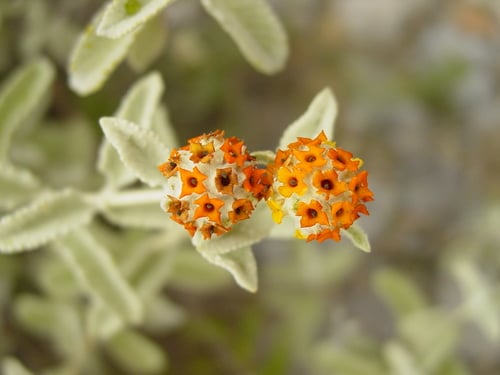
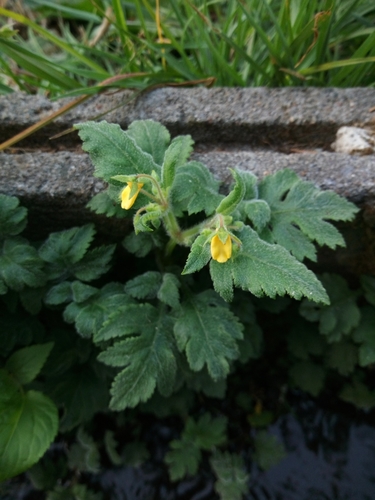
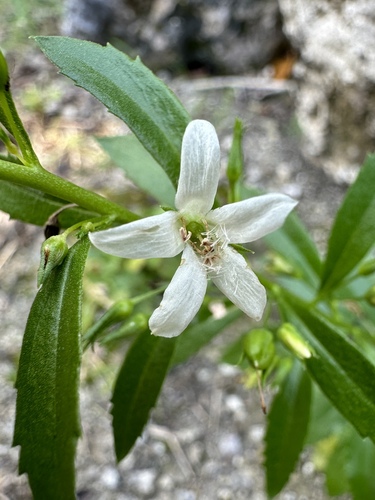
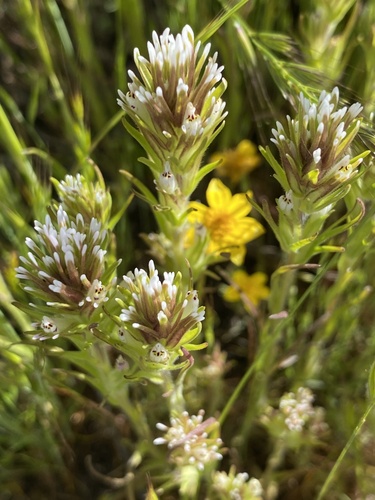
Source: WikipediaPenstemon procerus is a species of penstemon known by the common name littleflower penstemon. It is native to western North America from Alaska to California to Colorado, as far east in Canada as Manitoba, where it grows in mountain habitat such as meadows, often in alpine climates. This herbaceous perennial forms mats of herbage with some erect stems reaching about 40 centimeters in maximum height. There are several varieties which vary in morphology, some more decumbent than others, some of which are known commonly as pincushion penstemons for their matted forms. In general, the leaves are lance-shaped to oval, plentiful around the base of the plant with smaller ones arranged in opposite pairs along the stem. The inflorescence is made up of one or more clusters of tubular flowers with lipped, lobed mouths. Each flower is no more than one centimeter in length and is purple to blue in color, often with a white throat. The outside of the flower is generally hairless, while the inside may be lined with white or yellowish hairs.
Description
A perennial growing to 0.4m tall and 0.2m wide, hardy to UK zone 3. Flowers July to August. Hermaphroditic. Grows in light, medium, or heavy soils across mildly acid to mildly alkaline pH. Tolerates semi-shade to full sun and both dry and moist soil conditions.
Edible Uses
A tea-like beverage is made by boiling the dried leaves and stems.
Traditional Uses
The dried leaves are boiled to make tea.
This uses section is brief — help expand it
Medicinal Uses
None known
Distribution
It is a temperate plant.
Where It Grows
North America, Slovenia, USA,
Cultivation
Succeeds in ordinary rich garden soils so long as they are well-drained. Succeeds in dry soils. Prefers a position in full sun. Although very cold hardy, this species does not like winter wet and therefore is best given some protection in the winter or a position such as at the foot of a dry wall.
Propagation
Sow seed in late winter in a greenhouse. Prick seedlings into individual pots when large enough to handle and plant out in late spring. Alternatively, sow in early summer in a greenhouse, overwinter the seedlings under glass, and plant out the following spring. Division can be done in autumn, and cuttings can be taken throughout the growing season, with August and September being the most suitable time.
Other Uses
None known Special Uses
Synonyms
Also Known As
Littleflower penstemon, Pincushion beardtongue
References (4)
- Edinburgh New Philos. J. 7:348. 1829
- Facciola, S., 1998, Cornucopia 2: a Source Book of Edible Plants. Kampong Publications, p 230
- http://www.botanic-gardens-ljubljana.com/en/plants
- Kermath, B. M., et al, 2014, Food Plants in the Americas: A survey of the domesticated, cultivated and wild plants used for Human food in North, Central and South America and the Caribbean. On line draft. p 627