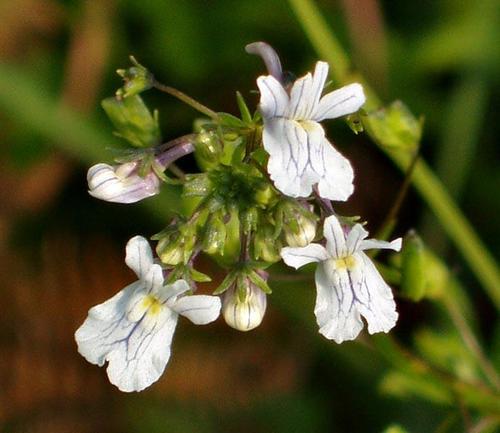
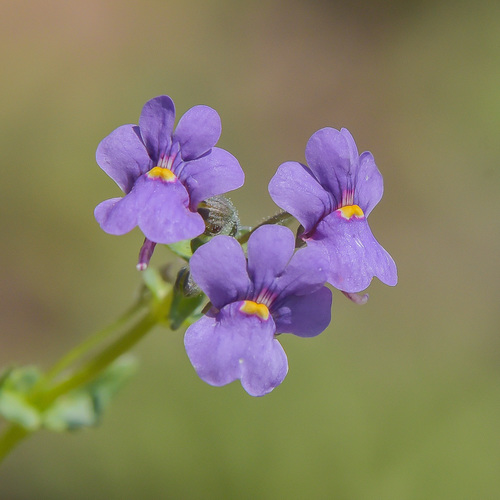
Scrophularia umbrosa
Dumort.
Water betony
iNaturalist· cc-by-nc
(c) Dirk Mezger, some rights reserved (CC BY-NC), uploaded by Dirk Mezger
iNaturalist· cc-by-nc
(c) Almantas Kulbis, some rights reserved (CC BY-NC), uploaded by Almantas Kulbis
iNaturalist· cc-by-nc-sa
(c) Jean Guérin, some rights reserved (CC BY-NC-SA)
Summary
Source: WikipediaA fast-growing perennial reaching 5 feet tall. Hardy to UK zone 7. Blooms June to September with ripening seeds July to September. Hermaphroditic flowers pollinated by bees and wasps. Notable for attracting wildlife. Accommodates sandy, loamy, or clay soils with mildly acidic to basic pH. Grows in semi-shade or full sun and prefers moist to wet conditions.
Description
A herb. It grows 50-130 cm tall. The stems are 4 sided and 8 mm across. They have narrow wings and a white pith that becomes hollow with age. The leaf stalks are 5 cm long. The leaves are oval and 7-10 cm long with shallow teeth along the edge. The flowers are green, purplish yellow or brown.
Edible Uses
The root can be cooked, though its edibility must be considered doubtful.
Medicinal Uses
The leaves are detergent and vulnerary, harvested as the plant comes into flower and usable fresh or dried. Water betony has a good reputation as a wound herb, applied externally as a poultice or taken as a decoction. It is said to share similar medicinal properties to knotted figwort (S. nodosa): supporting detoxification, treating skin disorders, and acting as an alterative, anodyne, anti-inflammatory, diuretic, mildly purgative, and stimulant. A decoction applied externally addresses sprains, swellings, burns, inflammations, chronic skin diseases, scrofulous sores, and gangrene. The leaves may also be applied fresh or made into an ointment. Internally, uses include chronic skin diseases such as eczema, psoriasis, and pruritis, mastitis, swollen lymph nodes, and poor circulation. It should not be prescribed for patients with heart conditions. The root is anthelmintic.
Known Hazards
The plant is probably poisonous to cows.
Distribution
It is a temperate plant. It grows in forests and along streams between 900-1,700 m above sea level in western China.
Where It Grows
Asia, Belgium, Britain, Central Asia, China, Europe, Luxembourg, Mongolia, Russia, Slovenia, Spain, Tajikistan, Turkey,
Cultivation
Succeeds in most moist soils. A good bee plant.
Propagation
Sow seed in spring or autumn in a cold frame. Prick seedlings into individual pots when large enough to handle and plant out in summer. With sufficient seed, sow outdoors in situ in autumn or spring. Divide in spring; larger divisions can go directly into permanent positions. Smaller divisions are best potted up and grown on in a lightly shaded cold frame until well established before planting out in summer.
Other Uses
None known
Synonyms
Also Known As
Krilatačrnobina
References (4)
- Fl. belg. 37. 1827
- http://www.botanic-gardens-ljubljana.com/en/plants
- Plants for a Future database, The Field, Penpol, Lostwithiel, Cornwall, PL22 0NG, UK. http://www.scs.leeds.ac.uk/pfaf/
- Urgamal, M., Oyuntsetseg, B., Nyambayar, D. & Dulamsuren, Ch. 2014. Conspectus of the vascular plants of Mongolia. (Editors: Sanchir, Ch. & Jamsran, Ts.). Ulaanbaatar, Mongolia. “Admon“ Press. 334pp. (p. 79-90).