Euphorbia thymifolia
L.
Red Caustic creeper
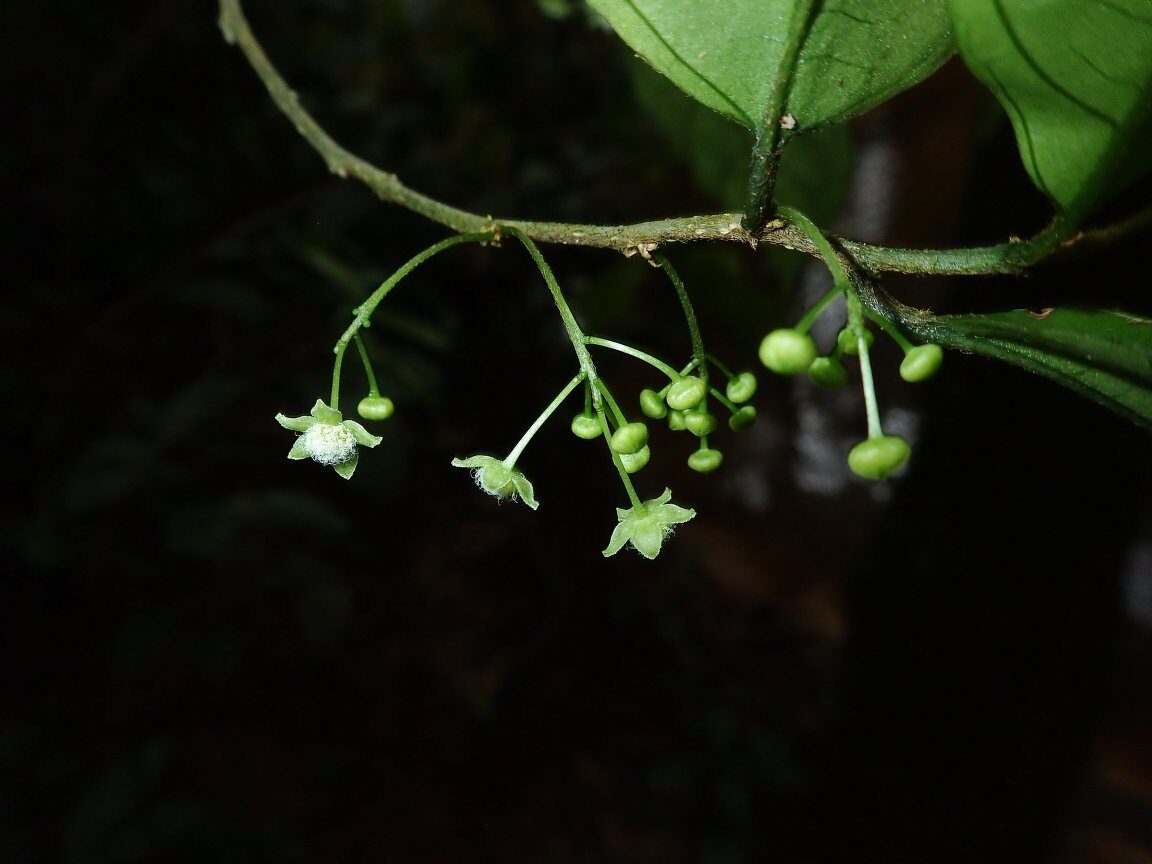
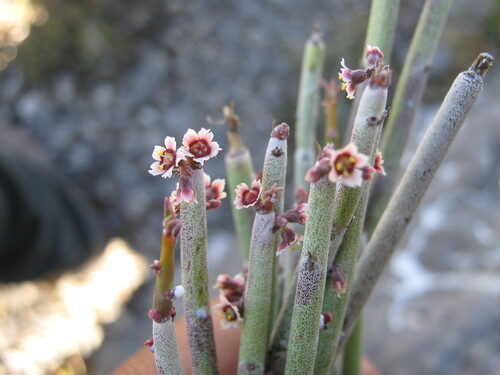
iNaturalist· cc-by-nc
(c) James Bailey, some rights reserved (CC BY-NC), uploaded by James Bailey
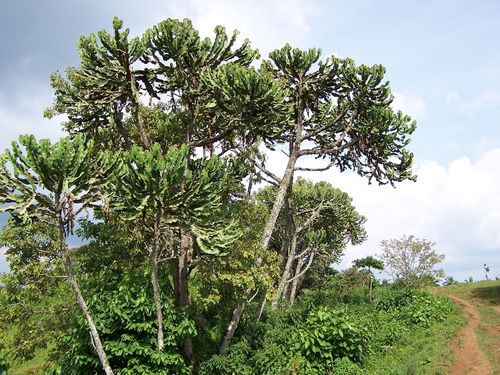
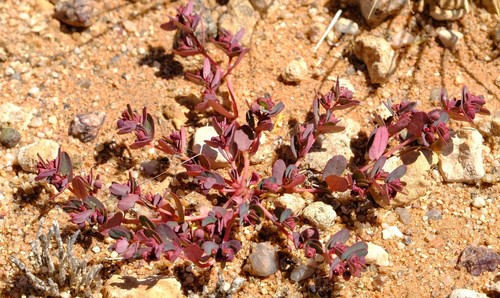
iNaturalist· cc-by-nc-sa
(c) Dinesh Valke, some rights reserved (CC BY-NC-SA)
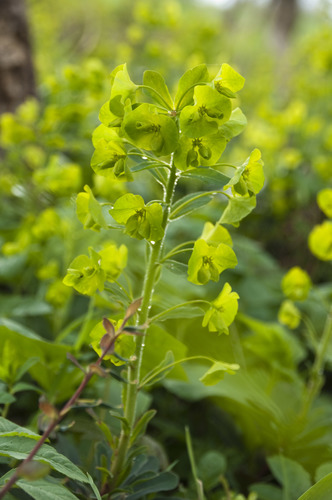
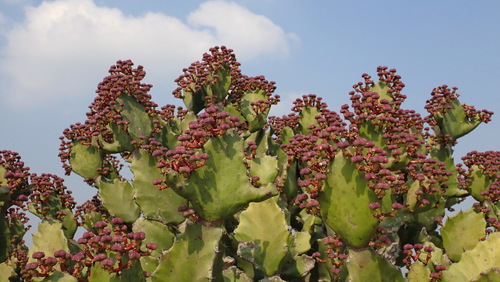
iNaturalist· cc-by-nc
(c) John D Reynolds, some rights reserved (CC BY-NC), uploaded by John D Reynolds
Summary
Source: WikipediaEuphorbia thymifolia, the red caustic-creeper, is a prostrate annual herb of the family Euphorbiaceae. Native to tropical and subtropical America, it grows in seasonally dry tropical biomes and produces milky sap. The plant has velvet-hairy red stems up to 25 cm long, with small ovate leaves and minute cyathia flowers in the leaf axils. Widely used as a traditional medicine in Africa and Asia, it is also harvested as food and traded in local markets.
Description
An annual spreading and much branched slender herb up to 20 cm long. The stems are usually reddish. The leaves are opposite and 4 to 7 mm long. The flowers are small and not easily noticed crowded on short branchlets in the axils of the leaves.
Edible Uses
The leaves and young shoots are edible when cooked.
Traditional Uses
The leaves and young shoots are edible cooked. Caution: All Euphorbias or spurges have irritating sap and many have chemicals that can cause cancer.
This uses section is brief — help expand it
Medicinal Uses
The plant is widely used in Africa in decoction or infusion as a treatment for dysentery, enteritis, diarrhoea and venereal diseases. The plant is rich in medically active compounds. From an aqueous acetone extract of the dried whole plant a range of hydrolysable tannins have been isolated as well as several flavonoids. Both flavonoids and tannins have been reported to have anti-inflammatory, analgesic, haemostatic, antithrombic, antioxidant and vasoprotective actions. The flavonoids furthermore have antiviral, anti-allergic, anti-inflammatory, and antitumour properties. The essential oil from the leaves has a pungent odour and irritating taste, and contains cymol, carvacrol, limonene, sesquiterpenes and salicylic acid. An extract prepared with 1.5% HCl inhibited the growth of gram-positive (Bacillus subtilis) and gram-negative (Escherichia coli) bacteria. Ethyl acetate and chloroform extracts of the aerial parts of the plant inhibited the growth of Escherichia coli and Shigella flexneri in vitro. The ethyl acetate extract was also found to be active against Shigella flexneri in vivo. The ethanol and water extracts of the whole plant showed significant antifungal activity against the dermatophytes Trichophyton mentagrophytes and Trichophyton verrucosum in vitro and in vivo in calves. The ether extract of the whole plant showed significant activity against the Sarcoptes scabei mite, which causes scabies. Several extracts from the whole plant as well as several pure compounds have been shown to possess antioxidant activities. Some have also shown significant activity against Herpes simplex virus type 2 in vitro in a dose-dependent manner. Several derivatives of the tannin galloyl-β-D-glucose show significant cytotoxicity against a range of human tumour cell lines. In pot tests, infection of Vigna radiata by tomato spotted wilt virus was prevented by spraying the plants first with water extracts of whole Euphorbia thymifolia plants. The essential oil is put into medicinal soaps for treatment of erysipelas, sprays to keep off flies and mosquitoes, and a vermifuge for dogs. The dried leaves and seeds are slightly aromatic and are used as a stimulant, astringent, anthelmintic and laxative. Plant and seed decoctions are also taken as a galactagogue, and to treat hypertension and venereal diseases. An infusion of the leafy stems is taken as a bitter diuretic. The leaves are used in a decoction to treat cystitis and kidney ailments. A maceration of the dried leaves is drunk for facilitating childbirth; it is claimed to stimulate contractions of the uterus. The leaves are pulped with water and applied to the head to treat headache. The ground fresh leaves are rubbed in to treat intercostal pain. A decoction of the whole plant is drunk to treat lung problems, fever, influenza, hypertension, absence of menstruation and venereal diseases. A decoction of fresh aerial parts is applied externally to treat dermatitis, measles, eczema and skin inflammations. The decoction is also used as an eye wash to treat conjunctivitis. Fresh crushed plants are applied as a plaster for healing sprains. Crushed plants are rubbed on the scalp for strengthening the skull bones of children to enable them to carry loads on their heads as adults, and also as mild irritating rubefacient products to treat alopecia. Women with heavy menstruation drink the latex as a tonic. The latex is applied externally to treat to warts and as a remedy for ringworm and scabies. It is used in the treatment of eye swellings, discharge and conjunctivitis.
Known Hazards
All Euphorbias have irritating sap. Many Euphorbia species contain chemicals that can cause cancer. Contact with the sap may irritate the skin.
Distribution
A tropical plant. A weed found throughout the Philippines in open waste places. In Argentina it grows below 500 m above sea level.
Where It Grows
Africa, Argentina, Asia, Australia, Brazil, Burkina Faso, Cambodia, Central America, China, Costa Rica, East Africa, Guiana, Guianas, Guyana, Hawaii, India, Indonesia, Malaysia, Maldives, Marquesas, Marshall Islands, Myanmar, Pacific, Pakistan, Papua New Guinea, PNG, Paraguay, Philippines, SE Asia, Sierra Leone, South Africa, South America, Suriname, Taiwan, Venezuela, West Africa, Zambia,
Cultivation
A common weed of cultivated and waste ground, often on sandy or gravelly soils, at elevations up to 1,650 metres. Euphorbia thymifolia grows very rapidly and completes its life cycle in 3 - 4 months; it can be found flowering and fruiting throughout the year in warm tropical conditions.
Other Uses
The essential oil is put into sprays to keep off flies and mosquitoes.
Notes
There are about 2000 Euphorbia species. Most Euphorbias have sap which irritates the skin.
Synonyms
Also Known As
Choti-dudhi, Ghakdidudhi, Golandrina, Laghuduhika, Maahiruhui, Patra-siju, Reddivari manubala, Shwetkeruee, Sittrapaladi, Thyme-leaved spurge
References (14)
- Ambasta, S.P. (Ed.), 2000, The Useful Plants of India. CSIR India. p 214
- Burkill, I.H., 1966, A Dictionary of the Economic Products of the Malay Peninsula. Ministry of Agriculture and Cooperatives, Kuala Lumpur, Malaysia. Vol 1 (A-H) p 997
- Flora of Pakistan. www.eFloras.org
- Fowler, D. G., 2007, Zambian Plants: Their Vernacular Names and Uses. Kew. p 79
- Henty, E.E., & Pritchard, G.S., 1973, Weeds of New Guinea and their control. Botany Bulletin No 7, Division of Botany, Lae, PNG. p 104
Show all 14 references Hide references
- Henty, E.E., 1980, Harmful Plants in Papua New Guinea. Botany Bulletin No 12. Division Botany, Lae, Papua New Guinea. p 52, 58
- Lazarides, M. & Hince, B., 1993, Handbook of Economic Plants of Australia, CSIRO. p 112
- Misra, S., 2020, Survey of edible plants for human consumption in south Odisha, India. Journal of Emerging Technologies and Innovative Research (JETIR) Vol. 7, Issue 12 p 278
- Monsalud, M.R., Tongacan, A.L., Lopez, F.R., & Lagrimas, M.Q., 1966, Edible Wild Plants in Philippine Forests. Philippine Journal of Science. p 465
- Singh, H.B., Arora R.K.,1978, Wild edible Plants of India. Indian Council of Agricultural Research, New Delhi. p 39
- Sp. pl. 1:454. 1753
- Sujanapal, P., & Sankaran, K. V., 2016, Common Plants of Maldives. FAO & Kerala FRI, p 126
- WATT,
- World Checklist of Useful Plant Species 2020. Royal Botanic Gardens, Kew