Hura crepitans
L.
Sandbox hura
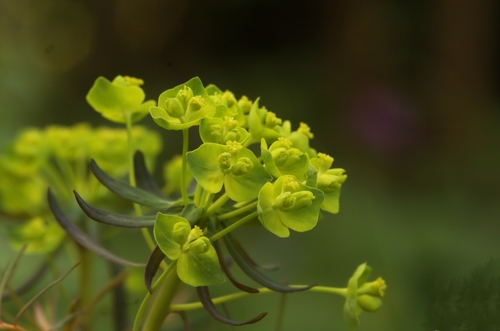
iNaturalist· cc-by-nc
(c) Elendil Cocchi, some rights reserved (CC BY-NC), uploaded by Elendil Cocchi
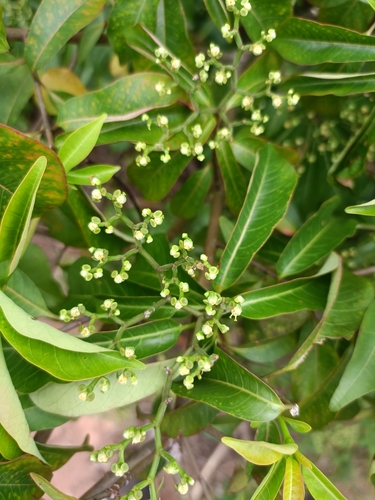
iNaturalist· cc-by-nc
(c) Luis Agosto, some rights reserved (CC BY-NC)
iNaturalist· cc-by-nc
(c) Luis Agosto, some rights reserved (CC BY-NC)
Summary
Source: WikipediaHura crepitans, known by the common names sandbox tree, possumwood, monkey no-climb, assacu (from Tupi asaku) and jabillo, is a species of evergreen tree in the family Euphorbiaceae, native to tropical regions of North and South America including the Amazon rainforest. It is also present in parts of Tanzania, where it is considered an invasive species. Because its fruit explodes when ripe, it has also received the colloquial nickname "dynamite tree".
Description
A large tree. It grows 25-60 m tall. The trunk and branches are spiny in young plants. It does not have buttresses. The leaves are heart shaped and have teeth. The side veins are straight and parallel. Broken leaves have a toxic sap. The flowers are in a cone shaped stalked head. The flowers are deep red. The fruit is a small capsule. It starts green but turns brown. The seed pod explodes when ripe.
Edible Uses
The flowers have been used to make jam.
Traditional Uses
The flowers have been used to make jam. Caution: The latex of the tree can cause blindness.
This uses section is brief — help expand it
Medicinal Uses
The leaves, bark, fruits, seeds, seed oil, and latex are all used medicinally. The bark is emetic and purgative. The sap in bark is toxic. Though it is said to be a remedy for leprosy. The milky sap is caustic and irritant. An infusion of the leaves is used as a body-rub for treating leprosy. The seed contains a glucosamine lectin having mitogenic and haemaglutinating properties. A viscous oil obtained from the seed is a very strong (drastic) purgative and emetic.
Known Hazards
Its wood is light enough that indigenous people used it to make canoes. Fishermen have been said to use the milky, caustic sap from this tree to poison fish. The Caribs made arrow poison from its sap. The wood is used for furniture under the name "hura". In a time when most writing pens left wet ink on the page, the trees' unripe seed capsules were sawn in half to make decorative boxes (also called pounce pots) to hold the "sand" used to dry the ink, hence the name "sandbox tree". Extracts from this species have also been documented in herbal remedies. The seeds contain an oil that is toxic if ingested but can be made into biodiesel and soap; the starchy leftovers after extracting the oil from the seeds can be made into animal feed after cooking.
Distribution
It is a tropical plant. It grows at low elevations in both dry and moist zones. In XTBG Yunnan.
Where It Grows
Africa, Amazon, Asia, Australia, Barbados, Belize, Benin, Bolivia, Brazil, Burkina Faso, Cameroon, Central Africa, Central African Republic, CAR, Central America, China, Colombia, Congo DR, Costa Rica, Côte d'Ivoire, Cuba, Dominican Republic, El Salvador, Ghana, Guatemala, Guiana, Guianas, Guyana, Haiti, Honduras, Indochina, Indonesia, Ivory Coast, Laos, Madagascar, Mexico, Myanmar, Nicaragua, Nigeria, North America, Panama, Peru, Puerto Rico, SE Asia, Senegal, Singapore, South America*, Sri Lanka, St. Kitts and Nevis, Suriname, Tanzania, Trinidad & Tobago, Venezuela, West Africa, West Indies,
Cultivation
Plants can be grown from seeds and cuttings.
Propagation
Seed - best sown as soon as it is ripe in a partially shaded position in individual containers. A high germination rate can normally be expected, with the seed sprouting within 30 - 40 days. They will be ready to plant out 4 - 5 months later. Large cuttings.
Other Uses
The woody shells of unripe fruits are sometimes used as small boxes. They were at one time very fashionable accessories to the writing desk, used as sandboxes. These were containers of a fine sand which was traditionally sprinkled over wet ink in order to dry it. When filled with sand they are also used as paperweights. The sandbox was made by harvesting the young fruit and holding the sections together with wire or by pouring molten lead into the centre before decorating and polishing it. The heartwood is pale, yellowish-brown to dark brown, indistinct purplish or greenish streaks and a slight ribbon stripe on the radial surface often give the wood an attractive figure. The heartwood varies from indistinct to, at times, sharply demarcated from the 15 - 25cm wide band of yellowish-white sapwood. The texture is fine to medium; the grain is straight to interlocked, but more often interlocked; the lustre is high; there is no distinctive odour, but a caustic taste is sometimes mentioned. The wood is moderately soft and light in weight, moderately durable but very susceptible to termite damage. It is somewhat slow to season, with a high risk of checking and distortion; once dry it is stable in service. The wood has a fairly high blunting effect, so stellite-tipped and tungsten carbide tools are usually recommended; it takes stain well; nailing and screwing are poor to satisfactorily; gluing is correct. It is utilized for general carpentry, interior construction, boxes, crates, veneers and plywood, furniture and joinery. Traditionally it has been used to make dugout canoes. Grown as a shade tree in plantations of cacao etc, or as a support for vanilla plants.
Synonyms
Also Known As
Abru koyin, Ceibo, Dimbo, Havillo, Hazombary, Nuno, Pohon hura roda, Tronador
References (8)
- Burkill, H. M., 1985, The useful plants of west tropical Africa, Vol. 2. Kew.
- Condit, R., et al, 2011, Trees of Panama and Costa Rica. Princeton Field Guides. p 168
- Grandtner, M. M., 2008, World Dictionary of Trees. Wood and Forest Science Department. Laval University, Quebec, Qc Canada. (Internet database http://www.wdt.qc.ca)
- Grandtner, M. M. & Chevrette, J., 2013, Dictionary of Trees, Volume 2: South America: Nomenclature, Taxonomy and Ecology. Academic Press p 310
- Latham, P., 2004, Useful Plants of Bas-Congo province. Salvation Army & DFID p 152
Show all 8 references Hide references
- Plants of Haiti Smithsonian Institute http://botany.si.edu/antilles/West Indies
- Sukarya, D. G., (Ed.) 2013, 3,500 Plant Species of the Botanic Gardens of Indonesia. LIPI p 332
- World Checklist of Useful Plant Species 2020. Royal Botanic Gardens, Kew