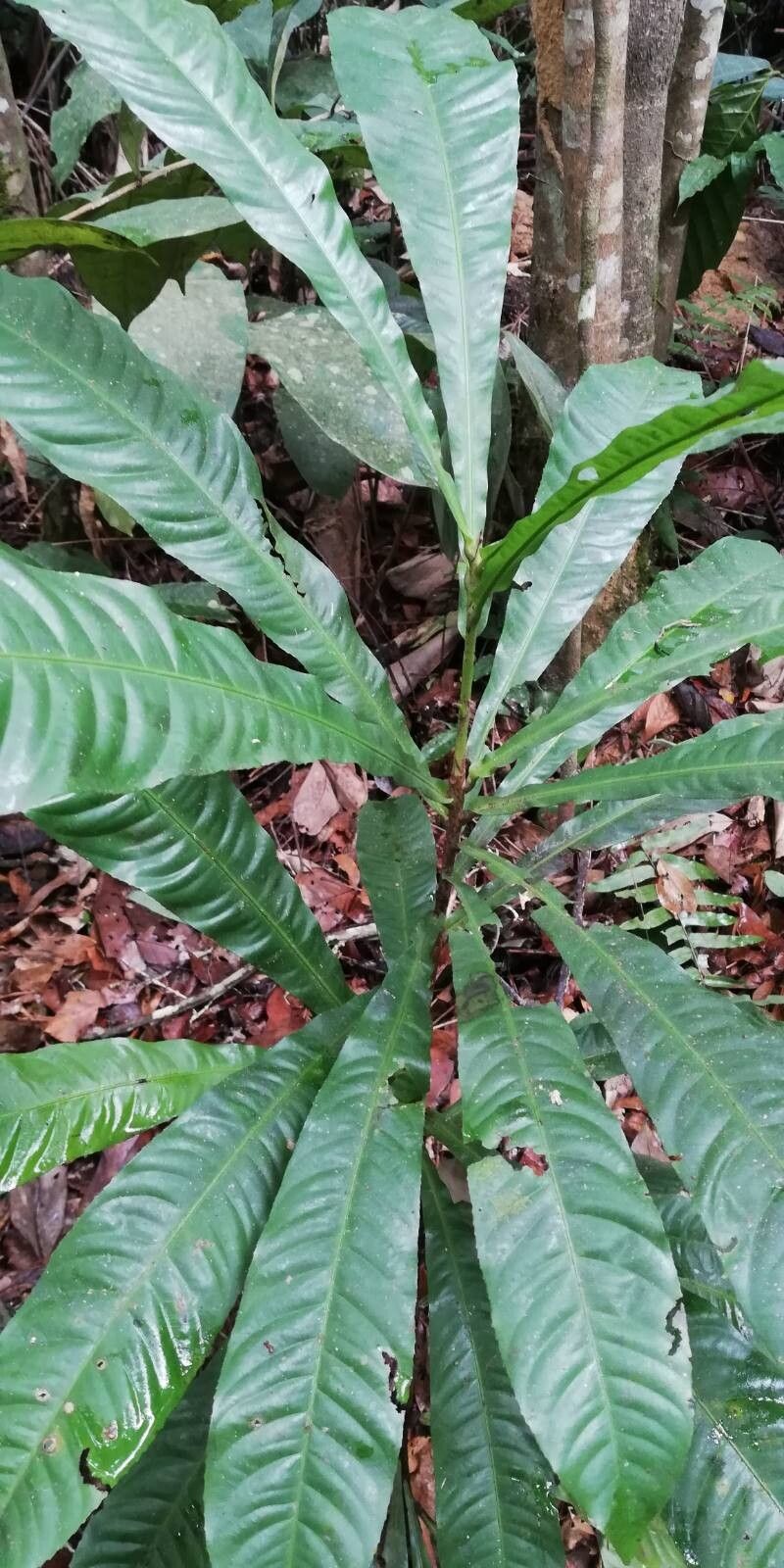
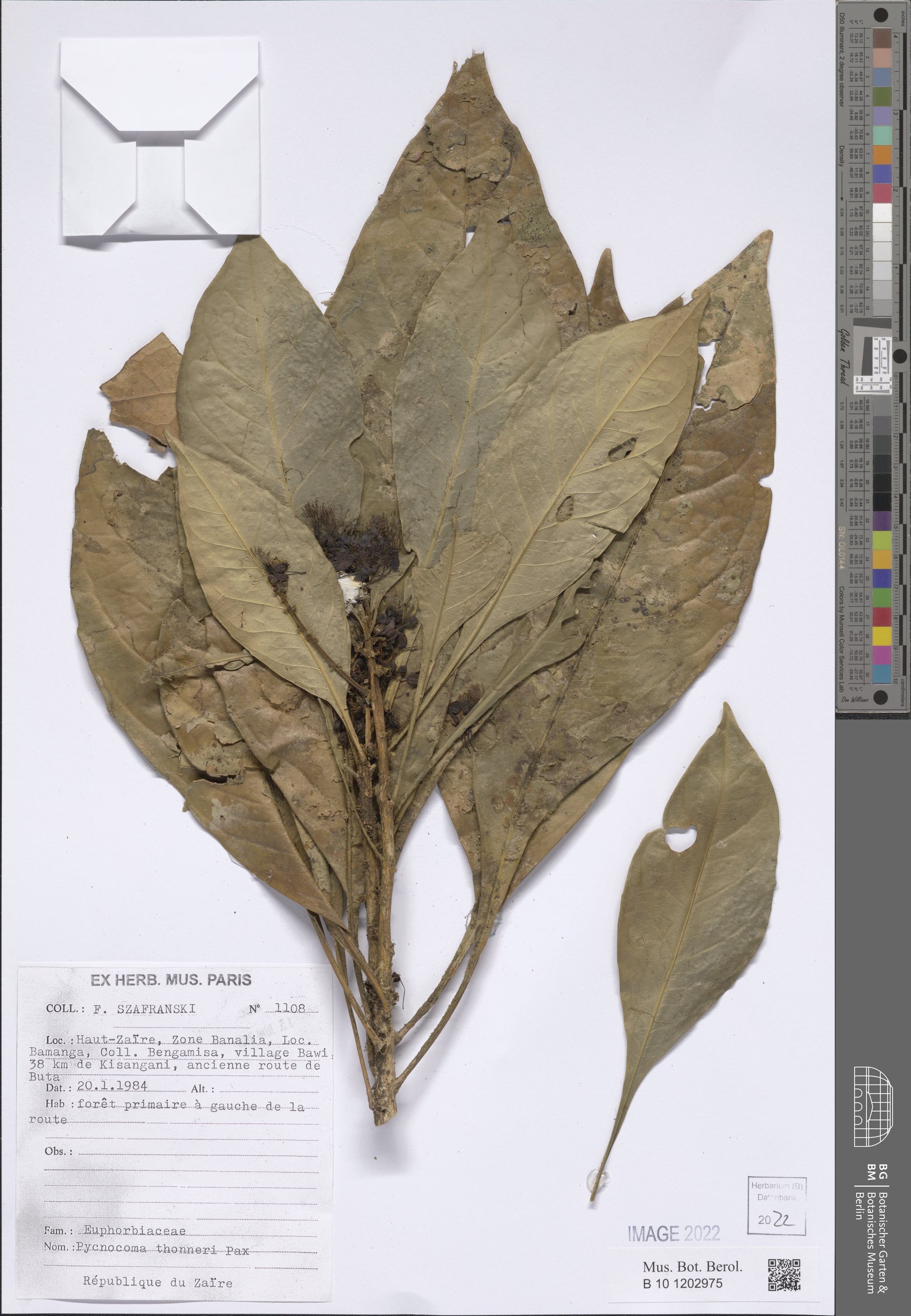
Hevea pauciflora var. coriacea
Ducke
gbif· cc-by-nc-sa
MBG
gbif· cc-by-nc-sa
MBG
gbif· cc-by
The New York Botanical Garden
Summary
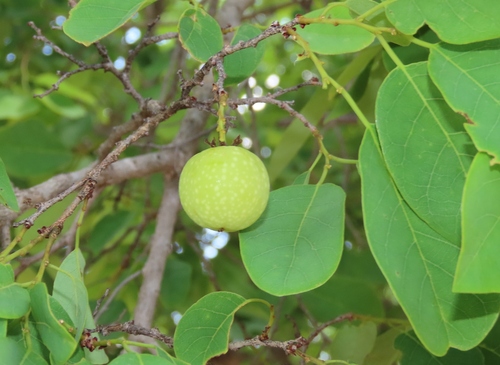
Source: WikipediaHevea pauciflora is a species of rubber tree in the genus Hevea, belonging to the family Euphorbiaceae. It is native to the rainforests of Venezuela, the Guyanas, northern Brazil, Colombia and Peru. It grows on slopes and high river banks where it is not seasonally inundated. H. pauciflora is a small evergreen tree growing to a height of about 18 m (60 ft). The specific epithet pauciflora is Latin for 'few-flowered'. It is sometimes tapped for rubber production but the latex is low in quality, being mixed with much resin. This tree has been used in breeding programmes, for example in Malaysia, to increase the disease resistance and improve the growth qualities of Hevea brasiliensis.
Description
A tropical tree in the spurge family (Euphorbiaceae) with edible seeds.
This description is brief — help expand it
Edible Uses
The seeds are eaten.
Distribution
It is a tropical plant.
Where It Grows
Brazil, Colombia, Guyana, Peru, South America, Suriname, Venezuela,
Synonyms
Also Known As
Caucho banero, Goma, Goma concha blanca, Shiringa, Shiringa maposa
References (1)
- Grandtner, M. M. & Chevrette, J., 2013, Dictionary of Trees, Volume 2: South America: Nomenclature, Taxonomy and Ecology. Academic Press p 300