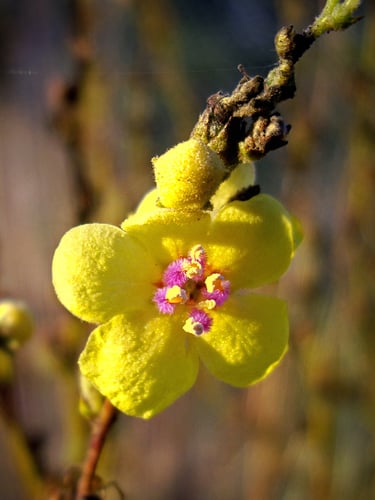
Mimulus moschatus
Douglas. ex Lindl.
Musk Monkey Flower, Muskflower
gbif· cc-by-nc
President and Fellows of Harvard College
gbif· cc-by
GBIF
gbif· cc-by
GBIF
Description
Mimulus moschatus is a PERENNIAL growing to 0.3 m (1ft) by 0.6 m (2ft in). See above for USDA hardiness. It is hardy to UK zone 7. It is in flower from July to August. Suitable for: light (sandy), medium (loamy) and heavy (clay) soils and can grow in heavy clay soil. Suitable pH: mildly acid, neutral and basic (mildly alkaline) soils. It can grow in semi-shade (light woodland) or no shade. It prefers moist or wet soil.
Edible Uses
Young plant - boiled and used for food.
Distribution
Western N. America - British Columbia to Montana and California. Naturalized in Britain.
Where It Grows
NORTHERN AMERICA: Canada (Québec, Nova Scotia, Ontario, Prince Edward Island, New Brunswick, Newfoundland and Labrador, Alberta (south), British Columbia (south)), United States (Connecticut, Massachusetts, Michigan, New Hampshire, New Jersey, New York, Pennsylvania, Vermont, West Virginia, Colorado (northwest), Idaho, Montana (west), Oregon, Washington, Wyoming (west), California, Nevada (north), Utah (north))
Cultivation
Prefers rather moist places such as damp borders, margins of streams and boggy spots. Grows well in heavy clay soils. Thrives in full sun so long as the soil does not dry out, otherwise it is best grown in partial shade. Grows well in shallow water, but it can be invasive. Hardy to at least -15°c. There are some named varieties, selected for their ornamental value. All parts of the plant have a musky scent, though the form naturalized in Britain, and most cultivars, appear to be scentless.
Propagation
Seed - sow spring in a greenhouse and only lightly cover the seed. When they are large enough to handle, prick the seedlings out into individual pots and plant them out in the summer. If you have sufficient seed it can also be sown in situ in late spring after the last expected frosts. Division in spring. Very easy, large divisions can be planted out direct into their permanent positions. We have found that it is better to pot up the smaller divisions and grow them on in light shade in a cold frame until they are well established before planting them out in late spring or early summer. Cuttings of softwood, 5cm long in spring or summer.