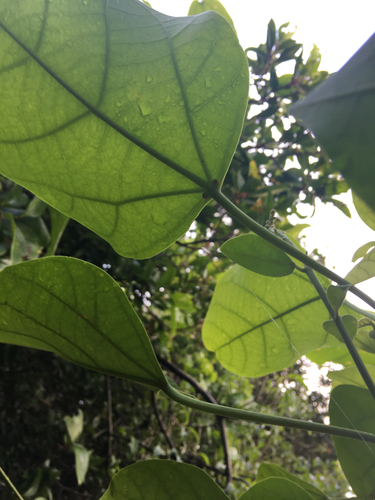
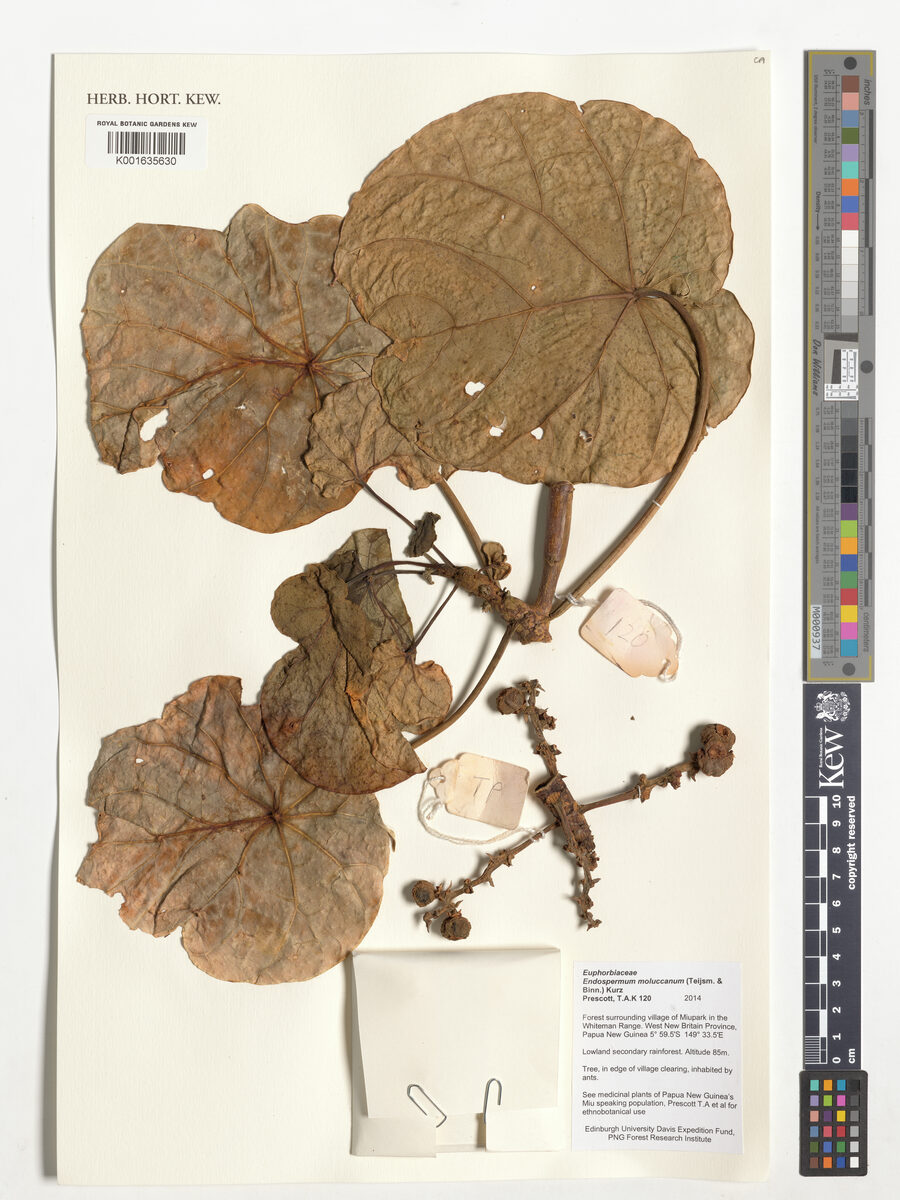
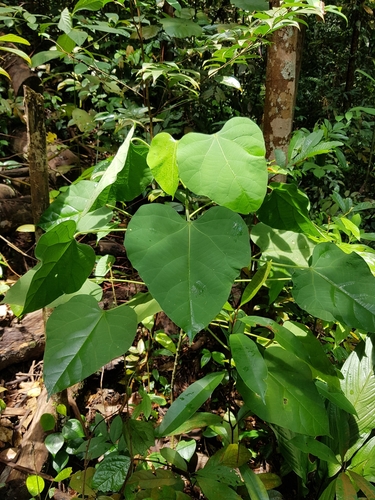
Euphorbia antiquorum
L.
Malayan tree spurge
iNaturalist· cc-by-nc
(c) Leoš Smutný a Antonín Horáček, some rights reserved (CC BY-NC), uploaded by Leoš Smutný a Antonín Horáček
iNaturalist· cc-by
(c) Siddarth Machado, some rights reserved (CC BY), uploaded by Siddarth Machado
iNaturalist· cc-by-nc
(c) T. VENUGOPAL REDDY, some rights reserved (CC BY-NC), uploaded by T. VENUGOPAL REDDY
Summary
Source: WikipediaEuphorbia antiquorum, known as antique spurge and "Euphorbia of the Ancients", is a species of succulent plant in the family Euphorbiaceae. It is widespread throughout peninsular India, but its wild origin is obscure. Escaped or naturalized and widely cultivated in neighbouring regions, such as Burma, China, Bangladesh, India, Indonesia, Iran, Malaysia, Myanmar, Pakistan, Thailand, the Philippines, Sri Lanka, and Vietnam, and in many tropical zones worldwide. The juice of this plant is a potent ingredient for a mixture of wall plaster, according to the Samarāṅgaṇa Sūtradhāra, which is a Sanskrit treatise dealing with Śilpaśāstra (Hindu science of art and construction). This species is the type species of the genus Euphorbia. As most other succulent members of the genus Euphorbia, its trade is regulated under Appendix II of CITES.
Description
A succulent tree. It grows 8 m tall. It has stiff 3-6 angled branches. These have succulent tissue inside a woody layer. The leaves are small and fall. The spiny stipules remain.
Edible Uses
The leaves are eaten as a sweetmeat after being boiled, soaked in water for 2 hours, reboiled with sugar, and processed to remove the latex.
Traditional Uses
CAUTION: Plants in this group are somewhat poisonous. The latex is poisonous. A sweetmeat is made from the leaves. They are boiled, then soaked in water for 2 hours, then reboiled with sugar and the latex removed.
Medicinal Uses
The poisonous milky latex or other plant parts (e.g. root bark) are taken as a drastic purgative and induce vomiting. The latex is applied externally to swellings, boils, warts and other skin affections. When mixed with oil, it is used as a rubefacient embrocation for rheumatism. It may also be used to treat toothache, earache and asthma. The dried heartwood is an antipyretic. It is used in the treatment of dysentery, nervine diseases and dropsy. It is also used in applications to treat toothache. A saline extract of the stem shows antibiotic activity.
Known Hazards
The latex is poisonous and plants in this group are somewhat poisonous. Most Euphorbias have sap which irritates the skin.
Distribution
A tropical plant. It grows in drier places. It can be on rocky limestone hills. It grows up to 800 m above sea level. In Sichuan and Yunnan.
Where It Grows
Asia, Bangladesh, China, East Timor, Hawaii, India*, Indochina, Indonesia, Laos, Malaysia, Myanmar, Pacific, Pakistan, SE Asia, Sri Lanka, Thailand, Timor-Leste, USA, Vietnam,
Cultivation
Plants can be grown from seeds and cuttings.
Propagation
Seed - Cuttings root easily. They need to be stored in light shade for a few days to dry before being planted, or else they will rot. It is best to plant the cuttings when the rain is about to stop, in a well-drained soil.
Other Uses
The plant shows insecticidal properties. The wood is used for making bowls. Grown as an ornamental hedge and as a barrier. The plant is traditionally grown in living fences in the northwestern Himalayas, where it helps to exclude livestock and other animals; mark out land boundaries; whilst also providing a range of medicinal and other uses.
Notes
There are about 2000 Euphorbia species. Most Euphorbias have sap which irritates the skin.
Also Known As
Bajwaran, Bomajemudu, Chadurakalli, Heilin, Jiasouli, Kun, Latupoukalaru, Maxituoluo, Milkhedge, Mulajemudu, Narasya, Saladdai, Sesudu, Snuhi, Som chow, Sudu-sudu, Tansharisehund, Tazaung-gyi, Tazaung-pyathat, Tiktasij, Tredhara sehund, Vachirom, Vajrakantaka, Vajri
References (11)
- Ambasta, S.P. (Ed.), 2000, The Useful Plants of India. CSIR India. p 213
- Burkill, I.H., 1966, A Dictionary of the Economic Products of the Malay Peninsula. Ministry of Agriculture and Cooperatives, Kuala Lumpur, Malaysia. Vol 1 (A-H) p 993
- Cowie, I, 2006, A Survey of Flora and vegetation of the proposed Jaco-Tutuala-Lore National Park. Timor-Lests (East Timor) www.territorystories.nt/gov.au p 47
- Heyne, K., 1927 p 962
- Martin, F.W. & Ruberte, R.M., 1979, Edible Leaves of the Tropics. Antillian College Press, Mayaguez, Puerto Rico. p 191
Show all 11 references Hide references
- Sp. pl. 1:450. 1753
- Staples, G.W. and Herbst, D.R., 2005, A tropical Garden Flora. Bishop Museum Press, Honolulu, Hawaii. p 285
- Sukarya, D. G., (Ed.) 2013, 3,500 Plant Species of the Botanic Gardens of Indonesia. LIPI p 1017
- Terra, G.J.A., 1973, Tropical Vegetables. Communication 54e Royal Tropical Institute, Amsterdam, p 46
- World Checklist of Useful Plant Species 2020. Royal Botanic Gardens, Kew
- Xu, You-Kai, et al, 2004, Wild Vegetable Resources and Market Survey in Xishuangbanna, Southwest China. Economic Botany. 58(4): 647-667.