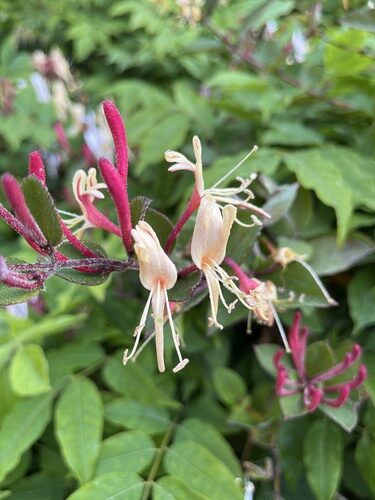
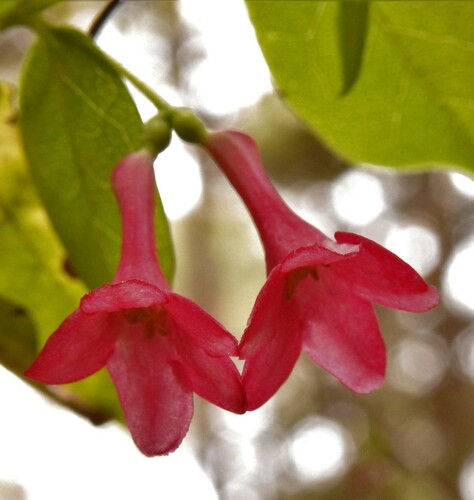
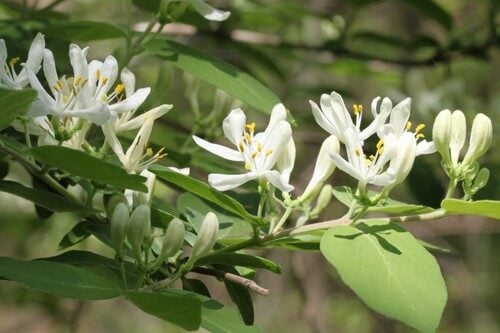
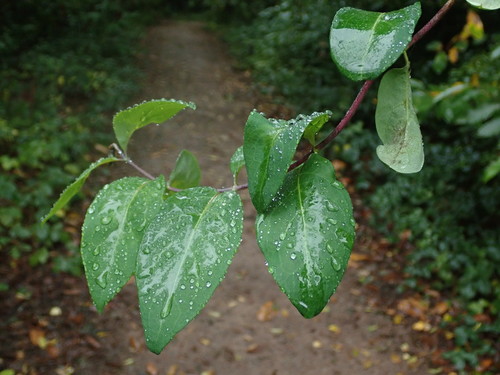
Lonicera affinis
Hook.&Arn.
iNaturalist· cc-by-nc
(c) Keita Watanabe, some rights reserved (CC BY-NC), uploaded by Keita Watanabe
Description
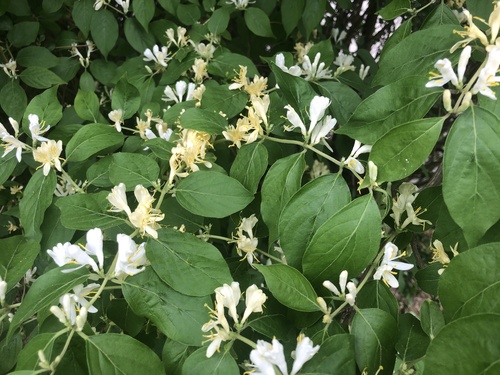
Lonicera affinis is an evergreen Climber growing to 7 m (23ft). See above for USDA hardiness. It is hardy to UK zone 6. It is in flower from May to July. The species is hermaphrodite (has both male and female organs) and is pollinated by Insects. Suitable for: light (sandy), medium (loamy) and heavy (clay) soils. Suitable pH: mildly acid, neutral and basic (mildly alkaline) soils. It can grow in semi-shade (light woodland) or no shade. It prefers moist soil.
Edible Uses
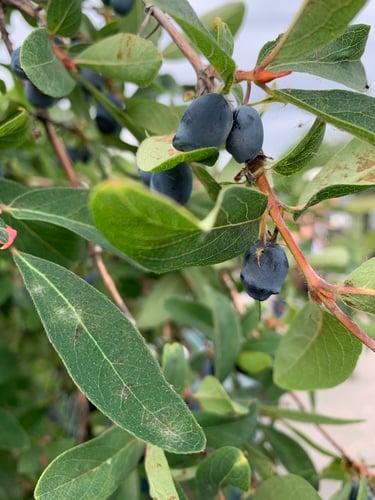
Fruit. No more details are given. The fruit is about 7mm in diameter. Flowers. Used as a flavouring in drinks.
Medicinal Uses
SkinA tea made from the flowers and leaves is used to treat rashes and boils.
Distribution
E. Asia - China, C. and S. Japan.
Where It Grows
TEMPERATE ASIA: Japan (Honshu (southwest), Kyushu, Ryukyu Islands, Shikoku)
Cultivation
Prefers a good moist soil with its roots in the shade and its top growing into the light. A climbing plant, supporting itself by twining around other plants.
Propagation
Seed - best sown as soon as it is ripe in a cold frame. Stored seed requires 2 months cold stratification and should be sown as soon as possible in a cold frame. When they are large enough to handle, prick the seedlings out into individual pots and grow them on in the greenhouse for at least their first winter. Plant them out into their permanent positions in late spring or early summer, after the last expected frosts. Cuttings of half-ripe wood, 7 - 10cm with or without a heel, July/August in a frame. Good percentage. Cuttings of mature wood of the current season's growth, 15 - 20cm with or without a heel, November in a cold frame. Good percentage. Layering in autumn.