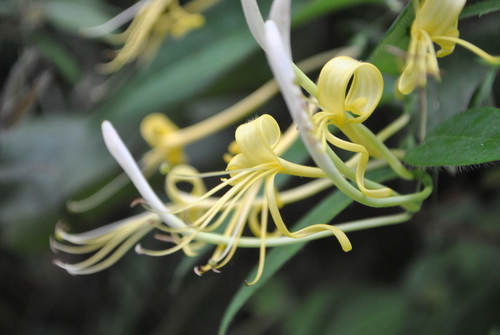
Patrinia scabiosifolia
Fisch. ex Link
Scabious patrinia, Valerian, Golden lace
iNaturalist· cc-by
(c) Repina Tatyana, some rights reserved (CC BY), uploaded by Repina Tatyana
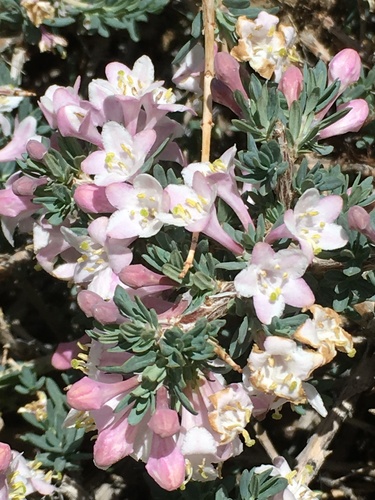
iNaturalist· cc-by
(c) Dmitry Kulakov, some rights reserved (CC BY), uploaded by Dmitry Kulakov
Summary
Source: WikipediaPatrinia scabiosifolia, the eastern valerian or golden lace, is a species of flowering plant in the family Caprifoliaceae. It is native to southeastern Siberia, Mongolia, the Russian Far East, most of China, Vietnam, Korea, Japan, and the Ryukyu Islands, and it has been introduced to Irkutsk. In Japan it is one of the popular Seven Flowers of Autumn. A spreading perennial, it is readily available in commerce.
Description
A herb which keeps growing from year to year. It grows 0.9-1.8 m high and spreads 45-60 cm wide. There a several stems from a central mound. These have a few leaves. The leaves are divided and have deep teeth. They are oblong to oval. The flowers are yellow and in open panicles at the ends of the stems.
Edible Uses
Young leaves, stem tips, and flower buds can all be cooked and used as a potherb, added to soups, or dried for later use.
Traditional Uses
The young plant, stem tips and flower buds are eaten steamed, fried, oil-roasted, preserved, in soups or parboiled and dried for later use.
This uses section is brief — help expand it
Medicinal Uses
The root is antibacterial, anticoagulant, antiphlogistic, antispasmodic, depurative, diuretic, febrifuge, haemostatic, and resolvent. It contains several medically active compounds including triterpenic glycosides and has been shown to stimulate the liver into producing drug-metabolizing enzymes. In Korea the root is used in treating the initial stages of appendicitis, perityphlitis, and neuralgia, as well as parasitic skin diseases, and as an antidote to poison. The entire plant is antibacterial, anti-inflammatory, and hepatic. It is used traditionally as a sedative and in the treatment of carbuncles, acute appendicitis, intestinal abscess, postpartum pain, dysmenorrhoea, and endometriosis. It stimulates the circulation, treats abscesses, and promotes regeneration of liver cells. Large doses can cause a decrease in white blood cells, nausea, and dizziness. The crushed leaves are applied externally to abscesses and boils.
Distribution
It is a temperate climate plant. It grows on the edges of forests and in grassy areas between 400-2,600 m above sea level. It suits hardiness zones 5-8.
Where It Grows
Asia, Australia, China, Japan, Korea, Mongolia, Russia, Siberia,
Cultivation
Easily grown in any light rich soil in a sunny position.
Propagation
Sow seed in situ in April. If seed is limited, sow in a pot in a cold frame instead. Prick seedlings out into individual pots when large enough to handle and plant out in early summer. The plant can also be divided in spring or autumn.
Other Uses
The plant has parasiticide properties.
Notes
There are 15 Patrinia species. They grow in temperate places. Also put in the family Valerianaceae.
Also Known As
Mat'ari, Ominaesi, Pai Chiang
References (8)
- Cundall, P., (ed.), 2004, Gardening Australia: flora: the gardener's bible. ABC Books. p 992
- Enum. hort. berol. alt. 1:131. 1821 "scabiosaefolia"
- Facciola, S., 1998, Cornucopia 2: a Source Book of Edible Plants. Kampong Publications, p 243
- Hwang, HS, et al, 2014, Distribution characteristics of plant in the Ungseokbong Mountain, Gyeongsangnam-do, Korea. Journal of Asia-Pacific Biodiversity. 7(2014) e164-e178
- Pemberton, R. W. & Lee, N. S., 1996, Wild Food Plants in South Korea: Market Presence, New Crops, and Exports to the United States. Economic Botany, Vol. 50, No. 1, pp. 57-70 (As Patrina)
Show all 8 references Hide references
- Plants for a Future database, The Field, Penpol, Lostwithiel, Cornwall, PL22 0NG, UK. http://www.scs.leeds.ac.uk/pfaf/
- Tanaka,
- Wujisguleng, W., & Khasbagen. K., 2010, An integrated assessment of wild vegetable resources in Inner Mongolian Autonomous Region, China. Journal of Ethnobiology and Ethnomedicine 6:34