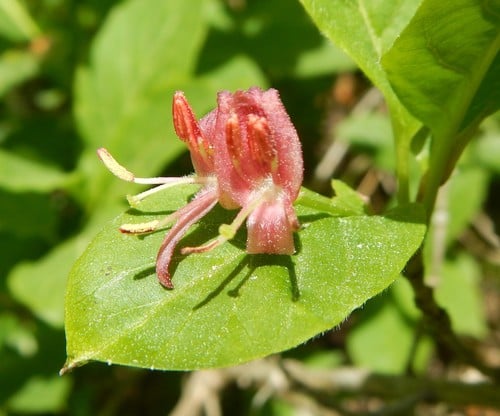
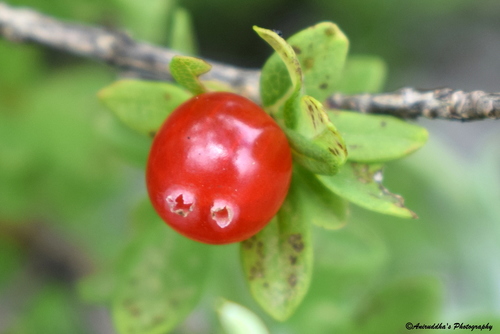
Patrinia villosa
(Thunb.) Juss.
Fu Chai, Thukkal
iNaturalist· cc-by-nc
(c) Yao Li, some rights reserved (CC BY-NC), uploaded by Yao Li
iNaturalist· cc-by-nc
(c) Yao Li, some rights reserved (CC BY-NC), uploaded by Yao Li
iNaturalist· cc-by-nc
(c) lucky fair, some rights reserved (CC BY-NC), uploaded by lucky fair
Summary
Perennial growing 1 m tall, flowering in August. Grows in semi-shade to full sun on light, medium, or heavy soils across mildly acidic to mildly alkaline pH. Prefers moist conditions. Hermaphroditic flowers.
Description
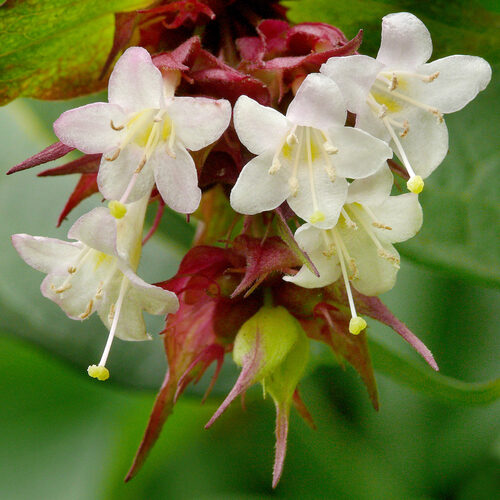
A herb. It can take 2 years to complete its life-cycle or keep growing for a few years. It grows 50-120 cm tall. The stems have 2 lines along them. The leaves at the base are in a ring. They are 4-25 cm long by 2-18 cm wide. There are teeth along the edges or their can be lobes. The leaves on the stem do not have leaf stalks. The flowers are tube shaped and white. The fruit is oval and 3-7 mm long by 3-8 mm wide.
Edible Uses
Young leaves and flower buds are cooked and eaten as a vegetable.
Traditional Uses
The young shoots are eaten in spring.
This uses section is brief — help expand it
Medicinal Uses
The whole plant is antibacterial, anti-inflammatory, and hepatic. It is used in the treatment of carbuncles, acute appendicitis, intestinal abscess, postpartum pain, dysmenorrhoea, and endometriosis. It stimulates the circulation, treats abscesses, and promotes regeneration of liver cells. Large doses can cause a decrease in white blood cells, nausea, and dizziness.
Distribution
It is a subtropical plant. It grows on the edges of forests and in grassy areas between 100-2,000 m above sea level.
Where It Grows
Asia, China, Japan, Korea, Taiwan,
Propagation
Sow seed in situ in April. If seed is limited, sow in a pot in a cold frame instead. Prick seedlings out into individual pots when large enough to handle and plant out in early summer. The plant can also be divided in spring or autumn.
Other Uses
None known
Notes
Also put in the family Valerianaceae.
Also Known As
Tin tong tsze-tin
References (9)
- Altschul, S.V.R., 1973, Drugs and Foods from Little-known Plants. Notes in Harvard University Herbaria. Harvard Univ. Press. Massachusetts. no. 4356
- Ann. Mus. Natl. Hist. Nat. 10:311. 1807
- Chen, B. & Qiu, Z., Consumer's Attitudes towards Edible Wild Plants, Ishikawa Prefecture, Japan. p 24 www.hindawi.com/journals/ijfr/aip/872413.pdf
- Heywood, V.H., Brummitt, R.K., Culham, A., and Seberg, O. 2007, Flowering Plant Families of the World. Royal Botanical Gardens, Kew. p 329
- Hwang, H., et al, 2013, A Study on the Flora of 15 Islands in the Western Sea of Jeollanamdo Province, Korea. Journal of Asia-Pacific Biodiversity Vol. 6, No. 2 281-310
Show all 9 references Hide references
- Hwang, HS, et al, 2014, Distribution characteristics of plant in the Ungseokbong Mountain, Gyeongsangnam-do, Korea. Journal of Asia-Pacific Biodiversity. 7(2014) e164-e178
- Pemberton, R. W. & Lee, N. S., 1996, Wild Food Plants in South Korea: Market Presence, New Crops, and Exports to the United States. Economic Botany, Vol. 50, No. 1, pp. 57-70
- Plants for a Future database, The Field, Penpol, Lostwithiel, Cornwall, PL22 0NG, UK. http://www.scs.leeds.ac.uk/pfaf/
- Reis, S. V. and Lipp, F. L., 1982, New Plant Sources for Drugs and Foods from the New York Botanical Garden herbarium. Harvard. p 295