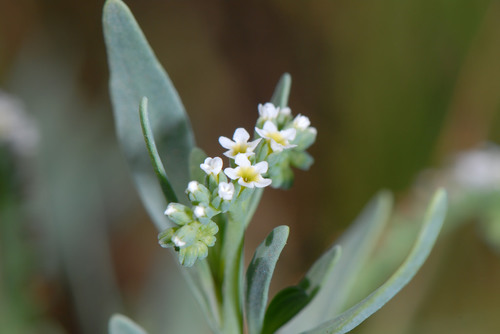
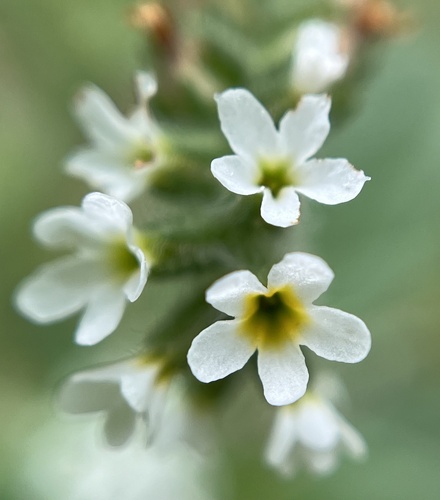
Lithospermum incisum
Lehm.
Narrow-Leaf Gromwell, Narrowleaf stoneseed
iNaturalist· cc-by-nc
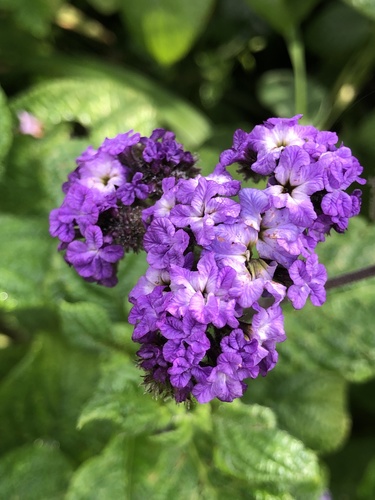
(c) Brent Franklin, some rights reserved (CC BY-NC), uploaded by Brent Franklin
iNaturalist· cc-by-nc-sa
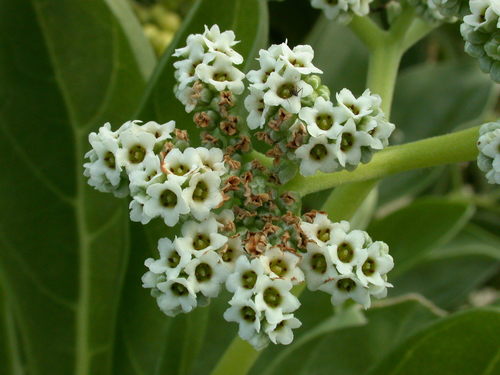
(c) Peter Gorman, some rights reserved (CC BY-NC-SA)
iNaturalist· cc-by-nc-sa
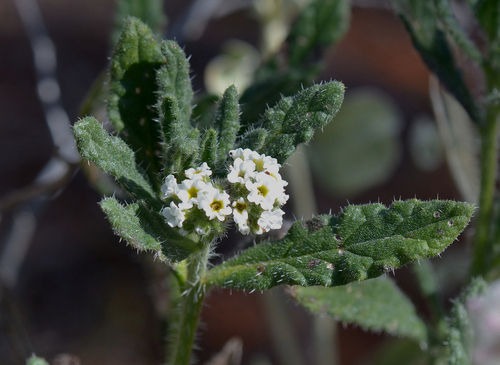
(c) thesnaguy, some rights reserved (CC BY-NC-SA), uploaded by thesnaguy
Description
Lithospermum incisum is a PERENNIAL growing to 0.3 m (1ft). See above for USDA hardiness. It is hardy to UK zone 3. It is in flower in June. The species is hermaphrodite (has both male and female organs) and is pollinated by Insects. Suitable for: light (sandy) and medium (loamy) soils and prefers well-drained soil. Suitable pH: neutral and basic (mildly alkaline) soils. It cannot grow in the shade. It prefers dry or moist soil.
Edible Uses
Tea. Root - cooked. Eaten boiled or roasted. The root has been used to make a tea.
Medicinal Uses
Contraceptive Kidney Miscellany Ophthalmic Pectoral Stomachic. The root has been chewed by some native North American Indian tribes as a treatment for colds. The finely powdered leaves, root and stem have been rubbed on the body in the treatment of paralyzed limbs. An infusion of the root has been used in the treatment of stomach aches and kidney problems. The plant has been eaten as an oral contraceptive and also as a treatment for lung haemorrhages, coughs and colds. A cold infusion of the pulverized root and seed has been used as an eyewash. This plant was used as a medicine by various native North American Indian tribes and interest in the plant has revived recently as a possible source of modern drugs. No more details are given.
Distribution
Central N. America - British Columbia to Manitoba, south to Illinois, Texas and Arizona.
Where It Grows
NORTHERN AMERICA: Canada (Ontario, Saskatchewan, Alberta, Manitoba, British Columbia), United States (Indiana, Iowa, Kansas, Minnesota, Missouri, Nebraska, North Dakota, South Dakota, Illinois, Oklahoma, Wisconsin, Colorado, Montana, Wyoming, Arkansas, New Mexico, Texas, Arizona, Nevada, Utah), Mexico (Coahuila de Zaragoza)
Cultivation
Requires a warm sunny position in a moderately fertile well-drained soil. Dislikes acid soils. After producing large, conspicuous flowers in the spring, the plant produces lots of small very fertile cleistogamous flowers.
Propagation
Seed - sow spring in a cold frame. When they are large enough to handle, prick the seedlings out into individual pots and grow them on in the greenhouse for their first winter. Plant them out into their permanent positions in late spring or early summer, after the last expected frosts. Cuttings. Division.
Other Uses
Beads Dye Incense Miscellany. The dried plant tops have been burnt as an incense. A blue dye has been obtained from the roots. A red dye is obtained from the roots. It is quite possible that both colours can be obtained, depending on the mordant used. The seeds have been used as beads.