Pulmonaria officinalis
L.
Lungwort, Jerusalem Cowslip, Soldiers and sailors, Spotted dog, Jerusalem sage
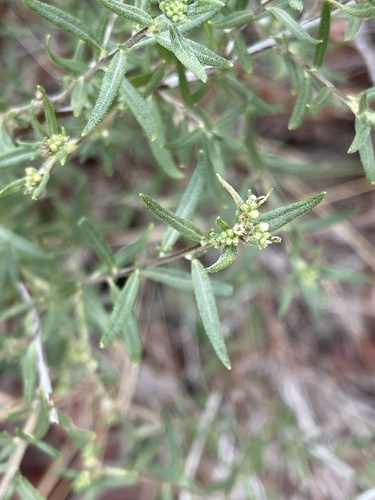
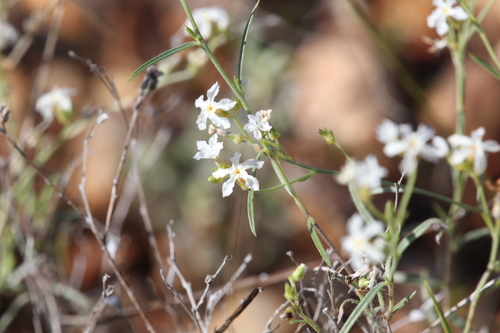
iNaturalist· cc-by
(c) naturalist charlie, some rights reserved (CC BY), uploaded by naturalist charlie
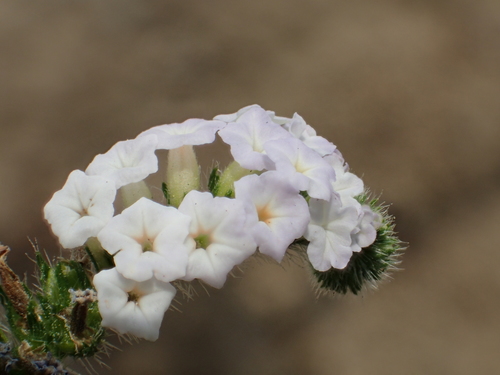
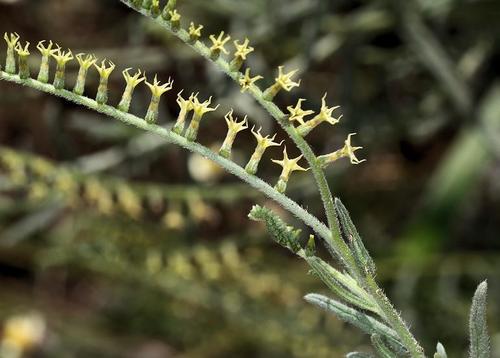
iNaturalist· cc-by
(c) aga_l_, some rights reserved (CC BY)
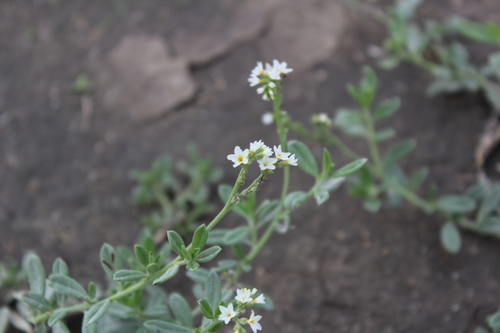
iNaturalist· cc-by
(c) aga_l_, some rights reserved (CC BY)
Summary
Source: WikipediaPulmonaria officinalis, common names lungwort, common lungwort, Mary's tears or Our Lady's milk drops, is a herbaceous rhizomatous evergreen perennial plant of the genus Pulmonaria, belonging to the family Boraginaceae.
Description
A perennial herb. It grows 25-30 cm high and 30-45 cm wide. The leaves are heart-shaped and spotted. They are 15 cm long. The flowers change from pink to violet then blue.
Edible Uses
The leaves can be eaten raw or cooked — added to salads or used as a potherb. The flavour is fairly bland, and while the low fibre content makes them an acceptable addition to mixed salads, their mucilaginous and slightly hairy texture makes them less pleasant eaten alone. Young leaves make a palatable cooked vegetable, though the texture tends toward sliminess. The plant is also an ingredient in the drink Vermouth.
Traditional Uses
The young leaves near the base are used for salads or boiled as potherbs or added to soups and stews. An extract of the herb is used to flavour vermouth.
Medicinal Uses
Lungwort's high mucilage content makes it particularly useful for chest conditions, especially chronic bronchitis. It combines well with herbs such as coltsfoot (Tussilago farfara) for treating chronic coughs including whooping cough, and can be taken for asthma. The leaves and flowering shoots are astringent, demulcent, diaphoretic, diuretic, emollient, mildly expectorant and resolvent. Their mucilaginous nature also makes them helpful for sore throats. Applied externally, the leaves can help stop bleeding. They are harvested in spring and dried for later use. A distilled water made from the plant serves as an effective eyewash for tired eyes. A homeopathic remedy prepared from the plant is used to treat bronchitis, coughs and diarrhoea.
Distribution
It is a temperate plant. It will grow in most soils. It needs a protected and partly shady position. It is frost hardy. It is sensitive to drought. It suits hardiness zones 6-9.
Where It Grows
Australia, Balkans, Bosnia, Britain, Czech Republic, Estonia, Europe*, Hungary, Macedonia, Moldova, Norway, Scandinavia, Slovakia, Slovenia, Spain, Tasmania, Turkey, Türkiye,
Cultivation
Grows well in any moderately good soil including heavy clay soils. Prefers full to part shade in a moist humus rich soil. Succeeds in the sunless shade of buildings. Plants growing in shady positions tolerate drought if the soil is rich in humus. The leaves tend to wilt in hot weather when the plant is grown in full sun. Hardy to about -20°c. Members of this genus are rarely if ever troubled by browsing deer and rabbits. A valuable early nectar source for bees. There are several named forms, selected for their ornamental value. Hybridizes freely with other members of this genus.
Propagation
Sow seed in spring in a greenhouse. Prick seedlings into individual pots when large enough to handle, and grow on under glass through their first winter. Plant out in late spring or early summer after the last expected frosts. Divide in spring, autumn, or after early summer flowering provided the soil is not too dry. Larger divisions can go directly into permanent positions. Smaller divisions are better potted up and grown on in light shade in a cold frame until well established before planting out in late spring or early summer.
Other Uses
A tolerant, slow-growing ground cover plant suited to open woodland and border edges. Space plants approximately 50cm apart in each direction. Attracts wildlife and can be incorporated into a food forest planting.
Notes
There are about 14 Pulmonaria species. Contains flavonoids, ascorbic and silicic acid, saponins, tannins, carotene, allantoin, rutin and mucous membranes. The plant also contains unsaturated pyrrolizidine alkaloids.
Nutrition
| Part | Moisture | kJ | kcal | Protein | Vit A | Vit C | Iron | Zinc |
|---|---|---|---|---|---|---|---|---|
| Leaves | 84 | 182 | — | 1.7 | — | — | — | — |
Synonyms
Also Known As
Cicalka, Cmelik, Lungeurt, Medunica, Plucna zelina, Plucnjak
References (23)
- Bodkin, F., 1991, Encyclopedia Botanica. Cornstalk publishing, p 853
- Bremness, L., 1994, Herbs. Collins Eyewitness Handbooks. Harper Collins. p 208
- Brickell, C. (Ed.), 1999, The Royal Horticultural Society A-Z Encyclopedia of Garden Plants. Convent Garden Books. p 847
- Cerne, M., 1992, Wild Plants from Slovenia used as Vegetables. Acta Horticulturae 318
- Cundall, P., (ed.), 2004, Gardening Australia: flora: the gardener's bible. ABC Books. p 1111
Show all 23 references Hide references
- Denes, A., et al, 2012, Wild plants used for food by Hungarian ethnic groups living in the Carpathian Basin. Acta Societatis Botanicorum Poloniae 81 (4): 381-396
- Facciola, S., 1998, Cornucopia 2: a Source Book of Edible Plants. Kampong Publications, p 51
- Girard, N. J., 2020, Sustainable Foraging of Wild Edible Plants in Norway. A Biocultural Approach. M. Sc. thesis Norwegian University. p 129
- Guil-Guerrero, J. L., et al, 2001, Edible Wild Plants. in Recent Progress in Medicinal Plants Vol. 8 Sci. Tech publishing, Texas
- Hammer, K. & Spahillari, M., 1999, Crops of European origin. in Report of a networking group on minor crops. IPGRI p 44
- Hedrick, U.P., 1919, (Ed.), Sturtevant's edible plants of the world. p 535
- Hibbert, M., 2002, The Aussie Plant Finder 2002, Florilegium. p 243
- Irving, M., 2009, The Forager Handbook, A Guide to the Edible Plants of Britain. Ebury Press p 69
- Joyce, D., 1998, The Garden Plant Selector. Ryland, Peters and Small. p 261
- Kalle, R. & Soukand, R., 2012, Historical ethnobotanical review of wild edible plants of Estonia (1770s-1960s) Acta Societatis Botanicorum Poloniae 81(4):271-281
- Luczaj, L., 2012, Ethnobotanical review of wild edible plants of Slovakia. Acta Societatis Botanicorum Poloniae 81(4):245-255
- Mabey, R., 1973, Food for Free. A Guide to the edible wild plants of Britain, Collins. p 105
- Plants for a Future database, The Field, Penpol, Lostwithiel, Cornwall, PL22 0NG, UK. http://www.scs.leeds.ac.uk/pfaf/
- Redzic, S. J., 2006, Wild Edible Plants and their Traditional Use in the Human Nutrition in Bosnia-Herzegovina. Ecology of Food and Nutrition, 45:189-232
- Redzic, S., 2010, Use of Wild and Semi-Wild Edible Plants in Nutrition and Survival of People in 1430 Days of Siege of Sarajevo during the War in Bosnia and Herzegovina (1992–1995). Coll. Antropol 34 (2010) 2:551-570
- Siminiuc, R. & Turcanu, D., 2021, Study of Edible Spontaneous Herbs in the Republic of Moldova for Ensuring a Sustainable Food System. Food and Nutrition Sciences, 2021, 12, 703-718 p 710
- Simkova, K. et al, 2014, Ethnobotanical review of wild edible plants used in the Czech Republic. Journal of Applied Botany and Food Quality 88, 49-67
- Sp. pl. 1:135. 1753