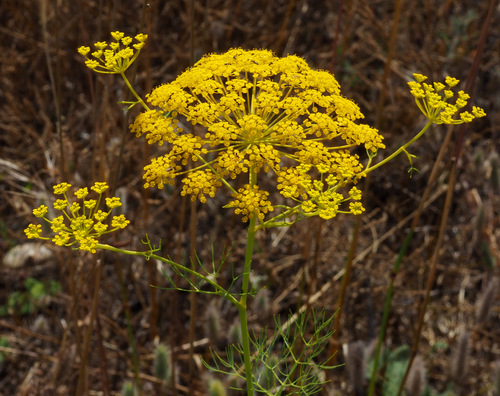
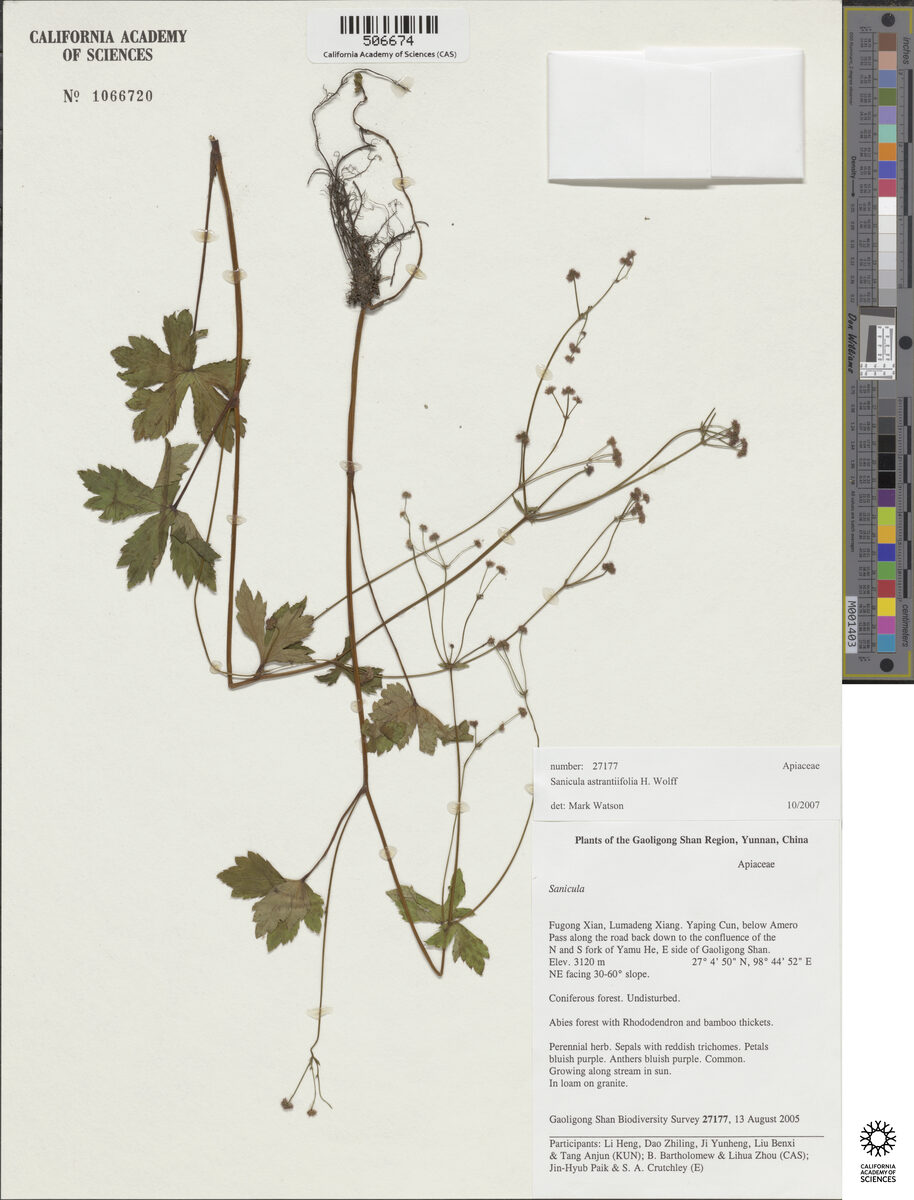
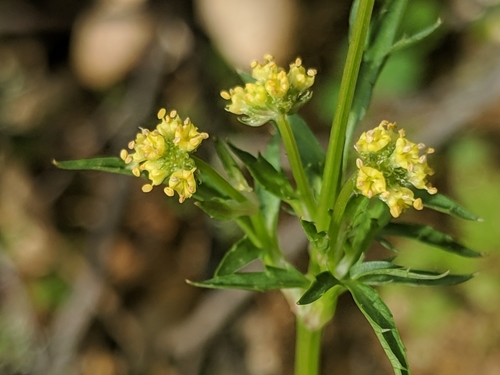
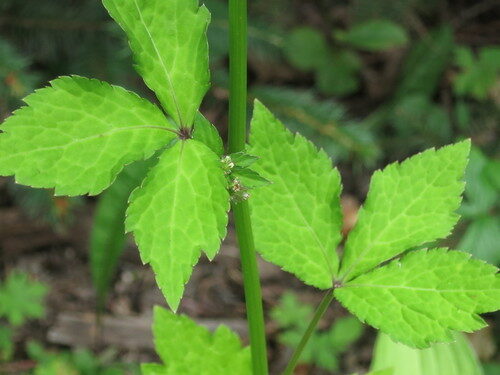
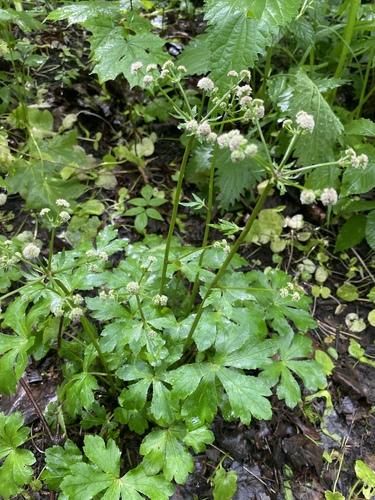
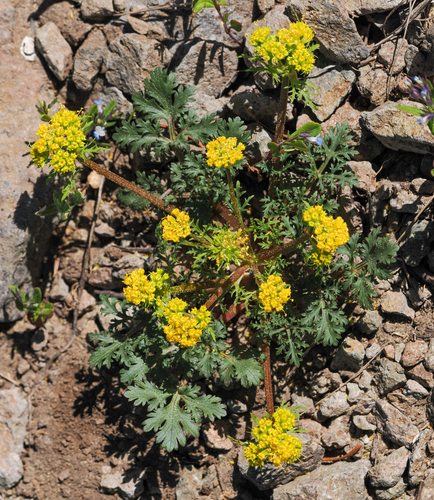
Ledebouriella seseloides - (Hoffm.)Wolff.
(Hoffm.)Wolff.
Fang Feng
No photos yet for Ledebouriella seseloides - (Hoffm.)Wolff.
Sign in to contribute a photoDescription
Ledebouriella seseloides is a PERENNIAL growing to 0.3 m (1ft). The species is hermaphrodite (has both male and female organs). Suitable for: light (sandy), medium (loamy) and heavy (clay) soils and prefers well-drained soil. Suitable pH: mildly acid, neutral and basic (mildly alkaline) soils. It can grow in semi-shade (light woodland) or no shade. It prefers moist soil and can tolerate drought.
Edible Uses
Young plant and leaves - raw or cooked. The leaves contain 1.7% protein, 0.3% fat, 4.7% carbohydrate and 1.3% ash.
Medicinal Uses
Antidote Antipyretic Antiseptic Diaphoretic. Antipyretic, antiseptic, diaphoretic, carminative and antitoxin. It is used in the treatment of influenza, headaches, chills, rheumatoid numbness, joint pains and tetanus.
Distribution
E. Asia - China and Japan to Siberia.
Where It Grows
TEMPERATE ASIA: Russian Federation-Western Siberia (Western Siberia), Russian Federation-Eastern Siberia (Eastern Siberia)
Cultivation
We have very little information on this species and do not know if it will succeed outdoors in Britain, though judging by its native range it is likely to be hardy at least in the milder areas of the country. There is some confusion over this name, according to this species is endemic to Siberia whilst other reports say that its range is China and Japan. According to, the correct name for this species is Siler divaricatum. [L.} and it is possible that two distinct species are being treated here.
Propagation
Seed -