Eugenia pyriformis
Cambess.
Uvalha
iNaturalist· cc-by-nc
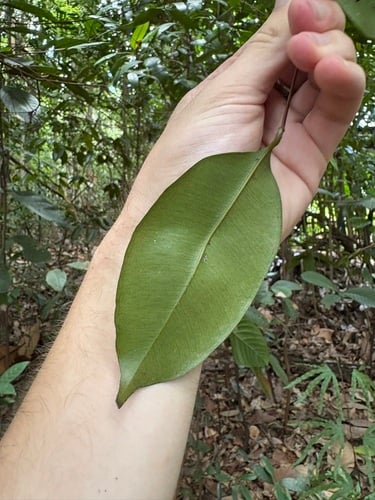
(c) Luís Roberto da Silva, some rights reserved (CC BY-NC), uploaded by Luís Roberto da Silva
iNaturalist· cc-by-nc
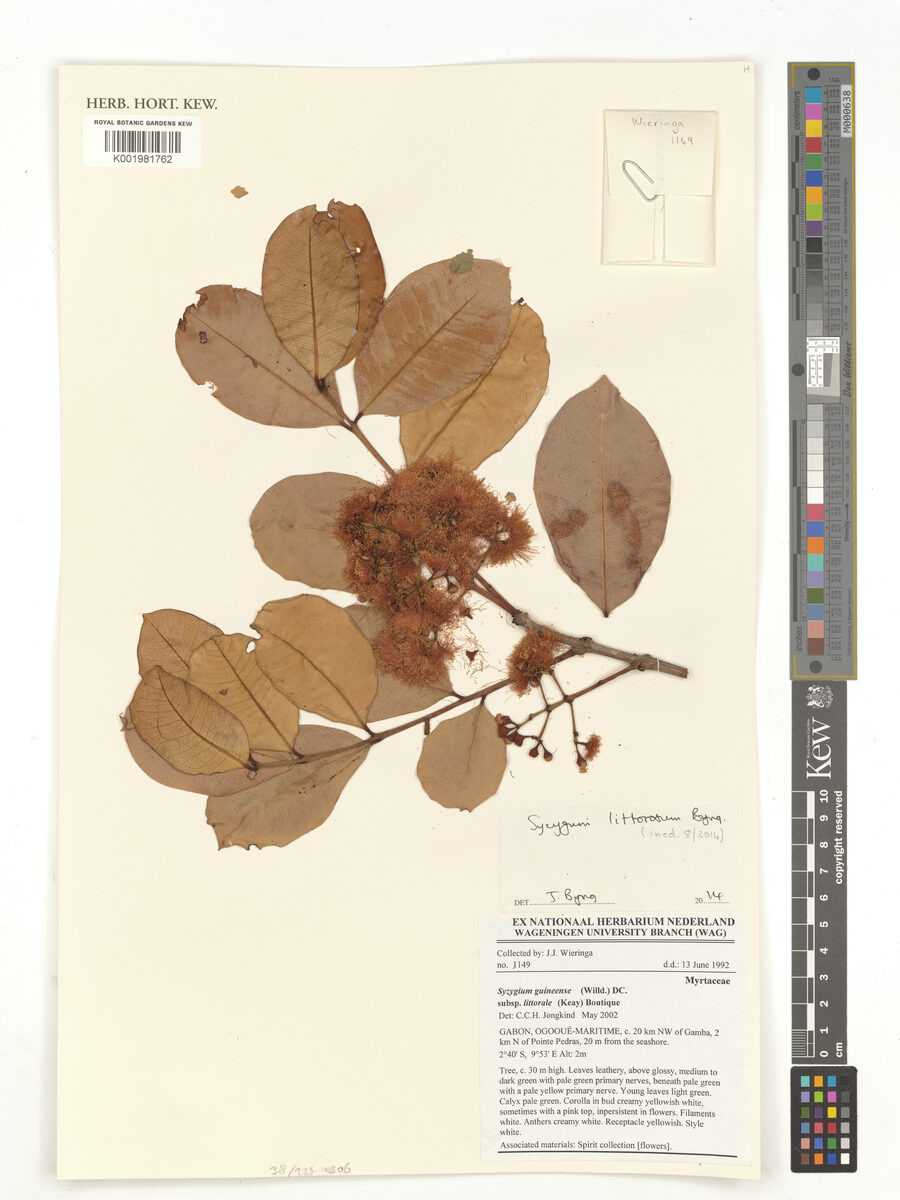
(c) Germaine Alexander Parada, some rights reserved (CC BY-NC), uploaded by Germaine Alexander Parada
iNaturalist· cc-by-nc
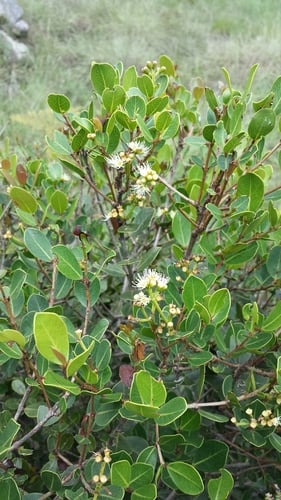
(c) Paula Romano, some rights reserved (CC BY-NC), uploaded by Paula Romano
Summary
Source: WikipediaEugenia pyriformis is a plant of the family Myrtaceae found primarily in Brazil. It reaches 6 to 13 metres (20 to 43 ft) in height and 30 to 50 centimetres (0.98 to 1.64 ft) in trunk diameter. It is a native species of Brazil, occurring primarily in the states of Paraná, Rio Grande do Sul, Santa Catarina and São Paulo.
Description
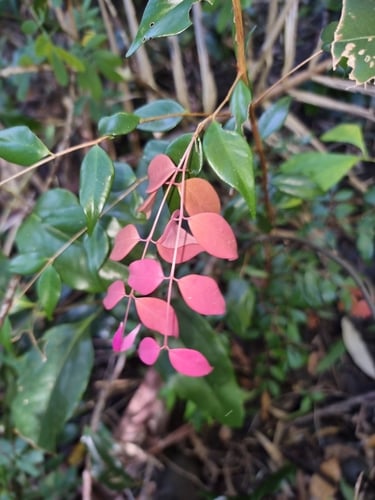
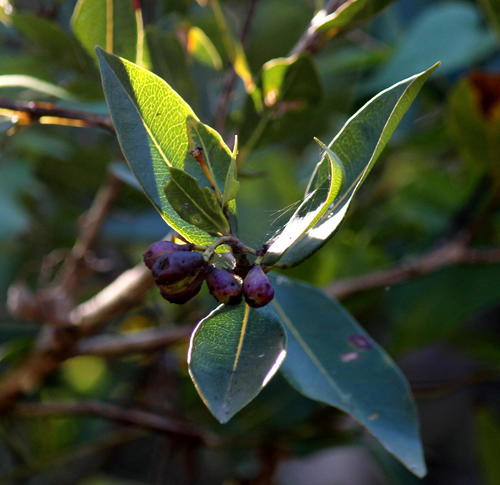
A tree. It grows 6-13 m tall. The crown is small and open. The trunk is 30-50 cm across. The bark peels off. The leaves are simple and red when young. The leaves are narrow and 4-7 cm long. The flowers are white and occur singly in the axils of the leaves. The fruit is the size of a pear. The fruit are medium size and round with soft sweet smelling pulp. They are 2.5 cm across. It is large and orange yellow. There are 1-3 large seeds.
Edible Uses
The fruit can be eaten raw or used to make juice. The fruit pulp is used for flavoring and drinks, though the fruit is notably sour.
Traditional Uses
The fruit can be eaten raw or used for juice. The fruit pulp is used for flavouring and drinks. They are edible but sour.
This uses section is brief — help expand it
Medicinal Uses
No medicinal uses mentioned.
Distribution
A tropical and subtropical plant. In Brazil it grows in semi-deciduous forest on the plateau. It grows between 300-1,500 m above sea level. It can tolerate light frost and drought. It grows in areas with low to medium rainfall. In Argentina it grows from sea level to 1,300 m above sea level.
Where It Grows
Asia, Argentina, Brazil*, Cuba, Indonesia, Pacific, Paraguay, Philippines, SE Asia, South America, Uruguay, West Indies,
Cultivation
Plants are grown from seed. The ripe fruit are harvested and the seeds collected with running water. They are dried in the shade. Seeds can only be stored for about 60 days. Plants are grown from fresh seed. They germinate in 10-40 days. Seedlings can be transplanted into the field after 10-11 months.
Propagation
Seed - it has a viability of 60 days or less and so is best sown as soon as it is ripe in a partially shaded position in individual containers. A germination rate of around 40% can be expected, with the seed sprouting within 10 - 40 days. Seedlings are quite slow to develop, but should be ready to plant out 10 - 11 months later.
Other Uses
The yellowish wood is of medium texture, moderately heavy, hard, very durable. It is only used locally for items such as fence posts and poles. It is used especially for rafters and small beams, tool handles and agricultural implements. The wood is used for fuel and to make charcoal.
Production
Plants grow slowly. They may reach 2 m high after 2 years growth. Trees can take 10 years to start to produce fruit. Fruit matures in 60 days.
Other Information
It is a cultivated fruit tree.
Notes
There are about 550 Eugenia species. They are mostly in tropical and subtropical South America.
Nutrition
| Part | Moisture | kJ | kcal | Protein | Vit A | Vit C | Iron | Zinc |
|---|---|---|---|---|---|---|---|---|
| Fruit | 94.2 | 88 | 21 | 0.6 | — | 38.2 | 0.7 | 0.1 |
| Fruit | 89.3 | — | — | — | — | 39.3 | — | — |
Synonyms
Also Known As
Ubaia, Uvaia, Uvaieira, Uva jay, Uvalha-do-campo
References (38)
- Barbieri, R. L., et al, 2014, Agricultural Biodiversity in Southern Brazil: Integrating Efforts for Conservation and Use of Neglected and Underutilized Species. Sustainability 6:741-757
- Bortolotto, I. M., et al, 2018, Lista preliminar das plantas alimenticias nativas de Mato Grosso do Sul, Brasil. Iheringia, Serie Botanica, Porto Alegre, 73 (supl.):101-116
- Brack, P., et al, 2020, Frutas nativas do Rio Grande do Sul, Brasil: riqueza e potencial alimentício. Native fruits of Rio Grande do Sul, Brazil: richness and potential as food. Rodriguésia 71: e03102018.
- Brazil: Biodiversity for Food and Nutrition. http://www.b4fn.org/countries/brazil/
- Coradin, L. et al (Eds), 2011, Especies Nativas da Flora Brasileira de Valor Economico Atual ou Potencial. Brasilia MMA. p 167
Show all 38 references Hide references
- Coronel, R.E., 1982, Fruit Collections in the Philippines. IBPGR Newsletter p 6 (As uvalha)
- Cruz, M. P., et al, 2014, Local perceptions and consumption of native wild edible plants from seasonal dry forests in Brazil. Journal or Ethnobiology and Ethnomedicine 10:45
- Facciola, S., 1998, Cornucopia 2: a Source Book of Edible Plants. Kampong Publications, p 158 (As uvalha)
- Fouqué, A., 1972, Espèces fruitières d'Amérique tropicale. Institut français de recherches fruitierès outre-mer (As Eugenia vauthiereana)
- Garner, R.J., and Chaudhri, S.A., (Ed.) 1976, The Propagation of Tropical fruit Trees. FAO/CAB. p 358 (As uvalha)
- Grandtner, M. M. & Chevrette, J., 2013, Dictionary of Trees, Volume 2: South America: Nomenclature, Taxonomy and Ecology. Academic Press p 242
- Hedrick, U.P., 1919, (Ed.), Sturtevant's edible plants of the world. p 300
- Hermandez Bermejo, J.E., and Leon, J. (Eds.), 1994, Neglected Crops. 1492 from a different perspective. FAO Plant Production and Protection Series No 26. FAO, Rome. p16
- Hunter, D., et al, 2019, The potential of neglected and underutilized species for improving diets and nutrition. Planta (2019) 250:709-729
- Kermath, B. M., et al, 2014, Food Plants in the Americas: A survey of the domesticated, cultivated and wild plants used for Human food in North, Central and South America and the Caribbean. On line draft. p 358
- Kinupp, V. F., 2007, Plantas alimenticias nao-convencionais da regiao metropolitana de Porto Alegre, RS, Brazil p 86
- Kujawska, M. & Luczaj, L., 2015, Wild Edible Plants Used by the Polish Community in Misiones, Argentina. Human Ecology 43:855-869
- Lorenzi, H., 2002, Brazilian Trees. A Guide to the Identification and Cultivation of Brazilian Native Trees. Vol. 01 Nova Odessa, SP, Instituto Plantarum p 277
- Lorenzi, H., Bacher, L., Lacerda, M. & Sartori, S., 2006, Brazilian Fruits & Cultivated Exotics. Sao Paulo, Instituto Plantarum de Estuados da Flora Ltda. p 210
- Lucena de, R. F. P, et al, 2008, Local Uses of Native, Plants in an Area of Caatinga Vegetation (Pernambuco, NE Brazil) Ethnobotany Research and Applications. Vol. 6:3-13 (As uvalha)
- Lyle, S., 2006, Discovering fruit and nuts. Land Links. p 200 (As uvalha)
- Mabberley, D.J., 1990, The plant-book: a portable dictionary of the higher plants. Cambridge University Press. NY. (As Eugenia vauthiereana)
- Martin, F. W., et al, 1987, Perennial Edible Fruits of the Tropics. USDA Handbook 642 p 40 (As Eugenia uvalha)
- Miguel, E., et al, 1989, A checklist of the cultivated plants of Cuba. Kulturpflanze 37. 1989, 211-357 (As Eugenia uvalha)
- Nunes, E. N., et al, 2018, Local botanical knowledge of native food plants in the semiarid region of Brazil. Journal of Ethnobiology and Ethnomedicine (2018) 14:49 (As Eugenia uvalha)
- Popenoe, (As uvalha)
- Rufina, M. S. M., et al, 2009, Free radical-scavenging behaviour of some north-east Brazilian fruits in a DPPH system. Food Chemistry 114:693-695
- Rufino, M. M., et al, 2010, Bioactive compounds and antioxidant capacities of 18 non-traditional tropical fruit from Brazil. Food Chemistry 121: 996-1002
- A. F. C. P. de Saint-Hilaire, Fl. Bras. merid. 2:241. 1830
- A. F. C. P. de Saint-Hilaire, Fl. Bras. merid. 2:367. 1833 (As uvalha)
- Sukarya, D. G., (Ed.) 2013, 3,500 Plant Species of the Botanic Gardens of Indonesia. LIPI p 275
- TodaFruta.com.br (As Eugenia uvalha)
- USDA, ARS, National Genetic Resources Program. Germplasm Resources Information Network - (GRIN). [Online Database] National Germplasm Resources Laboratory, Beltsville, Maryland. Available: www.ars-grin.gov/cgi-bin/npgs/html/econ.pl (10 April 2000) (As uvalha)
- USDA, ARS, National Genetic Resources Program. Germplasm Resources Information Network - (GRIN). [Online Database] National Germplasm Resources Laboratory, Beltsville, Maryland. Available: www.ars-grin.gov/cgi-bin/npgs/html/econ.pl (10 April 2000)
- van Wyk, B., 2005, Food Plants of the World. An illustrated guide. Timber press. p 192 (As uvalha)
- Wiersema, J. H. & Leon, B., 2013, World Economic Plants. A Standard Reference CRC Press. 2nd Ed. p 290
- World Checklist of Useful Plant Species 2020. Royal Botanic Gardens, Kew
- www.colecionandofrutas.org