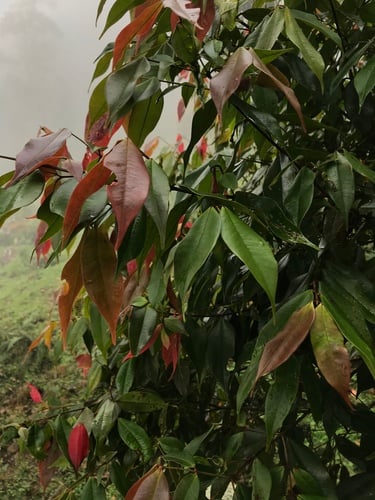
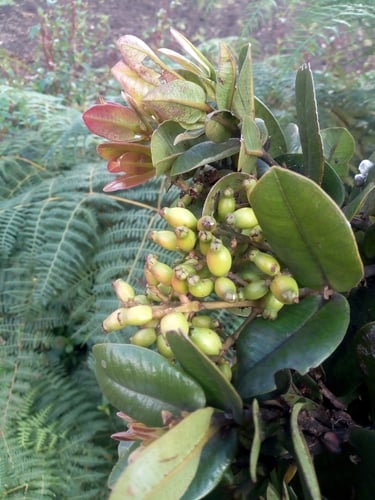
Syzygium calophyllifolium
Walp.
Neerodam
iNaturalist· cc-by
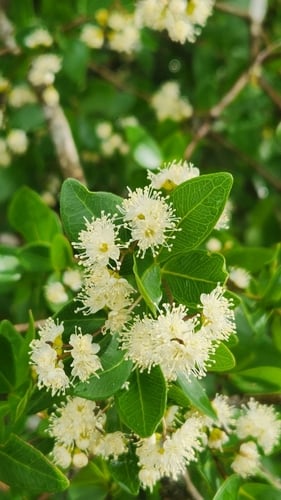
(c) Siddarth Machado, some rights reserved (CC BY), uploaded by Siddarth Machado
iNaturalist· cc-by
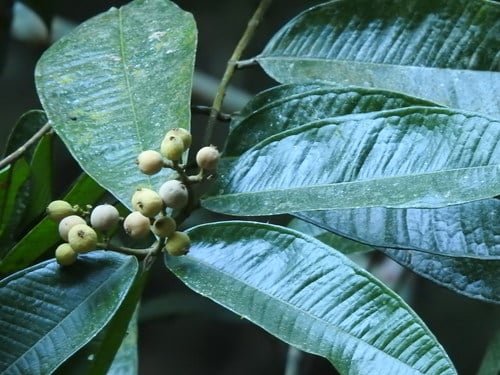
(c) Siddarth Machado, some rights reserved (CC BY)
Description
An evergreen tree. It grows 20 m tall. The bark is dark brown and smooth. The crown is round. The young branches and 4 sided. The leaves are simple and opposite. They overlap at the base. The leaves are 3-4 cm long by 2-3 cm wide. They are broadly oval. The flowers are in groups and are in the axils of leaves or at the ends of branches. They are white. The fruit is a dark purple berry. It is oval and 1 cm long.
Edible Uses
The fruit are eaten raw.
Traditional Uses
The fruit are eaten raw.
This uses section is brief — help expand it
Medicinal Uses
An extract from the seeds is used in traditional medicine for diabetes.
Distribution
A tropical plant. It grows at high elevation in evergreen forests. It occurs between 1,800-2,200 m above sea level.
Where It Grows
Asia, India, Sri Lanka,
Propagation
Seed - best sown as soon as it is ripe.
Other Uses
The reddish-brown wood is close-grained, hard, strong. A useful structural timber, it is used in construction.
Production
In India trees are flowering and fruit from February to May.
Notes
An extract from the seeds is used in medicine for diabetes.
Synonyms
Also Known As
Neerodam
References (2)
- Sasi, R. & Rajendran, A., 2012, Diversity of Wild Fruits in Nilgiri Hills of the Southern Western Ghats - Ethnobotanical Aspects. IJABPT, 3(1) p 82-87
- Singh, H.B., Arora R.K.,1978, Wild edible Plants of India. Indian Council of Agricultural Research, New Delhi. p 72