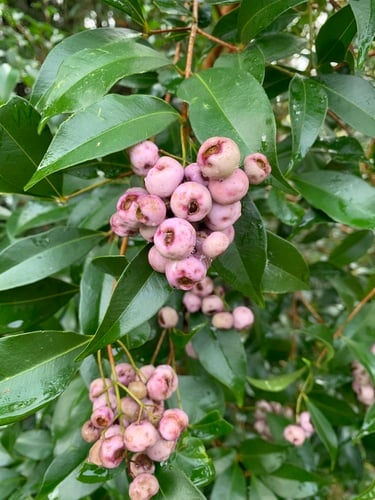
Eucalyptus viminalis
Labill.
Manna gum, Ribbon gum, White Gum
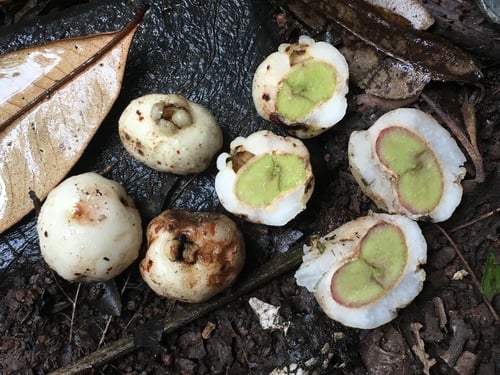
iNaturalist· cc-by-nc
(c) Margaret Alcorn, some rights reserved (CC BY-NC), uploaded by Margaret Alcorn
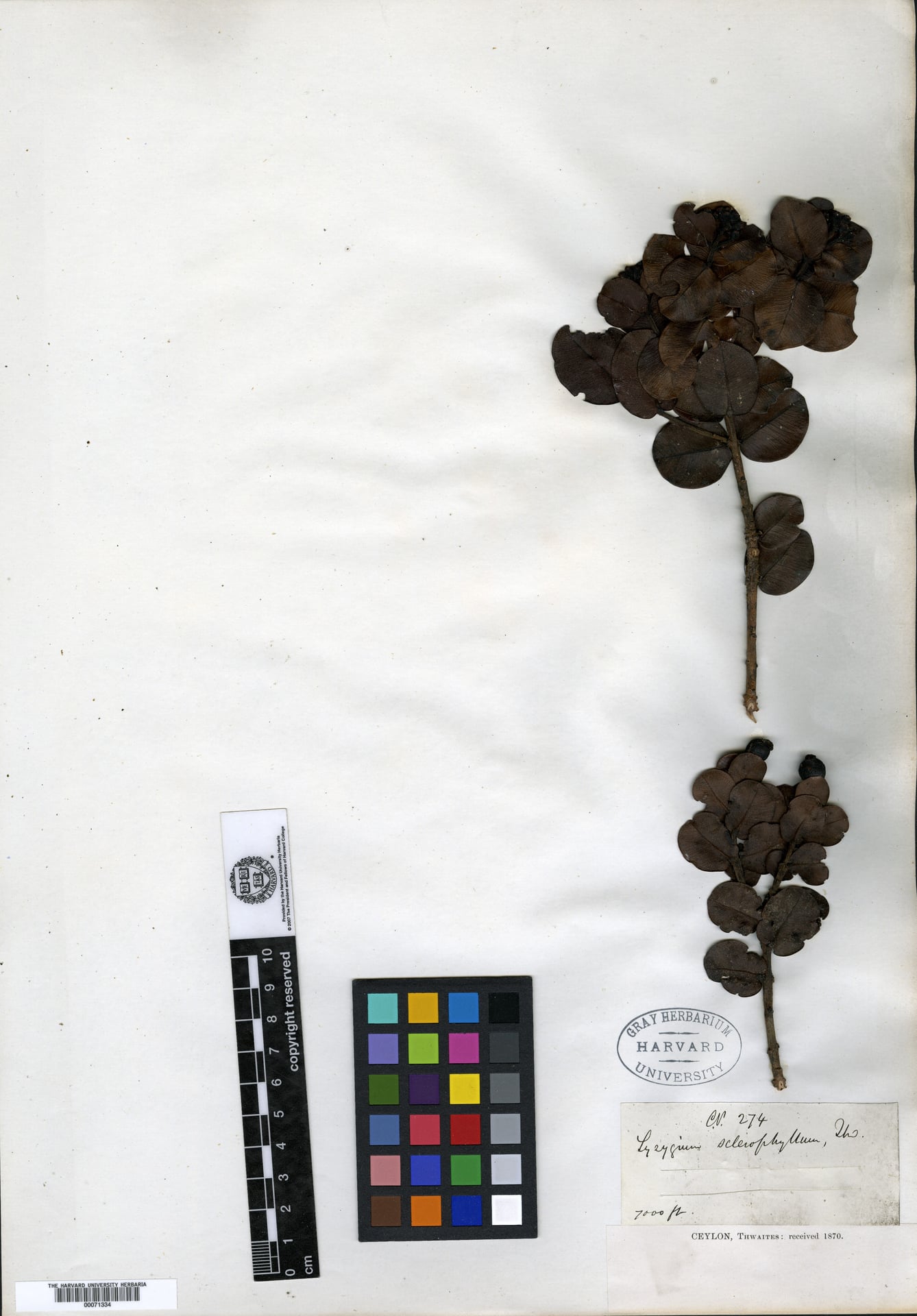
iNaturalist· cc-by-nc
(c) Wayne Martin, some rights reserved (CC BY-NC), uploaded by Wayne Martin
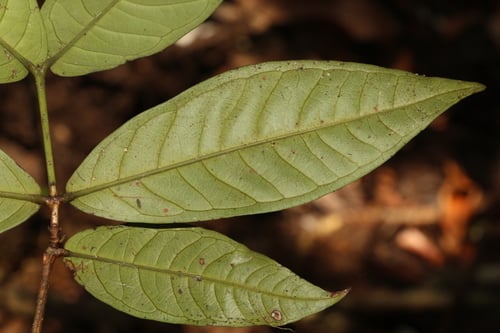
iNaturalist· cc-by-nc-sa
(c) Reiner Richter, some rights reserved (CC BY-NC-SA), uploaded by Reiner Richter
Summary
Source: WikipediaEucalyptus viminalis, commonly known as the manna gum, white gum or ribbon gum, is a species of small to very tall tree that is endemic to south-eastern Australia. It has smooth bark, sometimes with rough bark near the base, lance-shaped to curved adult leaves, flower buds in groups of three or seven, white flowers and cup-shaped or hemispherical fruit.
Description
A medium to tall tree. It can grow 10-70 m tall. It spreads 8-15 m wide. The bark is smooth and whitish. It has some rough bark at the base of the trunk. The upper limbs shed bark in long strips. The branches are long and slender. Young leaves are opposite with the base wrapped around the stem. They are bright green. The adult leaves are long, dark green and sword shaped. They are 10-15 cm long. The flowers are in groups of 3. They are small and cream or white. The capsule is 5-8 mm wide. It is almost round. It has pointed valves which stick up.
Edible Uses
A manna is exuded from the leaves — and possibly the bark — following insect damage. This red gum or manna from bark cracks is eagerly eaten, and the manna produced from punctures in summer months is also consumed. It has a pleasant, sweet flavour and is mildly laxative. Aboriginal Australians collected it from the ground or scraped it from leaves; heavily covered leaves were pounded and baked. The manna contains the sugars arabinose, raffinose, dextrose, and sucrose. As the manna likely forms in response to specific insect damage, it may not be produced in Britain where those insects cannot survive.
Traditional Uses
A white sweet manna probably produced as the result of insect damage is fermented and drunk.
This uses section is brief — help expand it
Medicinal Uses
The manna exuded from the plant has a mild laxative effect. The essential oil in the leaves shows antiviral activity and can be used in the treatment of influenza. The leaves inhibit the growth of Staphylococcus aureus. A decoction of leafy twigs was used to bathe rheumatic limbs.
Known Hazards
Citronellal, an essential oil found in most Eucalyptus species is reported to be mutagenic when used in isolation. In large doses, oil of eucalyptus, like so many essential oils has caused fatalities from intestinal irritation. Death is reported from ingestion of 4 - 24 ml of essential oils, but recoveries are also reported for the same amount. Symptoms include gastroenteric burning and irritation, nausea, vomiting, diarrhoea, oxygen deficiency, ,weakness, dizziness, stupor, difficult respiration, delirium, paralysis, convulsions, and death, usually due to respiratory failure.
Distribution
It grows in temperate regions. It can grow in the subtropics. It needs well drained soils but they can be wet. It can grow in full sun or light shade. It can stand heavy frosts. It grows in cooler places. It grows in areas with an annual rainfall between 635-889 mm. It grows below 1,300 m above sea level. It can grow in arid places. It suits hardiness zones 8-10. Tasmania Herbarium. Arboretum Tasmania.
Where It Grows
Africa, Asia, Australia*, Cameroon, Central Africa, Congo, East Africa, Ethiopia, Europe, Greece, Hawaii, Italy, Mediterranean, Myanmar, New Zealand, Portugal, SE Asia, Spain, St Helena, Tasmania*, USA, Zimbabwe,
Cultivation
Prefers a sunny position in a moderately fertile well-drained moisture retentive circum-neutral soil. Tolerates poor soils, especially those low in mineral elements. Tolerates dry soils and also drought once it is established. A fairly hardy species, one report suggests that it is hardy to between -15°c and -20°c whilst another says that plants succumb to hard frosts. Eucalyptus species have not adopted a deciduous habit and continue to grow until it is too cold for them to do so. This makes them more susceptible to damage from sudden cold snaps. If temperature fluctuations are more gradual, as in a woodland for example, the plants have the opportunity to stop growing and become dormant, thus making them more cold resistant. A deep mulch around the roots to prevent the soil from freezing also helps the trees to survive cold conditions. The members of this genus are remarkably adaptable however, there can be a dramatic increase in the hardiness of subsequent generations from the seed of survivors growing in temperate zones. Eucalyptus monocultures are an environmental disaster, they are voracious, allelopathic and encourage the worst possible attitudes to land use and conservation. A fast growing tree, it is often cultivated in S.W. Europe for timber, soil stabilization shelter and as an anti-malarial measure, the trees are capable of drying out wet ground, making it unsuitable for mosquitoes to breed in. This species is very easily confused with E. dalrympleana. Plants are shallow-rooting and, especially in windy areas, should be planted out into their permanent positions when small to ensure that they do not suffer from wind-rock. They strongly resent root disturbance and should be container grown before planting out into their permanent position. The flowers are rich in nectar and are a good bee crop.
Propagation
Surface sow seed in February/March in a sunny greenhouse position. High-altitude species benefit from 6–8 weeks of cold stratification at 2°c. Pot seedlings into individual pots as soon as the second set of seed leaves appears — leaving them longer risks poor establishment. Plant out into permanent positions in early summer with some cold protection for the first winter. Alternatively, sow in June and plant out in late spring the following year. Seed remains viable for a long time.
Other Uses
The leaves contain 0.35–0.75% essential oil, of which 50–65% is cineol, 5% is pinene, and 10% is eudesmol. The bark contains 4.8–8% tannin. The red gum or manna from bark cracks has been used to make adhesives. The tree has been planted in southern Europe for soil stabilization and to drain marshes in order to eliminate malarial mosquitoes. The wood is coarse-grained and durable in the soil, of excellent quality — though in rich soils it is less hard and durable. Weighing approximately 51 lb. per cubic foot, it is used for building, construction, joinery, and vehicles. It is considered suitable for paper pulp and is a moderately good fuel.
Production
The manna is probably the result of boring by the Great Black, or Manna cicada (Cicada moerens).
Notes
There are at least 500 Eucalyptus species mostly originally in Australia. This one is a favourite food of koalas. The manna consists of an unfermentable sugar called eucalin, and a fermentable sugar reported to be dextro-glucose.
Synonyms
Also Known As
Binnap, Manna eucalyptus, Yulong
References (35)
- Bekele-Tesemma A., Birnie, A., & Tengnas, B., 1993, Useful Trees and Shrubs for Ethiopia. Regional Soil Conservation Unit. Technical Handbook No 5. p 234
- Blamey, M and Grey-Wilson, C., 2005, Wild flowers of the Mediterranean. A & C Black London. p 151
- Bodkin, F., 1991, Encyclopedia Botanica. Cornstalk publishing, p 455
- Bonney, N., 1997, Economic Native Trees and Shrubs for South Australia. Greening Australia (SA) inc. Campbelltown SA 5074 p 130
- Boomsma, C.D., 1972, Native Tree of South Australia. Woods & Forests Department South Australia, Bulletin No.19. p 180
Show all 35 references Hide references
- Brickell, C. (Ed.), 1999, The Royal Horticultural Society A-Z Encyclopedia of Garden Plants. Convent Garden Books. p 423
- Clarke, P. A., 2013, The Aboriginal Ethnobotany of the Adelaide Region, South Australia. Transactions of the Royal Society of South Australia. (2013), 137(1): 97-126
- Cronin, L., 1989, The Concise Australian Flora. Reed. p 199
- Cundall, P., (ed.), 2004, Gardening Australia: flora: the gardener's bible. ABC Books. p 577
- Curtis, W.M., 1956, The Students Flora of Tasmania Vol 1 p 209, 211
- Dashorst, G.R.M., and Jessop, J.P., 1998, Plants of the Adelaide Plains & Hills. Botanic Gardens of Adelaide and State Herbarium. p 108
- De Angelis, D., 2005, Aboriginal Plant Use of the Greater Melbourne Area. La Trobe University Environment Collective
- Donkin,
- Elliot, W.R., & Jones, D.L., 1992, Encyclopedia of Australian Plants suitable for cultivation. Vol 4. Lothian. p 234
- Etherington, K., & Imwold, D., (Eds), 2001, Botanica's Trees & Shrubs. The illustrated A-Z of over 8500 trees and shrubs. Random House, Australia. p 309
- Facciola, S., 1998, Cornucopia 2: a Source Book of Edible Plants. Kampong Publications, p 142
- Gilfedder, L et al, 2003, The Nature of the Midlands. Midlands Bushweb. PO Box 156 Longford, Tasmania. p 131
- Gott, B & Conran, J., 1991, Victorian Koorie Plants. PO Box 666 Hamilton, Victoria 3300, Australia. p 47
- Harris, S., Buchanan, A., Connolly, A., 2001, One Hundred Islands: The Flora of the Outer Furneaux. Tas Govt. p 153
- Hibbert, M., 2002, The Aussie Plant Finder 2002, Florilegium. p 98
- Kiple, K.F. & Ornelas, K.C., (eds), 2000, The Cambridge World History of Food. CUP p 1810
- Kirkpatrick, J.B. & Backhouse, S., 1985, Native Trees of Tasmania. p 98
- Lazarides, M. & Hince, B., 1993, Handbook of Economic Plants of Australia, CSIRO. p 109
- Lord, E.E., & Willis, J.H., 1999, Shrubs and Trees for Australian gardens. Lothian. p 34
- Low, T., 1991, Wild Food Plants of Australia. Australian Nature FieldGuide, Angus & Robertson. p 153
- Maiden, JH, 1889, The Useful Native Plants of Australia. Compendium. Melbourne. Reprinted 1975.
- Molyneux, B. and Forrester, S., 1997, The Austraflora A-Z of Australian Plants. Reed. p 94
- Nov. Holl. pl. 2:12, t. 151. 1806
- Royal Botanic Gardens, Kew (1999). Survey of Economic Plants for Arid and Semi-Arid Lands (SEPASAL) database. Published on the Internet; http://www.rbgkew.org.uk/ceb/sepasal/internet [Accessed 4th May 2011]
- Tasmanian Herbarium Vascular Plants list p 41
- Whiting, J. et al, 2004, Tasmania's Natural Flora. Tasmania's Natural Flora Editorial Committee PO Box 194, Ulverstone, Tasmania, Australia 7315 p 237
- Williams, K.A.W., 1999, Native Plants of Queensland Volume 4. Keith A.W. Williams North Ipswich, Australia. p 188
- Woolmore, E et al, 2002, King Island Flora: A Field Guide. p 60
- World Checklist of Useful Plant Species 2020. Royal Botanic Gardens, Kew
- Young, J., (Ed.), 2001, Botanica's Pocket Trees and Shrubs. Random House. p 361