Eucalyptus tereticornis
Sm.
Forest red gum
iNaturalist· cc-by-nc
(c) beth2320, some rights reserved (CC BY-NC)
iNaturalist· cc0
no rights reserved, uploaded by Vale Jenny Conolly
iNaturalist· cc-by-nc
(c) Broke Bulga Landcare, some rights reserved (CC BY-NC), uploaded by Broke Bulga Landcare
Summary
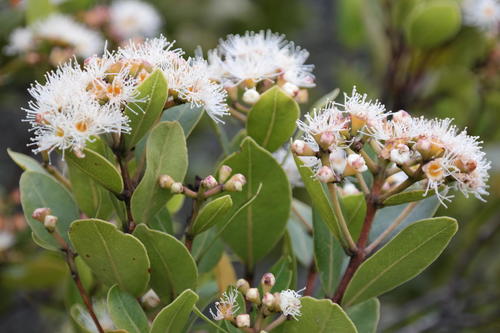
Source: WikipediaEucalyptus tereticornis, commonly known as forest red gum, blue gum or red irongum, is a species of tree that is native to eastern Australia and southern New Guinea. It has smooth bark, lance-shaped to curved adult leaves, flower buds in groups of seven, nine or eleven, white flowers and hemispherical fruit.
Description
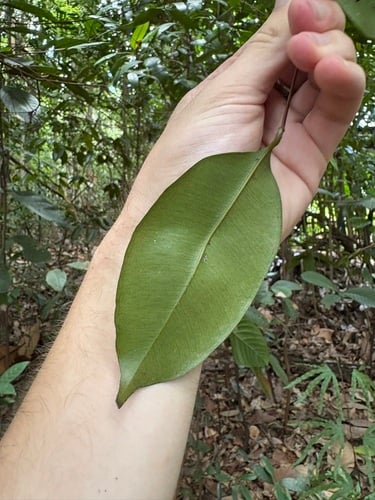
A tall tree. It grows 50 m tall. The leaves are narrow and alternate. They are oval and curved. They are 8-24 cm long by 1-4 cm wide. The tip is pointed. The flowers are creamy-white and in bundles of 5-12.
Edible Uses
The tree produces a nutritious, sweet manna-like substance that falls from the leaves. The roots can provide good drinking water for travellers in desert conditions.
Traditional Uses
A sweet manna-like substance forms on the leaves.
This uses section is brief — help expand it
Medicinal Uses
The resin is astringent. A leaf decoction can reduce fever and relieve pulmonary problems. The essential oil from the leaves has shown antibacterial and antifungal activity, and in-vivo analgesic, muscle-relaxant, and anti-inflammatory effects in rats and mice.
Known Hazards
Citronellal, an essential oil found in most Eucalyptus species is reported to be mutagenic when used in isolation. In large doses, oil of eucalyptus, like so many essential oils has caused fatalities from intestinal irritation. Death is reported from ingestion of 4 - 24 ml of essential oils, but recoveries are also reported for the same amount. Symptoms include gastroenteric burning and irritation, nausea, vomiting, diarrhoea, oxygen deficiency, ,weakness, dizziness, stupor, difficult respiration, delirium, paralysis, convulsions, and death, usually due to respiratory failure.
Distribution
It is a tropical plant.
Where It Grows
Africa, Asia, Australia, East Africa, Myanmar, Papua New Guinea*, PNG, SE Asia, Zambia, Zimbabwe,
Cultivation
This species has the widest latitudinal distribution of any species in the genus, occurring over a wide range of climatic conditions from temperate to tropical. Found naturally at elevations from sea level to 1,800 metres. It grows in areas where the mean annual precipitation ranges from 500 - 2,000mm and the dry season may extend for 7 months, and has been planted successfully in areas where there can be as much as 3,500mm of rain. The mean annual temperature ranges from 16 - 25°c, with a mean maximum temperature of the warmest month of around 27°c and a mean minimum of the coolest month of 7°c. Where it grows naturally, it may tolerate 0 - 15 frosts a year. In some areas where it has been planted, the tree has survived occasional frosts to -7°c. Grows wild in soils that are usually not acidic, are rather rich, moist, alluvial, sandy loams and gravels. It prefers a pH in the range 6.5 - 7.5. Established plants have considerable resistance to drought, and can also tolerate occasional waterlogging. A fast-growing tree, when planted on favourable sites trees have attained a height of 35 metres in 10 years, even on poorer sites they have managed 15 - 18 metres. Yields of wood depend primarily upon humidity. They are highest when trees are grown on the borders of canals and under conditions of irrigation. In irrigated plantations in Africa under good conditions, annual yields of 20 - 25 cubic metres per hectare during the first 15 years have been obtained; the yield then decreases to 10 - 15 cubic metres unless the trees are coppiced. On poor sites in Uruguay annual yields of only 6 cubic metres per hectare were achieved in a 16 year rotation. When grown in plantations, it begins to produce seed 3 - 6 years after establishment. For a Eucalypt, this species is considered relatively fire resistant. The species coppices vigorously: a 99% rate has been reported from Congo. Eucalyptus species have not adopted a deciduous habit and continue to grow until it is too cold for them to do so. This makes them more susceptible to damage from sudden cold snaps. If temperature fluctuations are more gradual, as in a woodland for example, the plants have the opportunity to stop growing and become dormant, thus making them more cold resistant. A deep mulch around the roots to prevent the soil from freezing also helps the trees to survive cold conditions. The members of this genus are remarkably adaptable however, there can be a dramatic increase in the hardiness of subsequent generations from the seed of survivors growing in temperate zones. Eucalyptus monocultures are an environmental disaster, they are voracious, allelopathic and encourage the worst possible attitudes to land use and conservation.
Propagation
No pre-treatment is required. Surface sow seed in a sunny position and keep the compost moist. High-altitude species benefit from 6–8 weeks of cold stratification at 2°c. Germination is good and uniform, with 30–70% success within 14–30 days. Pot seedlings into individual pots as soon as the second set of seed leaves appears. Seedlings are ready for field planting at 25–30cm tall, typically after 3–4 months. Seed remains viable for a long time. Vegetative propagation has been achieved successfully from ligno-tuberous tissue, from branch cuttings taken from 2–3-year-old saplings, and from epicormic shoots from older trees. In Congo, 60% rooting success has been obtained from cuttings.
Other Uses
The wood contains 6–12% tannin and the bark 3–15%. The leaves are a source of the essential oil known as eucalypt oil, with cineole as the principal component at 45%. The oil yield is 0.9–1.4% by fresh weight, and the leaves yield 0.45–3.4% essential oil. The essential oil has shown insecticidal activity. The wood contains 0.5% essential oil. The tree produces kino — a red, resin-like substance. It is generally brown in colour, readily reduced to a fine powder between the fingers, and forms a light reddish-brown turbid liquid that leaves a muddy salmon-coloured residue composed of finely divided particles of resin, wood, and a gelatinous substance. Rich in tannins, kino can be used medicinally and for tanning. The heartwood is pale to dark red, fairly well demarcated from the grey to cream sapwood. The grain is wavy or interlocked with an even, fairly fine texture. Wood density is 660–1060 kg/m³ at 12% moisture content, though plantation wood is often less dense than wood from natural stands. The wood has a strong tendency to warp during drying and is not stable in service. It is strong, tough, and hard, saws and works well with hand and machine tools, but splits easily and the interlocked grain makes finishing somewhat difficult. It holds and glues nails well, is durable, and has good weathering and wearing properties. In Australia it is among the most resistant timbers to marine borer attack, though it failed after 2.5–10 years on the Pacific coast of the United States. The sapwood is susceptible to Lyctus borers; the heartwood is resistant to preservative impregnation while the sapwood is permeable. The wood is used for construction, mining timber, poles, stakes, boxwood, bridge timber, railway sleepers, and wharves. It is also suitable for posts, flooring, vehicle bodies, furniture, handles, ladders, sporting goods, agricultural implements, veneer, plywood, core stock, matches, joinery, vats, toys, novelties, turnery, and wood-wool. In India the species is particularly valued for its good-quality pulp and paper, with strength properties improving after the tree reaches 9 years of age, though the dark heartwood colour is a disadvantage compared to some other eucalyptus species. It is also used for hardboard, fibreboard, and particleboard. The wood is a popular firewood and charcoal source, with an energy value of 17,750–22,000 kJ/kg. The tree is planted in shelterbelts as a windbreak and for shade, used in reforestation programmes, for dune restoration and wind erosion control, as hedges, and along riverbanks to stabilize soil. It is a major source of pollen and nectar and produces a caramel-flavoured honey.
Synonyms
Also Known As
Forest red gum, blue gum, flooded gum, grey gum, mountain gum, Queensland blue gum, red gum, bastard box, red ironbark, red irongum and slaty gum
References (5)
- Donkin,
- Facciola, S., 1998, Cornucopia 2: a Source Book of Edible Plants. Kampong Publications, p 141
- Ryan, M. (Ed.), 2003, Wild Plants of Greater Brisbane. Queensland Museum. p 168
- Spec. bot. New Holland 41. 1795
- World Checklist of Useful Plant Species 2020. Royal Botanic Gardens, Kew