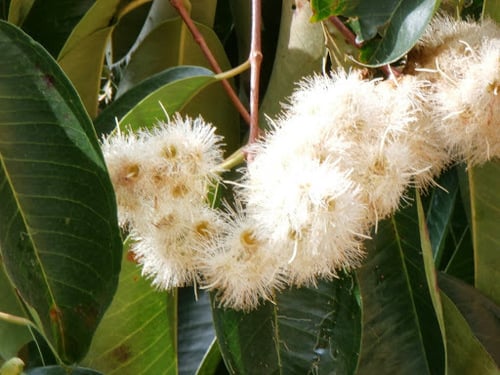
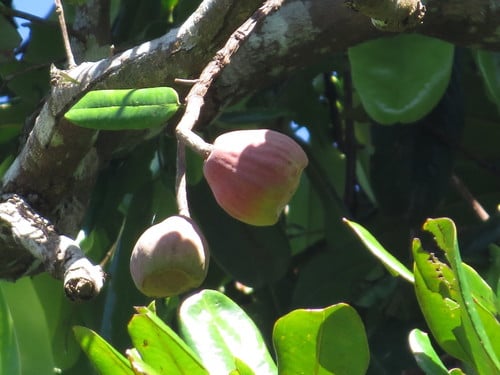
Eucalyptus staigeriana
F. Muell. ex F. M. Bailey
Lemon-scented ironbark
iNaturalist· cc-by-nc
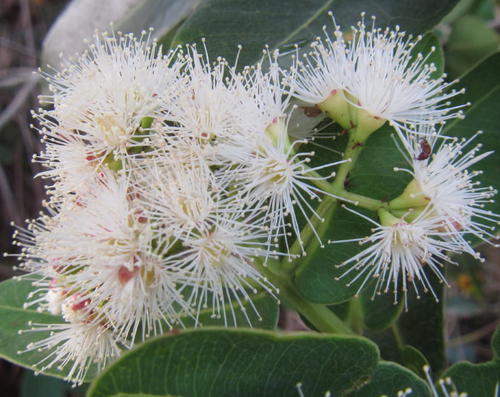
(c) Dean Nicolle, some rights reserved (CC BY-NC), uploaded by Dean Nicolle
iNaturalist· cc-by-nc
(c) Dean Nicolle, some rights reserved (CC BY-NC), uploaded by Dean Nicolle
iNaturalist· cc-by-nc
(c) Dean Nicolle, some rights reserved (CC BY-NC), uploaded by Dean Nicolle
Summary
Source: WikipediaEucalyptus staigeriana, commonly known as the lemon-scented ironbark, is a species of small ironbark tree that is endemic to the Cape York Peninsula. It has rough ironbark on the trunk and branches, lance-shaped to egg-shaped leaves that smell of lemons when crushed, flower buds in groups of seven, white flowers and oval to spindle-shaped fruit.
Description
A tree.
This description is brief — help expand it
Edible Uses
The complex essential oil is distilled from the leaves and used for flavouring, perfumery and aromatherapy. It has a fruity-lemon fragrance with rosemary-like back tones. E. staigeriana fresh weight leaves yield 2.9–3.4% essential oil. It contains a range of essential oil components, including geranial, methyl geranate, geranyl acetate, limonene, phellandrene, neral, terpinolene and geraniol. Brazil and Guatemala are the major producers of Eucalyptus staigeriana oil, with Brazil producing up to 60 tonnes pa.
Distribution
A tropical plant.
Where It Grows
Africa, Australia, Brazil, Central Africa, Central America, Congo, Guatemala, Indonesia, SE Asia, Seychelles,
Cultivation
Eucalyptus staigeriana is native to the monsoonal tropical climate of northern Australia, where it is found at elevations up to 600 metres. The mean annual rainfall is within the range 1,000 - 1,500mm and there is a dry season of around 7 months that can be severe. The mean maximum temperature of the hottest month is 32°c; mean minimum temperature of the coldest month is 13 - 15°c, and frosts are very rare or non-existent. Eucalyptus species generally require a sunny position, succeeding in a wide range of well-drained, circumneutral soils of low to moderate fertility. The plant develops a lignotuber - this is a woody tuber that starts to develop near the base of seedlings and can become massive in the mature plants of some species. It possesses embedded vegetative buds, allowing the plant to regenerate following crown destruction, for example by fire. The leaves have a strong smell of citronellal.
Propagation
Seed - surface sow in a sunny position and make sure the compost is not allowed to dry out. Species that come from high altitudes appreciate 6 - 8 weeks cold stratification at 2°c. The germination rate is only about 20 - 25%. Pot up the seedlings into individual pots as soon as the second set of seed leaves has developed, if left longer than this they might not move well. The seedlings are ready for planting in the field when they are 25 - 30 cm tall, usually after 3 - 4 months. The seed has a long viability.
Other Uses
An essential oil is obtained from the leaves. It is rich in citronellal. The leaves have a much higher leaf oil content than the commonly cultivated Eucalyptus citriodora (4% fresh weight). The main constituents are geraniole (9 - 18%), limonene (1 - 14%), phellandrene (12 - 34%) and nerale (8 - 12%). It is used in perfumery, toilet preparations and as a flavouring. The essential oil obtained from the leaves and young stems is used as an ingredient in commercial cosmetic preparations as a masking agent. The red wood is strong and durable.
References (1)
- Seidemann J., 2005, World Spice Plants. Economic Usage, Botany, Taxonomy. Springer. p 150