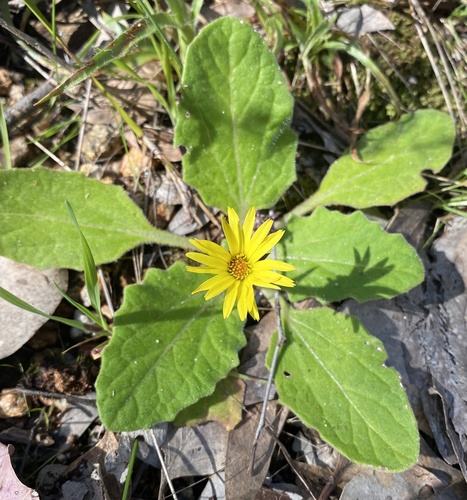
Chrysanthemum segetum
L.
Corn Marigold
gbif· cc-by-nc-nd
Thijs van der Zanden
gbif· cc-by-nc-nd
Thijs van der Zanden
gbif· cc-by-nc-nd
Leen de Ruiter
Description
Chrysanthemum segetum is a ANNUAL growing to 0.5 m (1ft 8in). It is in flower from June to August, and the seeds ripen from July to September. The species is hermaphrodite (has both male and female organs) and is pollinated by Bees, flies, beetles, Lepidoptera (Moths & Butterflies). The plant is self-fertile. Suitable for: light (sandy), medium (loamy) and heavy (clay) soils and prefers well-drained soil. Suitable pH: mildly acid and neutral soils. It can grow in semi-shade (light woodland) or no shade. It prefers moist soil.
Edible Uses
Young shoots - cooked. Strongly aromatic, they contain coumarin. Caution is advised, see the notes above on toxicity.
Known Hazards
One report suggests that the plant contains coumarin. If this is true it would be unwise to eat the leaves, especially if they are dried, since coumarin can prevent the blood from co-aggulating when there is a cut.
Distribution
Europe - E. Mediterranean. Probably introduced in Britain.
Where It Grows
TEMPERATE ASIA: Cyprus, Israel, Jordan, Lebanon, Syria, Turkey (southwest) EUROPE: Albania, Bosnia and Herzegovina, Greece (incl. Crete), Italy (incl. Sardinia, Sicily), Spain (incl. Baleares), France (incl. Corsica) AFRICA: Algeria (north), Libya (north), Morocco, Tunisia
Cultivation
Succeeds in ordinary garden soil, though it prefers a well-drained fertile soil in full sun. Grows well in sandy soils. Dislikes lime. Cultivated as a vegetable in China and Japan. There are several named varieties selected for their ornamental value.
Propagation
Seed - sow spring in situ. The seed usually germinates within 10 - 18 days at 15°c. Autumn sowings succeed in mild areas.
Other Uses
Dye. None known