Tridax procumbens
(L.) L.
Coat buttons, Tridax daisy
iNaturalist· cc0
no rights reserved, uploaded by 葉子
iNaturalist· cc-by-nc
(c) Navya S, some rights reserved (CC BY-NC)
iNaturalist· cc-by-nc
(c) Lucy Cash, some rights reserved (CC BY-NC)
Summary
Source: WikipediaTridax procumbens, commonly known as coatbuttons or tridax daisy, is a species of flowering plant in the family Asteraceae. It is best known as a widespread weed and pest plant. It is native to the tropical Americas including Mexico, but it has been introduced to tropical, subtropical, and mild temperate regions worldwide. It is listed as a noxious weed in the United States and has pest status in nine states.
Description
A low growing herb. It grows 10-40 cm tall. The leaves are the shape of arrow heads and have teeth along the edge. The flowers are like daisy flowers and white or yellow. The fruit is heard and covered with hairs. These seeds can blow in the wind and spread rapidly.
Edible Uses
The leaves are cooked and eaten, though they are only occasionally consumed.
Traditional Uses
The leaves are cooked and eaten. Caution.
This uses section is brief — help expand it
Medicinal Uses
Traditionally, Tridax procumbens has been in use in India for wound healing and as an anticoagulant, antifungal, and insect repellent. Animal studies have found that Tridax procumbens Linn. has anti-inflammatory and analgesic effects. It is also used as a treatment for boils, blisters, and cuts by local healers in parts of India.
Known Hazards
Caution advised when consuming the leaves.
Distribution
It is a tropical and subtropical plant. It grows along exposed dry roadsides and in lawns. In Argentina it grows between 200-2,000 m above sea level.
Where It Grows
Africa, American Samoa, Andaman Is., Angola, Argentina, Asia, Australia, Bahamas, Bangladesh, Belize, Benin, Bolivia, Botswana, Brazil, British Indian Ocean Terr., BIOT, Burkina Faso, Cambodia, Cameroon, Caribbean, Central America, Chad, China, Christmas Island, Colombia, Comoros, Congo DR, Congo R., Costa Rica, Cuba, Dominica, Dominican Republic, East Africa, Ecuador, Eritrea, Eswatini, Ethiopia, Fiji, Ghana, French Guiana, Gabon, Guyana, Haiti, Hawaii, Himalayas, India, Indochina, Ivory Coast, Jamaica, Japan, Kiribati, Laos, Madagascar, Malaysia, Maldives, Mali, Marianas, Marquesas, Mauritius, Mexico, Mozambique, Myanmar, Nauru, Nepal, New Caledonia, Nicaragua, Nigeria, North America, Northeastern India, Pacific, Panama, Pakistan, Papua New Guinea, PNG, Philippines, Reunion, Rotuma, SE Asia, Seychelles, Solomon Islands, South Africa, Southern Africa, South America, Sri Lanka, Sudan, Swaziland, Taiwan, Thailand, Togo, Trinidad-Tobago,Tuvalu, USA, Vanuatu, Venezuela, West Africa, West Indies, Yemen, Zambia, Zimbabwe,
Cultivation
The plant is particularly well-adapted to coarse-textured soils. A widespread weed, spreading freely by means of its creeping stems and prolific production of seeds that are dispersed by the wind. Plants can flower and produce fruit all year round.
Propagation
Seed - Division.
Other Uses
The leaf juice possesses insecticidal and parasiticidal properties. Smoke produced by burning the plant is used to repel mosquitoes. The leaves are used as a hair restorative. The plant has been proposed as a cover crop, but its actual use and value are questionable.
Other Information
The leaves are only occasionally eaten.
Notes
It contains flavonoids. It has medicinal uses.
Synonyms
Also Known As
Cadillo chisaca, Erva-de-touro, Hmwezok-ne-gya, Jentari, Maavina, Margaridinha, Mexican daisy
References (12)
- Achigan-Dako, E, et al (Eds), 2009, Catalogue of Traditional Vegetables in Benin. International Foundation for Science.
- Asase, A. & Oteng-Yeboah, A. A., 2012, Plants used in Wechiau Community Hippotamus Sanctuary in Northwest Ghana. Ethnobotany research & Applications 10:605-618
- Batawila, K., et al, 2007, Diversite et gestion des legumes de cueillete au Togo. African Journal of Food, Agriculture, Nutrition and Development 7( 3& 4): 64
- Dansi, A., et al, 2008, Traditional leafy vegetables and their use in the Benin Republic. Genet Resour Crop Evol (2008) 55:1239–1256
- Flora of Solomon Islands
Show all 12 references Hide references
- Franklin, J., Keppel, G., & Whistler, W., 2008, The vegetation and flora of Lakeba, Nayau and Aiwa Islands, Central Lau Group, Fiji. Micronesica 40(1/2): 169–225, 2008
- Kew Plants of the World Online
- Sujanapal, P., & Sankaran, K. V., 2016, Common Plants of Maldives. FAO & Kerala FRI, p 278
- Thaman, R. R., 1987, Plants of Kiribati: A listing and analysis of vernacular names. Atoll Research Bulletin No. 296
- Thaman, R. R, 2016, The flora of Tuvalu. Atoll Research Bulletin No. 611. Smithsonian Institute p 70
- Topp, J. M. W., 1988, An Annotated Check List of the Flora of Diego Garcia, British Ocean Territory. Atoll Research Bulletin No. 313
- World Checklist of Useful Plant Species 2020. Royal Botanic Gardens, Kew
More from Asteraceae
Ageratina aromatica
Lesser Snakeroot, Mata
Ageratum conyzoides
Billygoat Plant, Goatweed
Agoseris aurantiaca
Mountain dandelion, Orange Agoseris, Orange-flower Goat-chicory, False dandelion
Agoseris glauca
False dandelion, Pale agoseris, Short-beaked agoseris
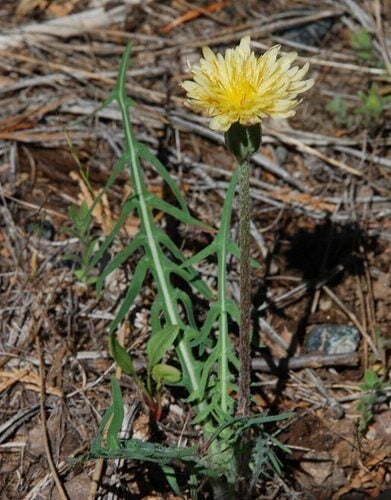
Agoseris retrorsa
Spearleaf Agoseris
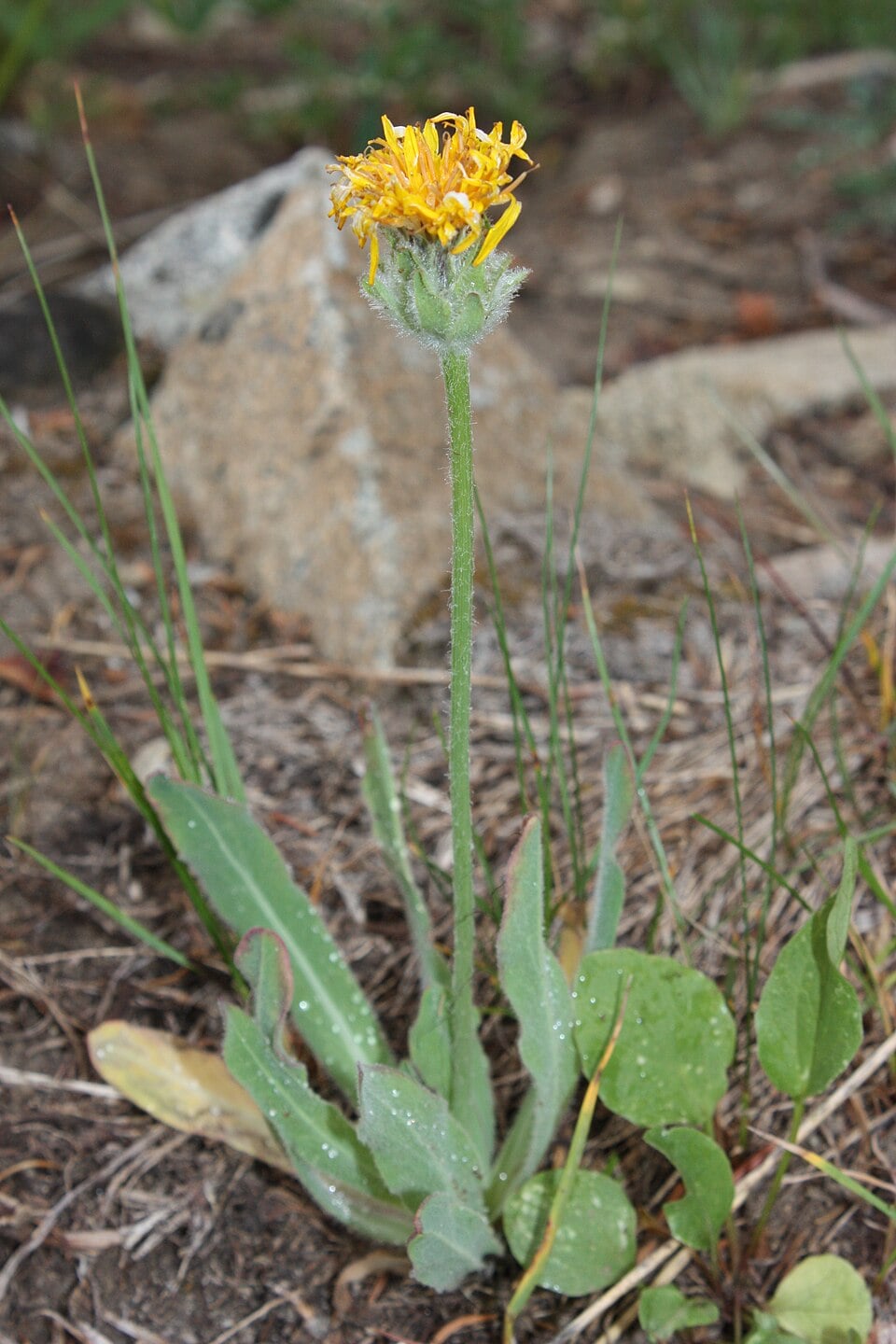
Agoseris villosa
Woolly Agoseris