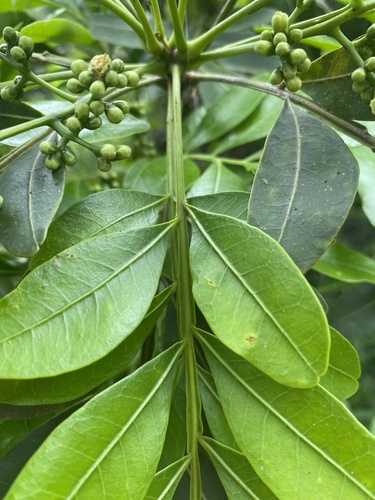
Toona ciliata
M.Roem.
Mountain Cedar, Australian Red Cedar, Toona
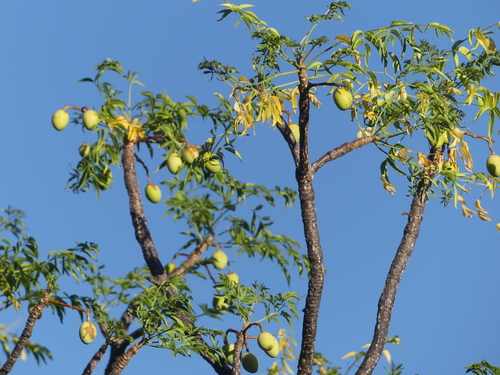
iNaturalist· cc-by-nc
(c) Martin Bennett, some rights reserved (CC BY-NC), uploaded by Martin Bennett
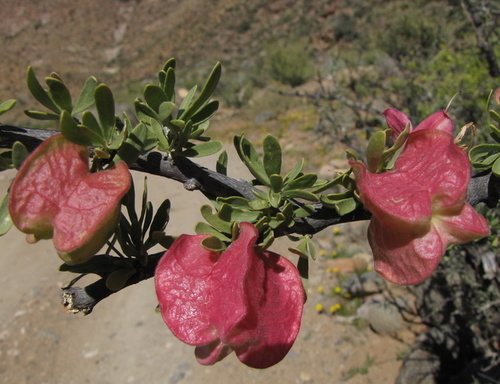
iNaturalist· cc-by-nc
(c) Martin Bennett, some rights reserved (CC BY-NC), uploaded by Martin Bennett
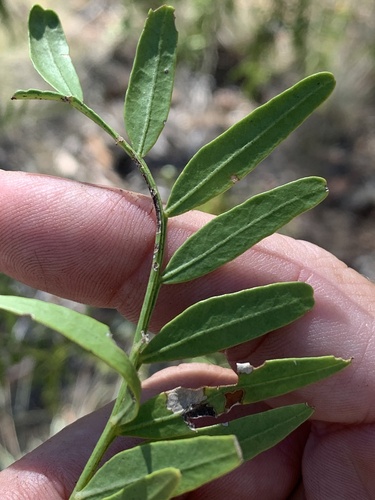
iNaturalist· cc-by-nc
(c) JA, some rights reserved (CC BY-NC), uploaded by JA
Description
Toona ciliata is a deciduous Tree growing to 30 m (98ft) by 30 m (98ft) at a fast rate. See above for USDA hardiness. It is hardy to UK zone 10. The flowers are pollinated by Bees, Moths. Suitable for: medium (loamy) and heavy (clay) soils, prefers well-drained soil and can grow in heavy clay soil. Suitable pH: mildly acid and neutral soils and can grow in very acid soils. It can grow in full shade (deep woodland) semi-shade (light woodland) or no shade. It prefers moist or wet soil and can tolerate drought.
Edible Uses
Leaves - cooked.
Medicinal Uses
Antiperiodic Astringent Dysentery Emmenagogue Febrifuge Skin Tonic. Various parts of the plant are used medicinally throughout its geographical range. The bark is a powerful astringent, febrifuge, tonic, and antiperiodic. It is used to treat chronic dysentery and wounds. A resinous gum obtained from the bark is used to treat boils. The flowers are emmenagogue.
Known Hazards
Sawdust from machining operations has been reported to cause dermatitis in some individuals.
Distribution
E. Asia - China, Indian subcontinent, Myanmar, Thailand, Cambodia, Laos, Vietnam, Malaysia, Indonesi
Where It Grows
TEMPERATE ASIA: Afghanistan, China (Guangdong Sheng, Hainan Sheng, Sichuan Sheng, Yunnan Sheng) TROPICAL ASIA: Bangladesh, Bhutan, India, Sri Lanka, Nepal, Pakistan, Papua New Guinea, Cambodia, Laos, Myanmar, Thailand, Indonesia, Malaysia, Philippines AUSTRALASIA: Australia (New South Wales (east), Queensland)
Cultivation
A plant of the moist to wet tropics and subtropics, where it is found at elevations from 400 - 2,800 metres. It grows best in areas where annual daytime temperatures are within the range 18 - 34°c, but can tolerate 8 - 48°c. When dormant, the plant can survive temperatures down to about -3°c, but young growth can be severely damaged at 0°c. It prefers a mean annual rainfall in the range 1,100 - 3,000mm, but tolerates 750 - 4,500mm. Young trees require some protection from direct sun, but become more light demanding as they grow older. Prefers a rich, deep, water-retentive soil. Does not do well on wet, compacted or poor sandy ones. Prefers a pH in the range 5.5 - 6.5, tolerating 4.5 - 7.5. Widely grown as a timber tree, it has wind-dispersed seeds and has become naturalized in some areas. It needs to be monitored for potential invasiveness. Toona ciliata grows rapidly. In Hawaii an average tree height of 10 metres and an average bole diameter of 9.6 cm had been reached after 8.7 years. Trees may reach a height of 35 metres with a bole diameter of 70 cm when 40 years old. In plantations in tropical Africa, growth declines seriously after 40 years. Trees planted in open localities may already flower and produce seed after 6 years. It coppices well and produces plentiful root suckers. The tree has a spreading superficial root system, which may have adverse effects on the growth of agricultural crops. The tendency to become branchy should be controlled by close initial spacing. Thinning is required from the 4th year, and thereafter every 5 years. A very variable tree. Flowering: early spring, mid spring, late spring. Bloom Color: red, pink, white.
Propagation
Seed - germinates quicker and better under shade. It should be broadcast thinly on raised and shaded nursery beds soon after collection. Germination takes 8 - 15 days and fresh seed has a germination rate of 50 - 80%. Natural regeneration is profuse even in areas outside its natural range. Good natural reproduction can be induced by clearing the ground in the vicinity of seed bearers. Orthodox seed storage behaviour; 90% germination after 12 months? storage in polythene bags at 5 - 8°c with 34-12.9% mc; complete loss of viability after 3 months at room temperature.
Other Uses
Dye Essential Furniture Insecticide Plant breeding String Tannin Wood. Shade tree. Street tree. Public open space. Timber tree. Agroforestry Uses: Mountain cedar has been used in reforestation projects and is also planted to provide firebreaks. Other Uses The flowers contain a red colouring matter and also a sulphur-coloured dye. Cotton and woollen fabric can be dyed a dull yellow by mere immersion in a boiling extract of the flowers. Used in conjunction with safflower and turmeric, they produce a sulphur-yellow colour. The bark contains tannin. A fibre obtained from the bark has been used traditionally for twines and the manufacture of string bags. An aromatic oil can be extracted from the fruit. Some extracts from the bark have insect-repellent properties. Extracts from the bark, heartwood and leaves apparently have insecticidal qualities. The wood is used for shiitake mushroom culture. The heartwood is pale brown, cedar brown, dark red-brown or brick red when first cut, darkening upon exposure to a rich reddish-brown with darker brown streaks. The sapwood is pinkish-white, red or pale yellow-brown, it smells strongly of cedar when cut. The grain is generally straight to somewhat interlocked, the texture moderately close and uneven, and the wood lustrous. A strong, fragrant, long-lasting spicy odour is usually present. The wood is moderately hard, lightweight, tough and durable. Staining is satisfactory, and the timber takes both water- and oil-based paints well. The wood has a variety of uses such as for carvings, boat building, cabinet making, cigar boxes, matchboxes, decorative plywood and veneer, food containers, high-grade furniture, interior trim, joinery, musical instruments, ornamental work, panelling, boxes and crates, building materials, exterior uses, millwork, mouldings. The timber of this species has always been highly regarded in the manufacture of light-weight racing boats particularly sailing boats and dinghies.
Synonyms
Also Known As
Kuruk, Mahaneem, Mahanim, Malarveppu, Mandurike, Mathagiri, Moulmein cedar, Nandichettu, Nandivriksha, Poma, Santhanavembu, Tawtama, Thevatharam, Todu, Tun, Tundu, Tuni, Tunna, Tunumaram, australian red-cedar, australian-cedar, henduri poma, hong chun, indian mahogany, moulmain cedar, poma, red cedar, red-cedar, thooniyanoikam, toon, toon tree, toona, toonboom, toontree, tuni.