Owenia acidula
F. Muell.
Emu apple
iNaturalist· cc-by-nc
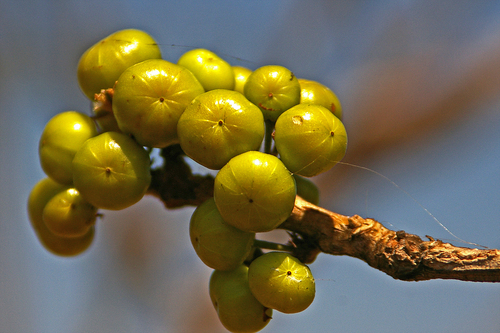
(c) Geoffrey Sinclair, some rights reserved (CC BY-NC), uploaded by Geoffrey Sinclair
iNaturalist· cc-by-nc
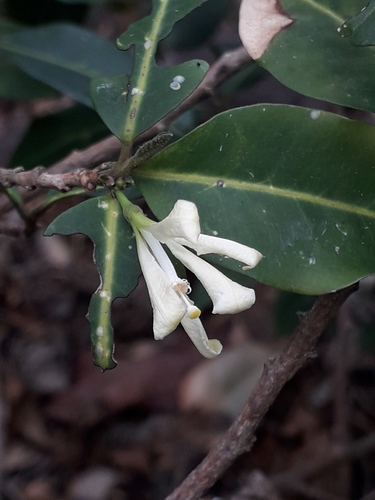
(c) Grant Houston, some rights reserved (CC BY-NC), uploaded by Grant Houston
iNaturalist· cc-by-sa
(c) Greg Tasney, some rights reserved (CC BY-SA), uploaded by Greg Tasney
Summary
Source: WikipediaOwenia acidula, commonly known as emu apple, is small or medium-sized tree of outback woodlands native to Australia. It may grow to ten metres tall. The pinnate leaves are bright green and shiny, with leaflets 2–5 cm long. Broken twigs ooze a milky sap. The edible fruit is purplish-red with paler speckles, 2–4 cm wide with a large stone-like seed.
Description
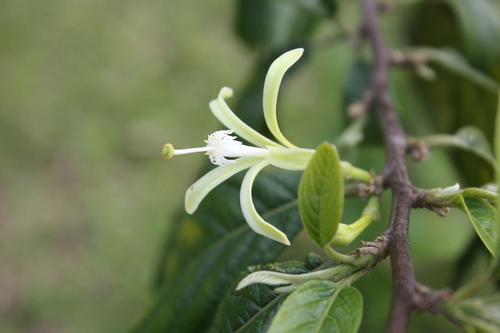
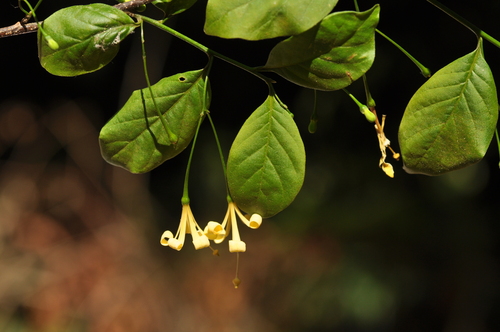
A small tree with a single trunk. It grows 4-12 m tall and spreads 4-8 m wide. The crown is dense and rounded. It can occur in clumps with several suckers. The bark is dark grey and rough. The leaves droop. They are 12-16 cm long. The leaves have leaflets along the stalk. The leaflets are 2-4 cm long and 4-9 mm wide. They are dark green. Male and female flowers occur on separate plants. The flowers are tiny and green. They have 5 petals. The fruit are plum-like. They have dark purplish red spots. They are 2-3 cm across. They hang down on long stalks. They contain one hard woody nut with 2-3 seeds.
Edible Uses
The fruit pulp is an Aboriginal bushfood and apparently causes hallucinations. The fruits ripen after falling off the tree, and have a sour flavour.
Traditional Uses
The fruit are sometimes buried before eating. They can be used for drinks, juices and jellies.
This uses section is brief — help expand it
Distribution
A tropical plant. It grows in tropical Australia. It is more common in arid and semiarid areas. It is hardy to frosts. It needs well drained soils. It can grow in sun or light shade.
Where It Grows
Australia*,
Cultivation
It is grown from seed. The seed are difficult to get to grow. It suckers freely from the roots.
Propagation
Seed - very difficult to germinate - in nature it probably germinates after passing through the stomach of an emu.
Other Information
The fruit are commonly eaten.
Notes
There are about 6 Owenia species. They grow in Australia.
Also Known As
Dillie Boolen, Colane, Gooya, Gruie, Guri, Sour Apple
References (25)
- Anon., 2003, Native Plants for the Fitzroy basin. Society for Growing Australian Plants Inc. (Rockhampton Branch) p 69
- Bodkin, F., 1991, Encyclopedia Botanica. Cornstalk publishing, p 750
- Bonney, N., 2012, Edible Wild Native Plants for Southern Australia. p 110
- Boomsma, C.D., 1972, Native Tree of South Australia. Woods & Forests Department South Australia, Bulletin No.19. p 209
- Cancilla, D., 2018, Ethnobotanical and Ethnozoological Values Desktop Assessment - Eliwana Project. p 41
Show all 25 references Hide references
- Cherikoff V. & Isaacs, J., The Bush Food Handbook. How to gather, grow, process and cook Australian Wild Foods. Ti Tree Press, Australia p 190
- Cleland, J.B., 1957, Mankind 5(4):149-62
- Cribb, A.B. & J.W., 1976, Wild Food in Australia, Fontana. p 46
- Elliot, W.R., & Jones, D.L., 1997, Encyclopedia of Australian Plants suitable for cultivation. Vol 7. Lothian. p 125 (Drawing)
- Facciola, S., 1998, Cornucopia 2: a Source Book of Edible Plants. Kampong Publications, p 149
- Hardwick, G., 2001, Economically Useful Plants for Northern Australia: Master Species List. Crusader eBooks.
- Hall, N. et al, 1972, The Use of Trees and Shrubs in the Dry Country of Australia, AGPS, Canberra. p 388
- Hedrick, U.P., 1919, (Ed.), Sturtevant's edible plants of the world. p 455
- Holliday, I., 1989, A Field Guide to Australian Trees. Hamlyn. p 276
- Hooker's J. Bot. Kew Gard. Misc. 9:304. 1857
- Hunter, J. T. et al, Budjiti traditional use of plants on Naree Station. p 8
- Hunter, J.T., 2017, Is there a relationship between contemporary high Aboriginal plant resource locations and mapped vegetation communities? Cunninghamia 17:27-34. The Royal Botanic Garden Sydney. ISSN 2200 - 405X
- Lazarides, M. & Hince, B., 1993, Handbook of Economic Plants of Australia, CSIRO. p 177
- Lord, E.E., & Willis, J.H., 1999, Shrubs and Trees for Australian gardens. Lothian. p 19
- Low, T., 1991, Wild Food Plants of Australia. Australian Nature FieldGuide, Angus & Robertson. p 178
- McKerney, M. & White, H., 2011, Bush Tucker, Boomerangs & Bandages. Border River-Gwyder Catchment Management Authority p 83
- Milson. J., 2000, Trees and Shrubs of north-west Queensland. DPI p 102
- Morley, B.D., & Toelken, H.R., (Eds), 1983, Flowering Plants in Australia. Rigby. p 200
- Paczkowska, G. & Chapman, A.R., 2000, The Western Australian Flora. A Descriptive Catalogue. Western Australian Herbarium. p 294
- Townsend, K., 1999, Field Guide to Plants of the Dry Tropics. Society for Growing Australian Plants, Townsville Branch Inc. p 74