Owenia reticulata
F. Muell.
Desert Walnut, Broad-leaved Emu Apple
iNaturalist· cc-by
(c) coenobita, some rights reserved (CC BY), uploaded by coenobita
iNaturalist· cc-by-nc
(c) geoffbyrne, some rights reserved (CC BY-NC)
iNaturalist· cc-by-nc
(c) geoffbyrne, some rights reserved (CC BY-NC)
Description
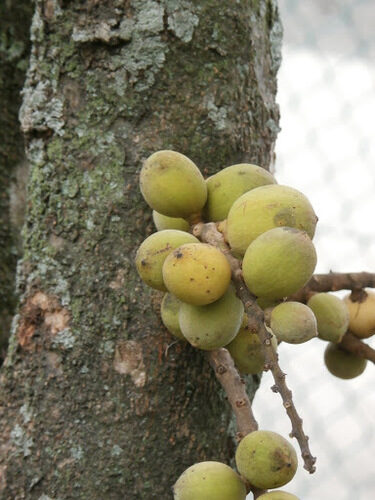
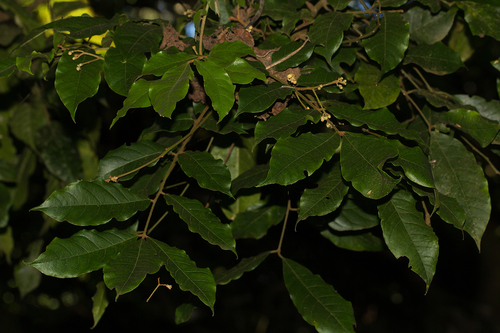
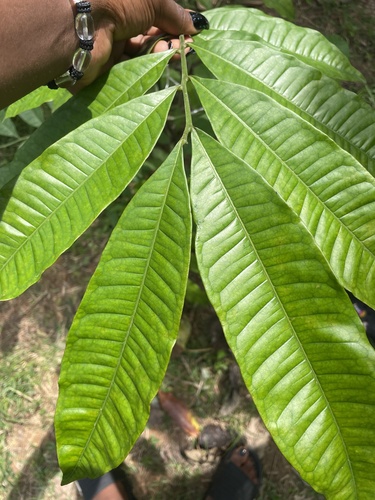
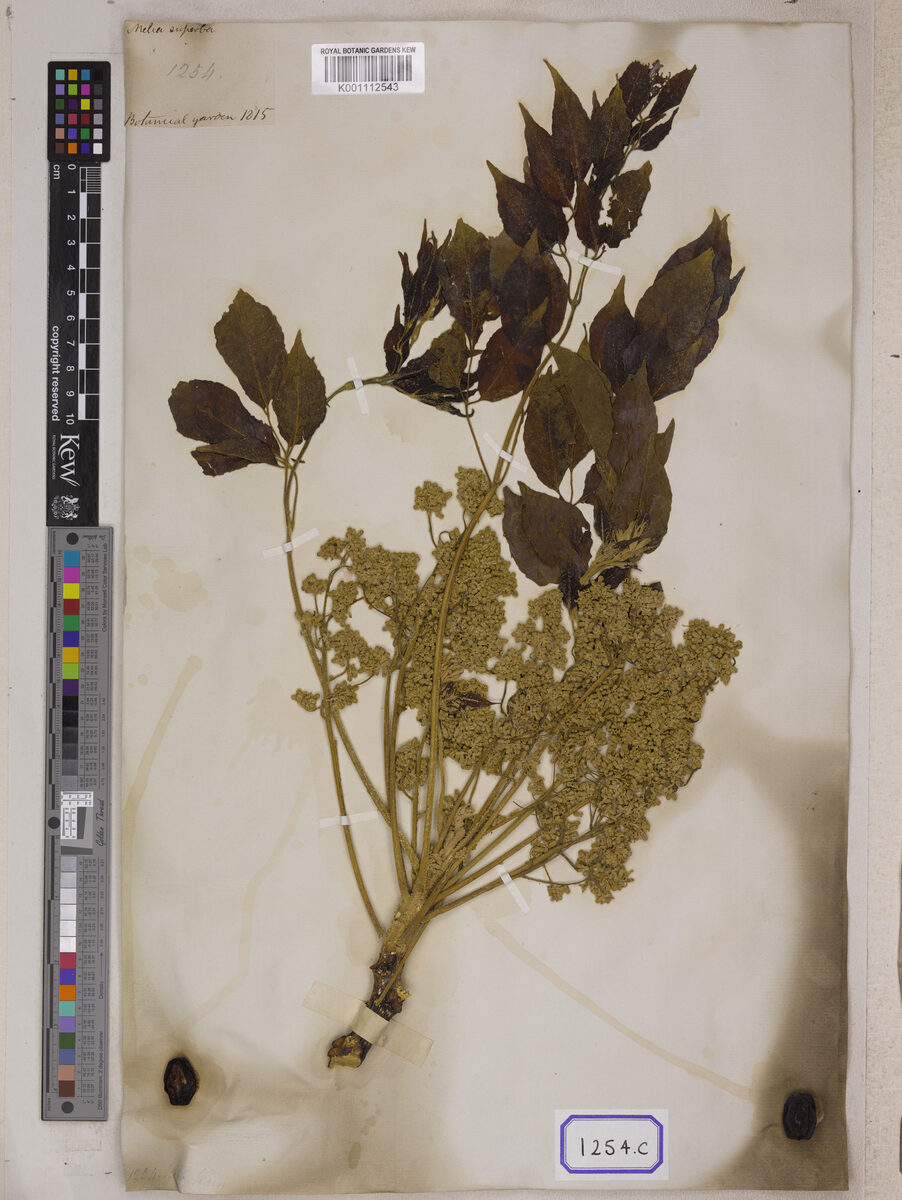
A tall shrub or small tree. It grows 4-10 m high and spreads 3-8 m wide. Young growth is sticky and yellow. The bark is rough and dark grey. The small branches are covered with a sticky yellow covering. The leaves are 30 cm long. They are divided into leaflets along the stalk. The leaflets are 6-20 cm long by 3.5-10 cm wide. There are 1-6 pairs of leaflets. They are mid green and with a network of veins. The flowers are 0.5 cm across and white. Male and female flowers are on separate plants. They occur in loose clusters. The fruit are 2-4 cm across. They can be pear shaped or round and red or purple.
Edible Uses
The nuts or kernels are roasted and eaten. The tree also yields an edible sap-like liquid. The fruit and gum are also edible portions.
Traditional Uses
The nuts or kernels are eaten. They are roasted. The tree yields a saplike liquid.
This uses section is brief — help expand it
Distribution
A tropical plant. It grows in tropical and subtropical places. It grows in arid and semi-arid regions. It grows in seasonally dry tropical regions. It needs good drainage and a sunny location. Plants are hardy to frost.
Where It Grows
Australia*, Kenya,
Cultivation
Plants can be grown from seed. Seed may be difficult to germinate.
Production
The nuts are hard to extract from the shell.
Notes
There are about 6 Owenia species. They grow in Australia.
References (18)
- Bodkin, F., 1991, Encyclopedia Botanica. Cornstalk publishing, p 750
- Cancilla, D., 2018, Ethnobotanical and Ethnozoological Values Desktop Assessment - Eliwana Project. p 41
- Cherikoff V. & Isaacs, J., The Bush Food Handbook. How to gather, grow, process and cook Australian Wild Foods. Ti Tree Press, Australia p 190
- Cleland, J.B., 1957, Mankind 5(4):149-62
- Elliot, W.R., & Jones, D.L., 1997, Encyclopedia of Australian Plants suitable for cultivation. Vol 7. Lothian. p 126
Show all 18 references Hide references
- Facciola, S., 1998, Cornucopia 2: a Source Book of Edible Plants. Kampong Publications, p 149
- Hardwick, G., 2001, Economically Useful Plants for Northern Australia: Master Species List. Crusader eBooks.
- Hall, N. et al, 1972, The Use of Trees and Shrubs in the Dry Country of Australia, AGPS, Canberra. p 536
- Kenneally, K.E., Edinger, D. C., and Willing T., 1996, Broome and Beyond, Plants and People of the Dampier Peninsula, Kimberley, Western Australia. Department of Conservation and Land Management. p 126
- Latz, P.K., 1996, Bushfires and Bushtucker: Aboriginal plant use in Central Australia. IAD Press Alice Springs p 237
- Menninger, E.A., 1977, Edible Nuts of the World. Horticultural Books. Florida p 119
- Milson. J., 2000, Trees and Shrubs of north-west Queensland. DPI p 104
- Morley, B.D., & Toelken, H.R., (Eds), 1983, Flowering Plants in Australia. Rigby. p 200
- Paczkowska, G. & Chapman, A.R., 2000, The Western Australian Flora. A Descriptive Catalogue. Western Australian Herbarium. p 294
- Permaculture website Ngare Ndare project Kenya
- Petheram, R.J. and Kok, B., 2003, Plants of the Kimberley Region of Western Australia. UWA Press p 505
- Townsend, K., 1994, Across the Top. Gardening with Australian Plants in the tropics. Society for Growing Australian Plants, Townsville Branch Inc. p 307
- Wheeler, J.R.(ed.), 1992, Flora of the Kimberley Region. CALM, Western Australian Herbarium, p 663