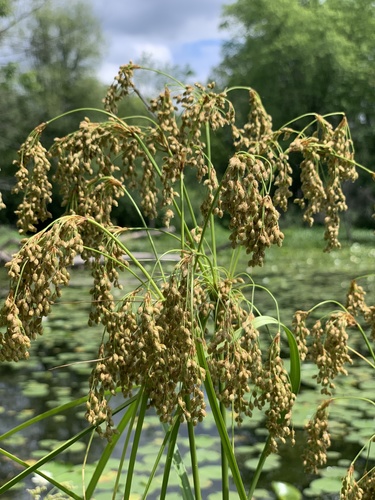
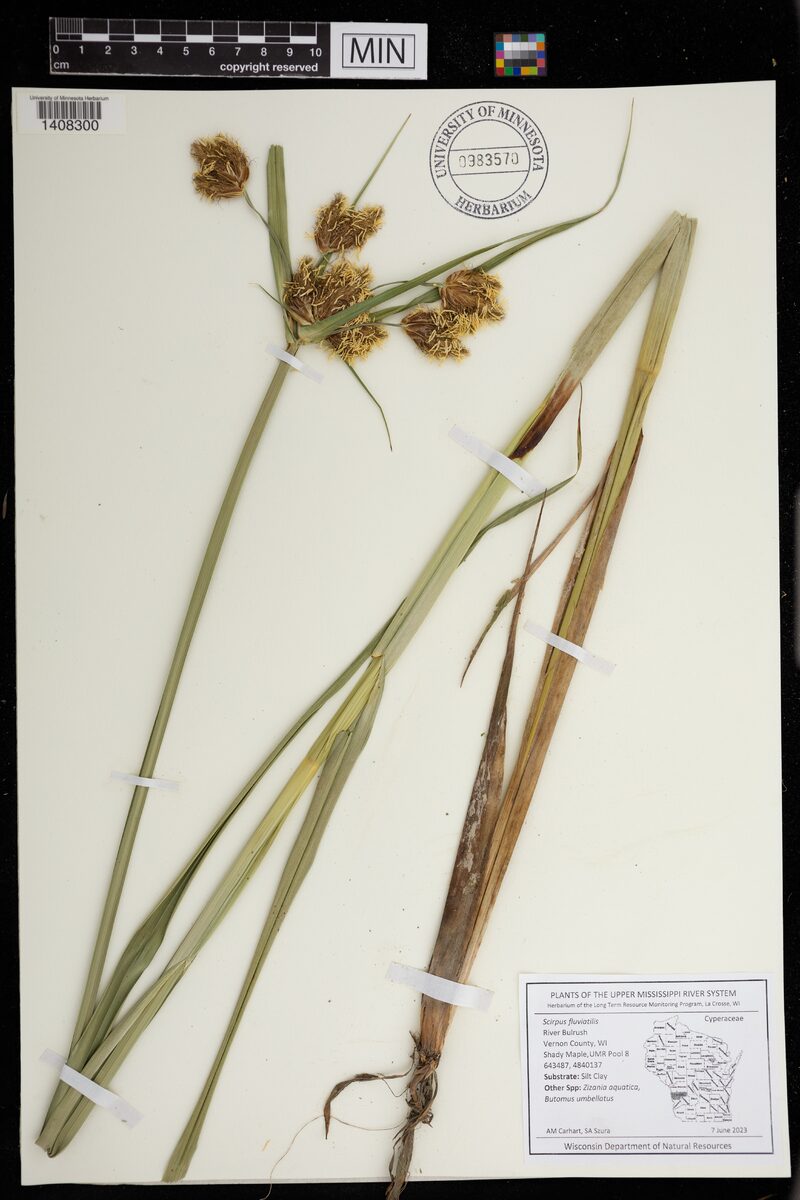
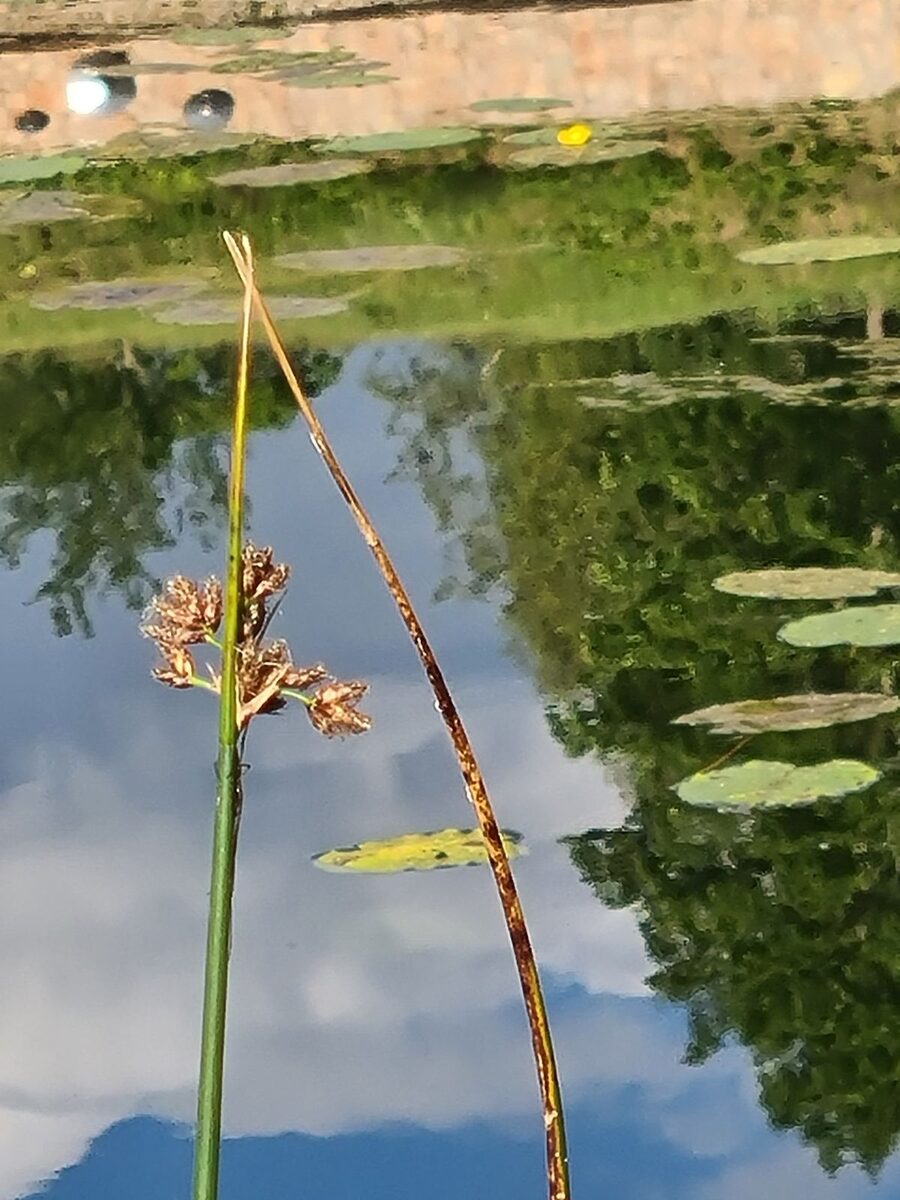
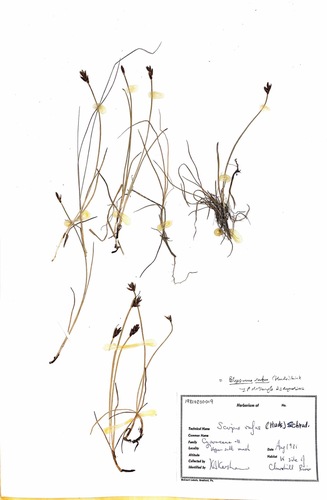
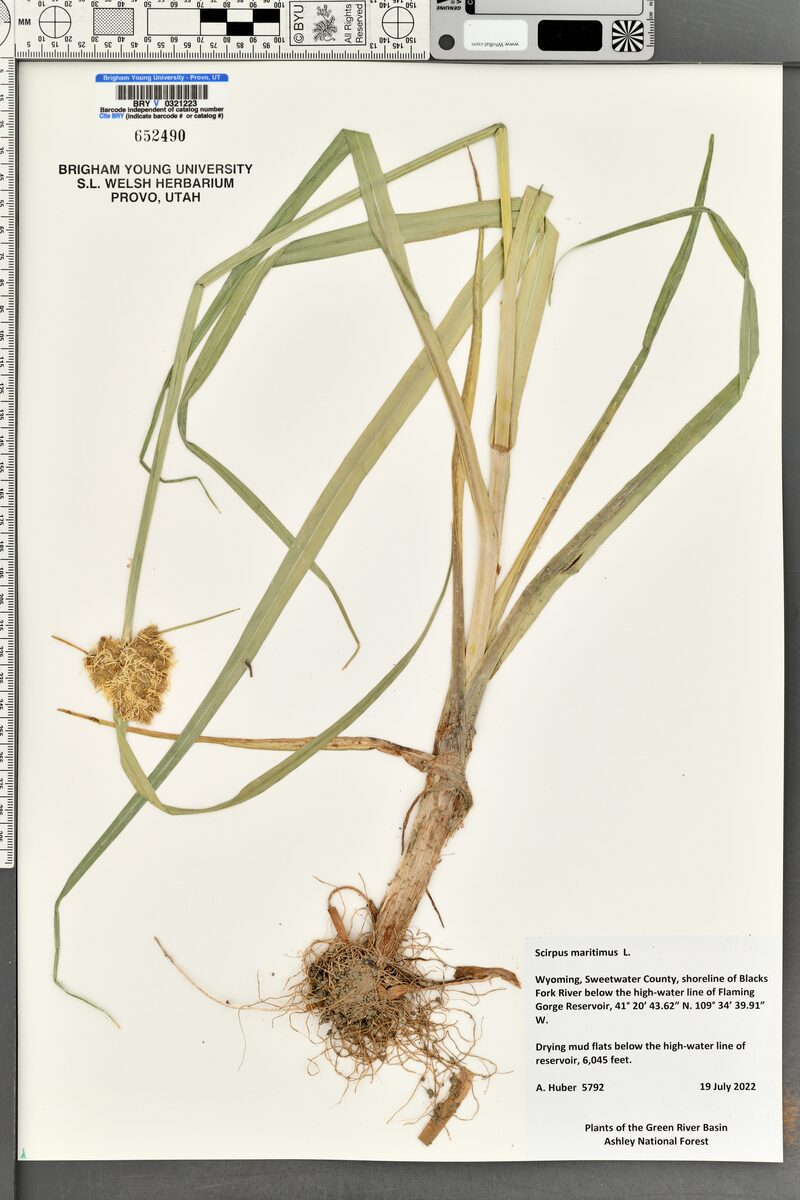
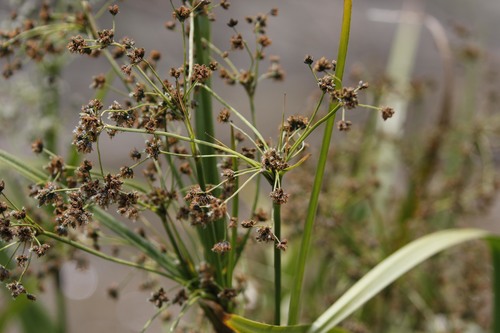
Scirpus americanus
Pers.
American Bulrush
gbif· cc-by-nc
vanklinken
gbif· cc-by-nc
vanklinken
gbif· cc-by-nc
chalikotheres
Description
Scirpus americanus is a PERENNIAL growing to 0.6 m (2ft). It is in flower from June to July, and the seeds ripen from August to September. The species is hermaphrodite (has both male and female organs) and is pollinated by Wind. Suitable for: light (sandy), medium (loamy) and heavy (clay) soils. Suitable pH: mildly acid, neutral and basic (mildly alkaline) soils. It can grow in semi-shade (light woodland) or no shade. It prefers moist or wet soil and can grow in water. The plant can tolerate maritime exposure.
Edible Uses
Root - raw or cooked. Rich in starch. Stem. Peeled and eaten raw or cooked. Stem base - raw or cooked. Pollen. Rich in protein, it can be added to flour when making bread, cakes etc. Seed - cooked. A nutty flavour. The seed can be ground into a powder, mixed with water, boiled and eaten as a mush. The seed is rather small and fiddly to harvest and utilize.
Distribution
S. W. Europe, including Britain, south and east from the Netherlands to Belgium, Germany and Italy.
Where It Grows
NORTHERN AMERICA: Canada (Nova Scotia, British Columbia (south)), United States (Maine, Massachusetts, Michigan, New Hampshire, New Jersey, New York, Rhode Island, Vermont, Connecticut, Kansas (southwest), Missouri,, Oklahoma, Idaho, Oregon, Washington, Wyoming, Alabama, Delaware, Florida, Georgia, Louisiana, Maryland, North Carolina, South Carolina, Virginia, Mississippi, New Mexico, Texas, Arizona, California, Nevada, Utah), Mexico (Chihuahua, Nuevo León, Sonora, Baja California (Norte), Baja California Sur, Chiapas, Jalisco, México, Michoacán de Ocampo, Oaxaca, Puebla, Veracruz de Ignacio de la Llave, Ciudad de México). SOUTHERN AMERICA: Hispaniola, Bermuda, Cuba, Jamaica, St. Kitts and Nevis (Nevis), United States (Puerto Rico), Belize, Costa Rica, Guatemala, Nicaragua, Peru (La Libertad), Argentina (Buenos Aires, Catamarca, Chubut, Córdoba, Entre Ríos, La Rioja, Mendoza, Río Negro, San Juan, Santa Fe, Tucumán), Chile, Uruguay
Cultivation
Succeeds in any wet to moisture retentive ground, pond margins and shallow water in full sun or shade.
Propagation
Seed - sow in a cold frame as soon as it is ripe in a pot standing in 3cm of water. Only just cover the seed with soil. The seed usually germinates fairly quickly. Prick out the plants when large enough to handle and plant out in their permanent positions in early summer. Division in spring. Very easy, larger divisions can be planted out direct into their permanent positions. We have found it best to pot up the smaller divisions and grow them on in a lightly shaded position in a cold frame, planting them out once they are well established in the summer.
Other Uses
Basketry Hair Weaving. The leaves, mixed with oil, have been rubbed on a child's head to make the hair grow long and thick. The leaves have been used in making baskets and shopping bags. They have also been woven into hats.