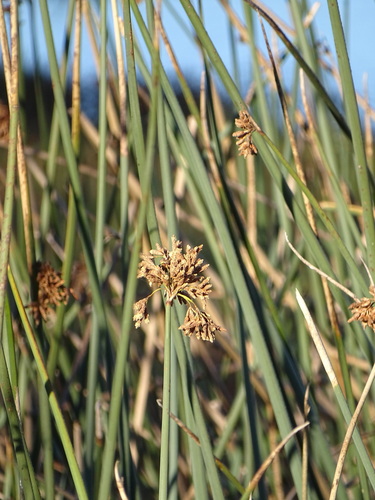
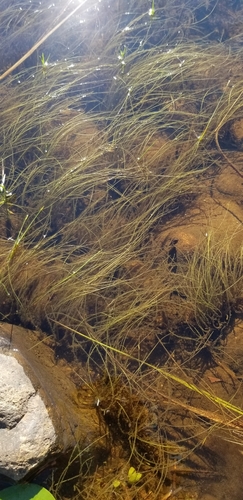
Carex dispalata
Boott ex A. Gray
iNaturalist· cc-by-sa
(c) harum.koh, some rights reserved (CC BY-SA), uploaded by harum.koh
Summary
A perennial sedge with monoecious, wind-pollinated flowers. Adapts to light sandy, medium loamy, and heavy clay soils across mildly acidic to mildly alkaline pH ranges. Grows in semi-shade or full sun and prefers moist or wet soil.
Description
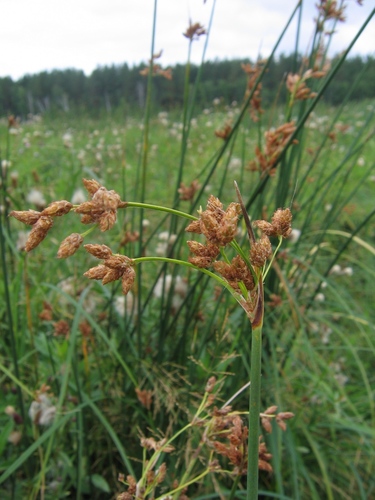
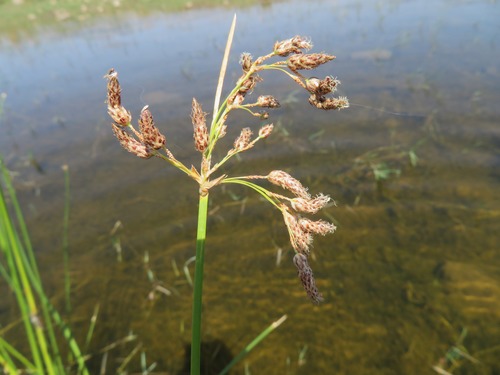
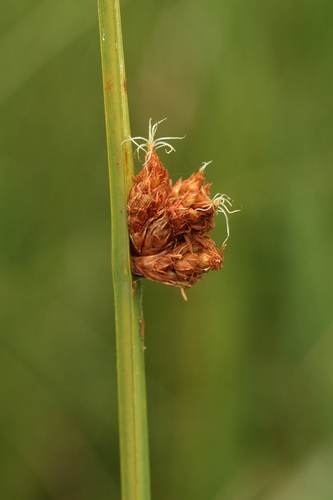
A sedge. These grow in clumps and have grass like leaves and solid stalks. The rhizome is thick. It has thick stolons. The stalks are 40-80 cm tall. They are 3 sided. The leaves are 4-8 mm wide. They are flat. There are 4-6 flower spikes. The seeds have a loose cover and are 3 sided and 2 mm across.
Edible Uses
Roots can be cooked. Seeds are edible but small and tedious to harvest and process.
Medicinal Uses
None known
Distribution
It is a temperate plant. It grows in swamp areas. in north China it grows in ditches and wet areas between 500-2,900 m above sea level.
Where It Grows
Asia, China, Japan, Korea,
Cultivation
We have very little information on this species and do not know if it will be hardy in Britain, though judging by its native range it should succeed outdoors in most parts of this country. The following notes are based on the general needs of the genus. Easily grown in a damp to wet soil in full sun or shade. Members of this genus are rarely if ever troubled by browsing deer.
Propagation
Sow seeds in spring directly in moist soil with light shade, or in a cold frame if seed is limited, transplanting seedlings in summer. Seeds germinate in 2-6 weeks at 15°C. Divide established clumps in spring; larger divisions can be replanted directly, while smaller ones benefit from cold frame treatment until well-rooted before summer or spring planting.
Other Uses
Leaves are used for bedding material and can be woven into straw hats.
Notes
There are about 2000 Carex species. There are 200 species in tropical America.
References (3)
- Arora, R. K., 2014, Diversity in Underutilized Plant Species - An Asia-Pacific Perspective. Bioversity International. p 101
- Plants for a Future database, The Field, Penpol, Lostwithiel, Cornwall, PL22 0NG, UK. http://www.scs.leeds.ac.uk/pfaf/
- Simpson, D. A. & Inglis, C. A., 2001, Cyperaceae of Economic, Ethnobotanical and Horticultural Importance: A checklist. Kew Bulletin Vol. 56, No. 2 (2001), pp. 257-360