Carex filicina
Nees
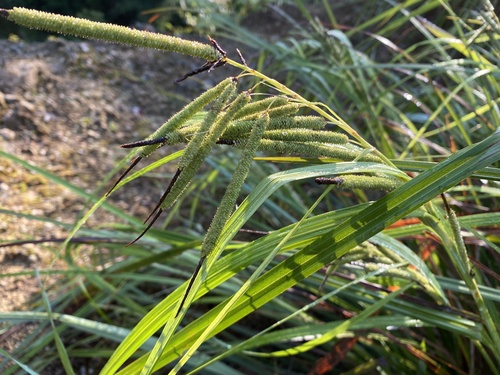
iNaturalist· cc-by-nc
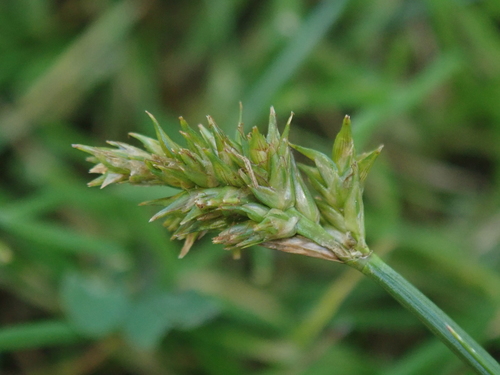
(c) 陳柏璋, some rights reserved (CC BY-NC), uploaded by 陳柏璋
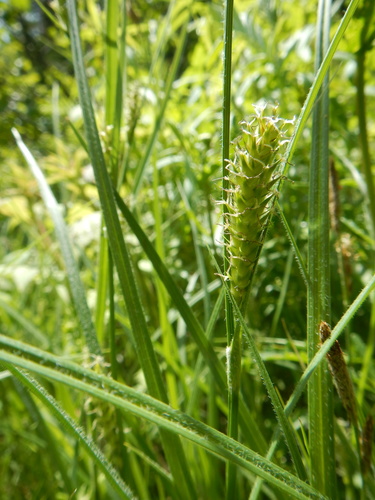
iNaturalist· cc-by-nc
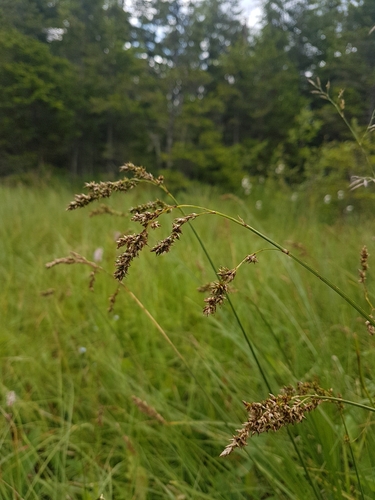
(c) Chen Shu, some rights reserved (CC BY-NC), uploaded by Chen Shu
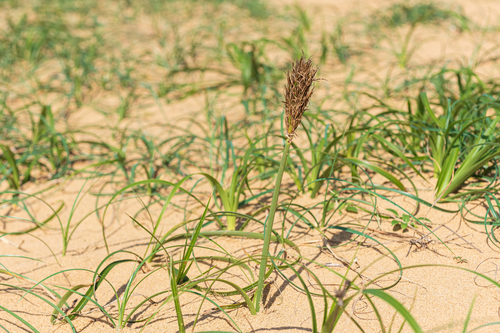
iNaturalist· cc-by-nc
(c) 洪阿愷, some rights reserved (CC BY-NC), uploaded by 洪阿愷
Summary
Source: WikipediaCarex filicina is a tussock-forming species of perennial sedge in the family Cyperaceae. It is native to parts of Asia from Pakistan in the north west to Indonesia in the south east.
Description
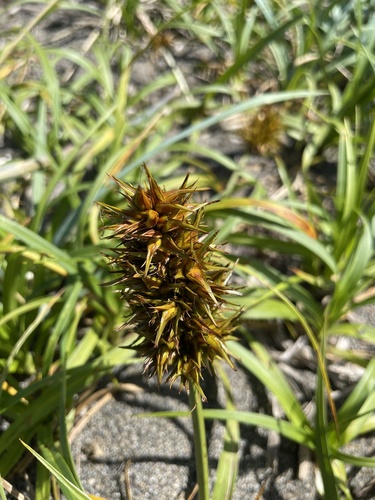
A sedge. It grows in tufts and keep growing from year to year. It grows 30-70 cm high. It has a short thick rhizome or underground stem. This is dark and has fibrous scales. The leaves are 3/4 of the length of the stem. The blade is 5-7 mm wide and it is rough towards the tip. The flowering stalk is angular and grooved. The nuts are 2.5 mm long by 1 mm wide. They are brown and triangle shaped.
Edible Uses
The nutlets are eaten raw.
Traditional Uses
The nutlets are eaten raw.
This uses section is brief — help expand it
Distribution
It is a tropical plant. It grows in forest openings and grassy areas along river banks. It grows in monsoon areas and hillsides. In southern China it grows between 1,200-2,800 m above sea level. In Sichuan and Yunnan.
Where It Grows
Asia, China, Himalayas, India, Indochina, Indonesia, Laos, Malaysia, Myanmar, Nepal, Pakistan, Philippines, SE Asia, Sri Lanka, Taiwan, Thailand, Tibet, Vietnam,
Notes
There are about 2000 Carex species. There are 200 species in tropical America.
References (2)
- Flora of Pakistan. www.eFloras.org
- Simpson, D. A. & Inglis, C. A., 2001, Cyperaceae of Economic, Ethnobotanical and Horticultural Importance: A checklist. Kew Bulletin Vol. 56, No. 2 (2001), pp. 257-360