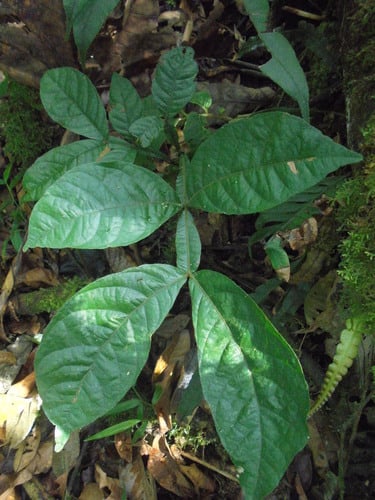
Medicago lupulina
L.
Black Medick
iNaturalist· cc-by-sa
(c) Douglas Goldman, some rights reserved (CC BY-SA), uploaded by Douglas Goldman
iNaturalist· cc-by-nc
(c) Максим Исмайлов, some rights reserved (CC BY-NC), uploaded by Максим Исмайлов
iNaturalist· cc-by
(c) Kai Löhr, some rights reserved (CC BY), uploaded by Kai Löhr
Description
Medicago lupulina is a ANNUAL/PERENNIAL growing to 0.5 m (1ft 8in) at a medium rate. See above for USDA hardiness. It is hardy to UK zone 5 and is not frost tender. It is in flower from April to August, and the seeds ripen from July to September. The species is hermaphrodite (has both male and female organs) and is pollinated by Bees, Lepidoptera (Moths & Butterflies). The plant is self-fertile. It can fix Nitrogen. It is noted for attracting wildlife. Suitable for: light (sandy), medium (loamy) and heavy (clay) soils and prefers well-drained soil. Suitable pH: mildly acid, neutral and basic (mildly alkaline) soils. It cannot grow in the shade. It prefers moist soil.
Edible Uses
Leaves - cooked. Used as a potherb. A nutritional analysis is available. Seed - cooked. Parched and eaten or ground into a powder. The seed is said to contain trypsin inhibitors. These can interfere with certain enzymes that help in the digestion of proteins, but are normally destroyed if the seed is sprouted first.
Medicinal Uses
Antibacterial Lenitive. Aqueous extracts of the plant have antibacterial properties against micro-organisms. The plant is lenitive. One of our users has sent the following information 'Trypsin inhibitors can be inactivated by the application of heat, for example, boiling for 9 minutes. (Trypsin inhibitors are found in soy). L-canavanine can be destroyed by heat as well. Major saponins in alfalfa but also black medick, known as medicagenic acid and its derivatives, have major antifungal/antimycotic activity that could lend to better medical applications than existing antimycotic drugs that are limited in number and abilities. Medical applications meaning mycoses, which is a consequence of widespread use of immunospuppressive drugs used in transplants, cytotoxic chemotherapy in cancer treatments, broad spectrum antibiotics, recurring mycotic infections in those suffering of AIDS, and a recent hazard of previously agricultural niche saprophyte fungi that are becoming etiological agents and are relatively resistant to conventional therapies.'
Distribution
Europe, including Britain, south and east to N. Africa, the Atlantic Islands and W. Asia.
Where It Grows
TEMPERATE ASIA: Saudi Arabia, Yemen, Afghanistan, Cyprus, Iran, Iraq, Israel, Lebanon, Syria, Turkey, Russian Federation-Ciscaucasia (Ciscaucasia), Armenia, Azerbaijan, Georgia, Russian Federation (Dagestan), China, Korea, Taiwan (north) TROPICAL ASIA: India (Bihar, Delhi, Gujarat, Haryana, Himachal Pradesh, Jammu and Kashmir, Madhya Pradesh, Punjab, Rajasthan, Uttar Pradesh, West Bengal), Nepal, Pakistan EUROPE: Denmark, Finland, United Kingdom, Ireland, Norway, Sweden, Czechoslovakia, Austria, Belgium, Switzerland, Germany, Hungary, Netherlands, Poland, Russian Federation (European part), Belarus, Estonia, Lithuania, Latvia, Ukraine (incl. Krym), Former Yugoslavia, Albania, Bulgaria, Greece (incl. Crete), Italy (incl. Sardinia, Sicily), Romania, Spain, France (incl. Corsica), Portugal AFRICA: Spain (Canarias (La Palma)), Portugal (Madeira Islands), Algeria, Egypt, Libya, Morocco, Tunisia
Cultivation
Dislikes acid soils. (This conflicts with the notes on its habitat above.) Dislikes shade. A good food plant for many caterpillars. This species has a symbiotic relationship with certain soil bacteria, these bacteria form nodules on the roots and fix atmospheric nitrogen. Some of this nitrogen is utilized by the growing plant but some can also be used by other plants growing nearby. In garden design, as well as the above-ground architecture of a plant, root structure considerations help in choosing plants that work together for their optimal soil requirements including nutrients and water.
Propagation
Pre-soak the seed for 12 hours in warm water and then sow in spring in situ. The seed can also be sown in situ in autumn. Green manure crops can be sown in situ from early spring until early autumn. (the later sowings are for an over-wintering crop)
Other Uses
Green manureA good green manure plant, it is fairly deep rooted, has good resistance to 'Clover rot' but it is not very fast growing. It can be undersown with cereals, succeeding even in a wet season.