Parkia leiophylla
Kurz
gbif· cc-by
Royal Botanic Gardens, Kew
gbif· cc-by
Royal Botanic Gardens, Kew
Description
A tree. It grows 35 m high. It loses its leaves during the year. The bark is red brown. It has small buttresses. The leaves are 30-60 cm long. They are twice divided. There are 14-20 pairs of side branches. The larger ones can have 30-45 pairs of leaflets. These are 1,5 mm long by 4 mm wide. They are pointed at both ends. The flowers are creamy white. They are in round heads on long stalks. These are 30-40 cm long. The fruit are strap shaped and 30-45 cm long. They are clumped together on a lumpy swelling. They are bright green when young but turn black and shiny when mature. The seeds are arranged horizontally across the pod. The pod splits open but does not curl back.
Edible Uses
The seeds are used as both a spice and vegetable.
Distribution
A tropical plant. It grows in dry evergreen and mixed deciduous forests between 500-600 m above sea level. In Yunnan.
Where It Grows
Asia, Bangladesh, China, Indochina, Myanmar, SE Asia, Thailand*,
Production
In China plants flower in March and fruit September to November.
Notes
Also as Mimosaceae.
Also Known As
Se kwi mae, Thet-magyi, Thit-tawt
References (4)
- Gardner, S., et al, 2000, A Field Guide to Forest Trees of Northern Thailand, Kobfai Publishing Project. p 160
- Kew Plants of the World On line
- PROSEA handbook Volume 13 Spices. p 279
- Sutjaritjai, N., et al, 2019, Traditional Uses of Leguminosae among the Karen in Thailand. Plants 2019, 8, 600 p 7
More from Fabaceae
Leucaena confertiflora var. adenotheloidea
Guaje de huerta
Leucaena confertiflora var. confertiflora
Guaje, Gueje dal Cerro, Huaje
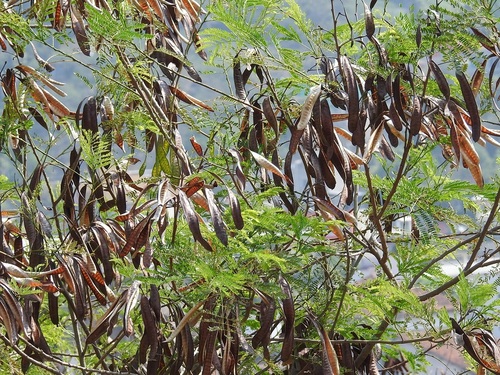
Leucaena cuspidata
Efe, Efe de Cerro, Huaxi
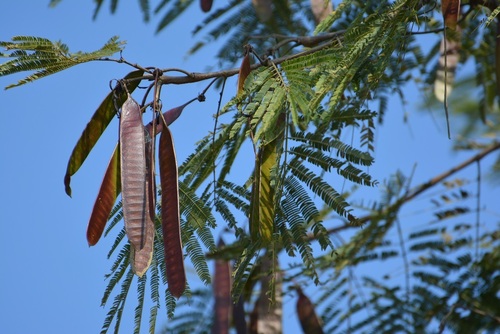
Leucaena diversifolia
Guache, Guaje
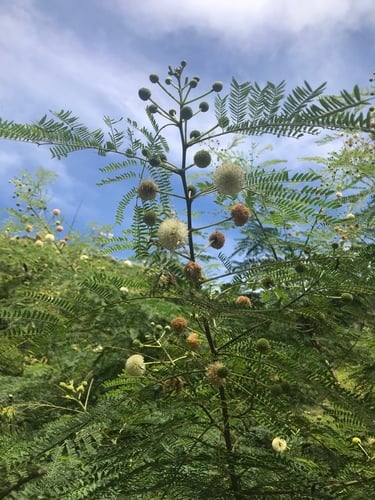
Leucaena leucocephala subsp. glabrata
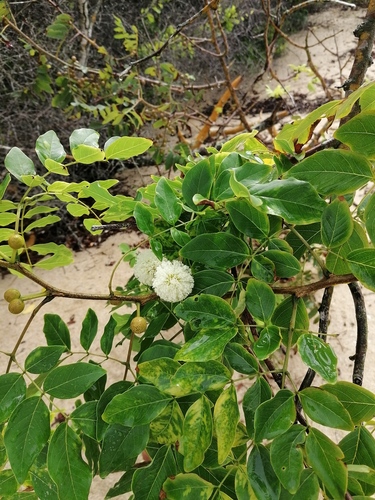
Leucaena macrophylla
Calguje, Frijolito, Guaje blanco