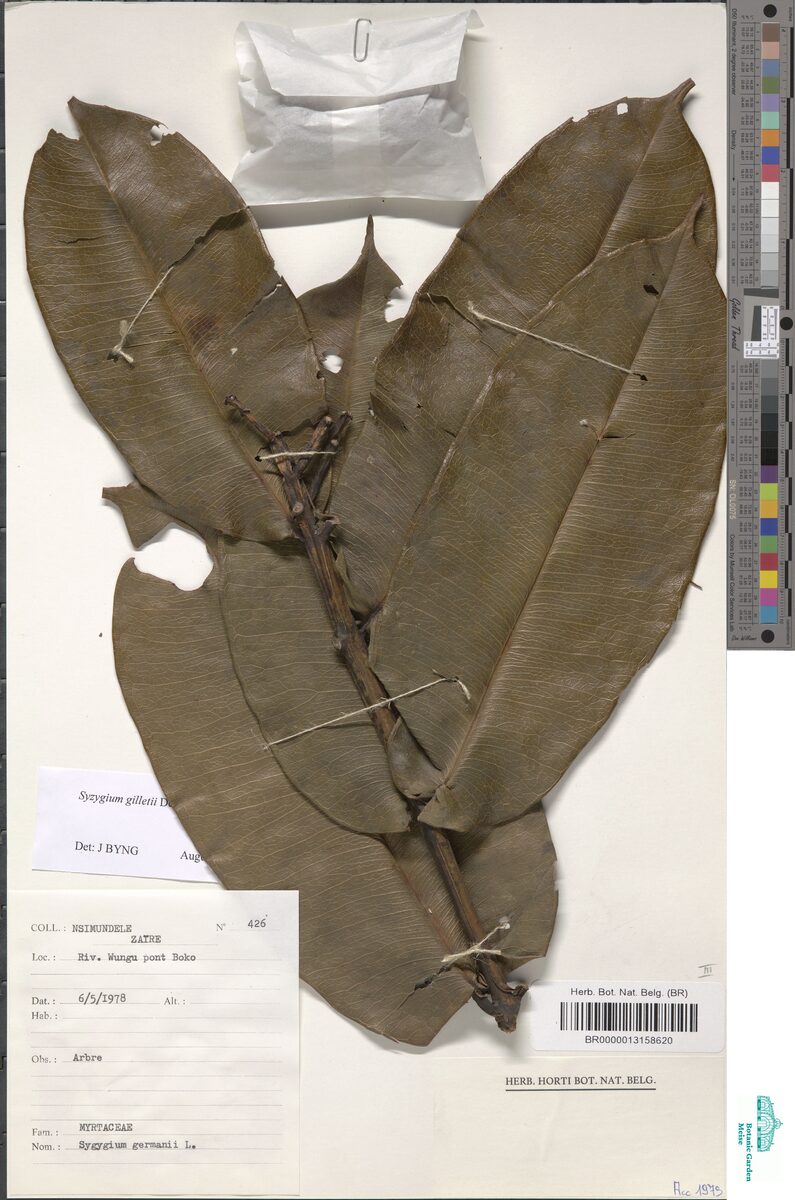
Eucalyptus camaldulensis
Dehnh.
River red gum
iNaturalist· cc-by-nc
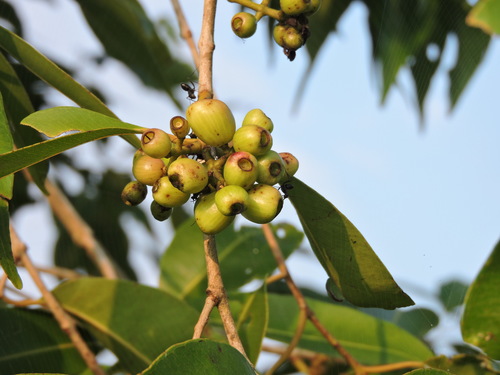
(c) Dean Nicolle, some rights reserved (CC BY-NC), uploaded by Dean Nicolle
iNaturalist· cc-by-nc-sa
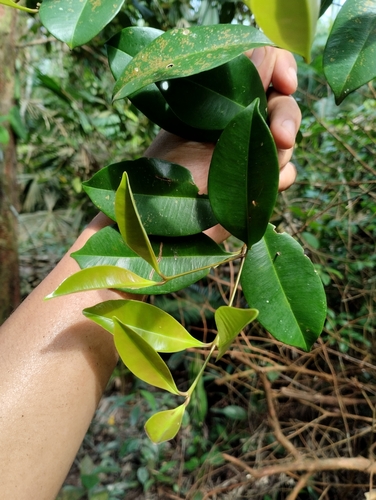
(c) Michael Keogh, some rights reserved (CC BY-NC-SA), uploaded by Michael Keogh
iNaturalist· cc-by-nc
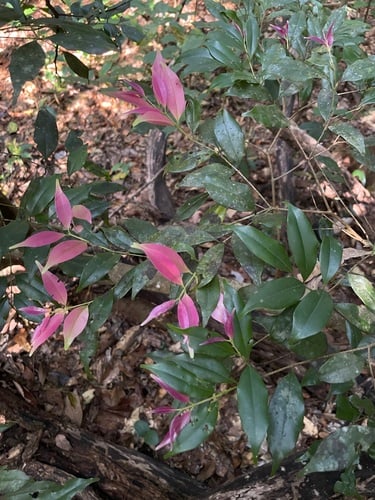
(c) leithallb, some rights reserved (CC BY-NC), uploaded by leithallb
Summary
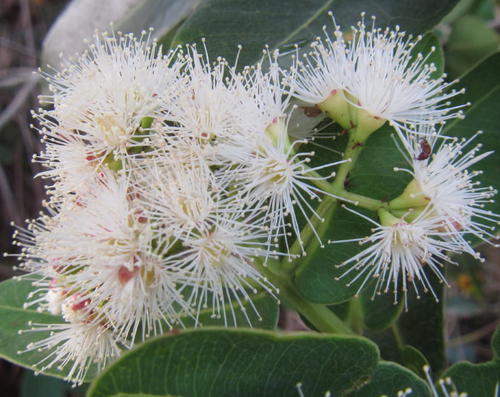
Source: WikipediaEucalyptus camaldulensis, commonly known as river red gum, is a flowering plant in the family Myrtaceae, and is endemic to Australia. It is a tree with smooth white or cream-coloured bark, lance-shaped or curved adult leaves, flower buds in groups of seven or nine, white flowers and hemispherical fruit with the valves extending beyond the rim. A familiar and iconic tree, it is seen along many watercourses across inland Australia, providing shade in the extreme temperatures of central Australia and elsewhere.
Description
A graceful tree 10-20 m high. It can be 45 m tall. It spreads 15-35 m wide. The bark is grey and white. The small branches hang down. The leaves are smooth, narrow and sword shaped. They are 10-25 cm long by 1-3.5 cm wide. They are grey-green. They have a long pointed tip. The fruit are small cup shaped woody capsules. They are 0.5 cm across.
Edible Uses
Both the gum and seed of this tree have been recorded as edible, though no further preparation details are given. The seed is extremely small — little more than a speck of dust.
Traditional Uses
The seeds have been reported to have been eaten. A white sugary scale insect secretion on the leaves is eaten, in Australia. Grubs in the trunks and branches are also eaten. A lerp scale (Psylla eucalypti) is eaten in Australia.
Medicinal Uses
Eucalyptus leaves are a traditional Aboriginal herbal remedy. The essential oil in the leaves is a powerful antiseptic used worldwide for relieving coughs, colds, sore throats and other infections, and appears in many over-the-counter cold remedies. The plant is aromatic, astringent and tonic in character, with a resin that sticks to the teeth and turns saliva red. The leaves and oil share similar properties, though the oil — being distilled — is considerably more potent. When exposed to air, ozone forms in aged essential oil, intensifying its antiseptic and disinfectant action against lower life forms. The oil can be applied externally to cuts and skin infections, inhaled for blocked nasal passages, gargled for sore throats, or taken internally for a range of complaints. As with all essential oils, larger doses can have a harmful effect on the body. An oleo-resin is naturally exuded from the tree and can also be obtained by making incisions in the trunk. Rich in tannin, this resin is powerfully astringent and is used internally for diarrhoea and bladder inflammation, and applied externally to cuts and wounds. It also treats throat ailments.
Known Hazards
Citronellal, an essential oil found in most Eucalyptus species is reported to be mutagenic when used in isolation. In large doses, oil of eucalyptus, like so many essential oils has caused fatalities from intestinal irritation. Death is reported from ingestion of 4 - 24 ml of essential oils, but recoveries are also reported for the same amount. Symptoms include gastroenteric burning and irritation, nausea, vomiting, diarrhoea, oxygen deficiency, ,weakness, dizziness, stupor, difficult respiration, delirium, paralysis, convulsions, and death, usually due to respiratory failure.
Distribution
It grows in temperate regions but can also grow in the tropics. It can grow in arid or semiarid locations. It grows along the banks of rivers. It can stand heavy frosts. It needs well drained soils but they can be wet or dry. It can tolerate salty soil. It can grow in arid places. In Melbourne Botanical Gardens. It suits hardiness zones 9-12.
Where It Grows
Africa, Algeria, Asia, Australia*, Benin, Botswana, Brazil, Burkina Faso, Cambodia, Cameroon, Canary Islands, Caucasus, Central Africa, Central America, China, Costa Rica, Cyprus, East Africa, Ecuador, Egypt, Ethiopia, Europe, France, Greece, Guyana, India, Iran, Iraq, Israel, Italy, Kenya, Libya, Madagascar, Malawi, Mediterranean, Mexico, Middle East, Morocco, Mozambique, Myanmar, Nepal, Nicaragua, Niger, North Africa, North America, Oman, Panama, Portugal, Rwanda, Sahel, Saudi Arabia, SE Asia, Senegal, Seychelles, Slovenia, Somalia, South Africa, Southern Africa, South America, Spain, Sudan, Taiwan, Tanzania, Tunisia, Turkey, Türkiye, Uganda, United Arab Emirates, UAE, USA, Venezuela, West Africa, Yemen, Zambia, Zimbabwe,
Cultivation
Prefers a sunny position in a moderately fertile well-drained moisture retentive circum-neutral soil. Succeeds in most soils, tolerating poor and dry soils, especially those low in mineral elements. A drought resistant tree once established, it is slightly salt tolerant, and can also withstand periodic inundation. A very fast growing tree. Plants tolerate an annual precipitation of 103 to 206cm and an annual temperature range of 18.0 to 26.6°C. It is reported to grow in areas with only 20cm rainfall, but the lower limit for commercial plantations is 40cm. Some provenances tolerate many different soil conditions such as high calcium, high salt and periodic water-logging.The mean maximum temperature of the warmest month where it grows well is ca 29°C. The dry season lasts 4 - 8 months or more and may be severe. Fairly frost resistant, plants survive temperatures down to at least -7°c in Australian gardens. This figure is not directly relatable to British gardens, however, because of our cooler summers and colder, wetter winters. It could be worthwhile giving this species a try in the milder areas of the country. Some Provenances can tolerate temperatures down to about -5°C and up to 20 frosts per year. Eucalyptus species have not adopted a deciduous habit and continue to grow until it is too cold for them to do so. This makes them more susceptible to damage from sudden cold snaps. If temperature fluctuations are more gradual, as in a woodland for example, the plants have the opportunity to stop growing and become dormant, thus making them more cold resistant. A deep mulch around the roots to prevent the soil from freezing also helps the trees to survive cold conditions. The members of this genus are remarkably adaptable however, there can be a dramatic increase in the hardiness of subsequent generations from the seed of survivors growing in temperate zones. Trees are liable to shed branches, especially in hot weather. This is said to be the most widely distributed eucalyptus tree in Australia, ranging over 23° lat. in most of arid and semiarid Australia but not the humid eastern and south-western coasts. It is regarded as one of the most widely planted eucalypts in the world with more than 500,000 ha planted. It is planted in Europe, especially in Italy, as a timber crop, for soil stabilization and as an anti-malarial measure. Some provenances coppice well for six or more rotations, on good sites, plantations are managed on coppice rotations of 7 - 10 years. Eucalyptus monocultures are an environmental disaster, they are voracious, allelopathic and encourage the worst possible attitudes to land use and conservation. Plants are shallow-rooting and, especially in windy areas, should be planted out into their permanent positions when small to ensure that they do not suffer from wind-rock. They strongly resent root disturbance and should be container grown before planting out into their permanent position. Survivalists in Australia and elsewhere might learn how the aborigines obtained water from the superficial roots, usually those ca 3 cm in diameter. The roots were excavated or lifted to the soil surface. Then the root was cut into segments ca 45 cm long, debarked, held vertically, and blown into, the water then draining into the receptacle provided. The flowers are rich in nectar and are a good bee crop.
Propagation
Surface sow seed in February or March in a sunny greenhouse position. Species from high altitudes benefit from 6–8 weeks of cold stratification at 2°C. Pot seedlings into individual containers as soon as the second set of true leaves develops — leaving them longer risks poor establishment. Plant out into permanent positions in early summer with some cold protection through the first winter. Alternatively, sow in June and plant into final positions the following late spring. Seed remains viable for a long time.
Other Uses
A gum obtained from the plant is used medicinally and in tanning. The leaves contain 0.1–0.4% essential oil, of which 77% is cineol, along with cuminal, phellandrene, aromadendren, valerylaldehyde, geraniol, cymene, and phellandral. Leaf tannin content is 5–11%; bark tannin runs 2.5–16%, wood 2–14%, and kino 46.2–76.7%. The kino itself contains 45% kinotannic acid, kino red, a glycoside, catechol, and pyrocatechol. Leaves and fruits test positive for flavonoids and sterols. This fast-growing, wide-rooted tree is used in soil stabilisation and can be planted in marshy ground to drain it and eliminate mosquito breeding sites — a practice used in southern Italy. The wood is durable, easy to saw, and resistant to termites; it is widely used for construction, interior finishing, flooring, cabinetry, furniture, fence posts, railway cross-ties, and sometimes pulpwood. Australian Aborigines historically made canoes from the bark. Annual wood yields are around 20–25 m³/ha in Argentina, 30 m³ in Israel, 17–20 m³ in Turkey during the first rotation, and 25–30 m³ in subsequent coppice rotations. On poor, arid sites, yields drop to 2–11 m³ over 14–15 year rotations.
Production
It grows quickly.
Other Information
It is cultivated.
Notes
There are at least 500 Eucalyptus species mostly originally in Australia.
Synonyms
Also Known As
Baxrasaaf, Breng khyal, Kina, Masala
References (47)
- Bekele-Tesemma A., Birnie, A., & Tengnas, B., 1993, Useful Trees and Shrubs for Ethiopia. Regional Soil Conservation Unit. Technical Handbook No 5. p 224
- Bernholt, H. et al, 2009, Plant species richness and diversity in urban and peri-urban gardens of Niamey, Niger. Agroforestry Systems 77:159-179
- Blamey, M and Grey-Wilson, C., 2005, Wild flowers of the Mediterranean. A & C Black London. p 152
- Bodkin, F., 1991, Encyclopedia Botanica. Cornstalk publishing, p 413
- Bonney, N., 1997, Economic Native Trees and Shrubs for South Australia. Greening Australia (SA) inc. Campbelltown SA 5074 p 80
Show all 47 references Hide references
- Boomsma, C.D., 1972, Native Tree of South Australia. Woods & Forests Department South Australia, Bulletin No.19. p 88
- Brock, J., 1993, Native Plants of Northern Australia, Reed. p 159
- Brickell, C. (Ed.), 1999, The Royal Horticultural Society A-Z Encyclopedia of Garden Plants. Convent Garden Books. p 421
- Cat. horti camald. ed. 2:6, 20. 1832
- Cherikoff V. & Isaacs, J., The Bush Food Handbook. How to gather, grow, process and cook Australian Wild Foods. Ti Tree Press, Australia p 189
- Clarke,P. A., 2013, The Aboriginal Ethnobotany of the Adelaide Region, South Australia. Transactions of the Royal Society of South Australia. (2013), 137(1): 97-126
- Cribb, A.B. & J.W., 1976, Wild Food in Australia, Fontana. p 86
- Cronin, L., 1989, The Concise Australian Flora. Reed. p 193
- Cundall, P., (ed.), 2004, Gardening Australia: flora: the gardener's bible. ABC Books. p 568
- Dashorst, G.R.M., and Jessop, J.P., 1998, Plants of the Adelaide Plains & Hills. Botanic Gardens of Adelaide and State Herbarium. p 108
- Elliot, W.R., & Jones, D.L., 1992, Encyclopedia of Australian Plants suitable for cultivation. Vol 4. Lothian. p 46
- Etherington, K., & Imwold, D., (Eds), 2001, Botanica's Trees & Shrubs. The illustrated A-Z of over 8500 trees and shrubs. Random House, Australia. p 296
- FAO, 2012, Forest Genetic Resources Situation in Mexico. Final Report of Project TCP/ 3301 p 287
- Forest Genetic Resources Situation in Mexico, FAO 2012 Annex 15 p 286
- Goddard, C. & Kalotas A. (Eds.), Punu, 2002, Yankunytjatjara plant use. Jukurrpa books. p 25
- Greig, D., 1996, Flowering Natives for Home Gardens. Angus & Robertson. p 167
- Hall, N. et al, 1972, The Use of Trees and Shrubs in the Dry Country of Australia, AGPS, Canberra. p 365
- Hearne, D.A., & Rance, S.J., 1975, Trees for Darwin and Northern Australia. AGPS, Canberra p 58, Pl 14
- Hibbert, M., 2002, The Aussie Plant Finder 2002, Florilegium. p 96
- Holliday, I., 1989, A Field Guide to Australian Trees. Hamlyn. p 132
- Karim, F. M. & Dakheel, A, J., 2006, Salt-tolerant plants of the United Arab Emirates. 2006. International Center for Biosaline Agriculture, Dubai, UAE. p 132
- Kenneally, K.E., Edinger, D. C., and Willing T., 1996, Broome and Beyond, Plants and People of the Dampier Peninsula, Kimberley, Western Australia. Department of Conservation and Land Management. p 142
- Krishen P., 2006, Trees of Delhi, A Field Guide. DK Books. p 181
- Latz, P.K., 1996, Bushfires and Bushtucker: Aboriginal plant use in Central Australia. IAD Press Alice Springs p 182
- Latz, P & Wightman, G., 1995, Desert Bush Tucker Identikit. Common Native Food Plants of Central Australia. Parks & Wild Commission Northern territory. p 16
- Lazarides, M. & Hince, B., 1993, Handbook of Economic Plants of Australia, CSIRO. p 98
- Llamas, K.A., 2003, Tropical Flowering Plants. Timber Press. p 284
- Mbuya, L.P., Msanga, H.P., Ruffo, C.K., Birnie, A & Tengnas, B., 1994, Useful Trees and Shrubs for Tanzania. Regional Soil Conservation Unit. Technical Handbook No 6. p 252
- Molyneux, B. and Forrester, S., 1997, The Austraflora A-Z of Australian Plants. Reed. p 81
- Paczkowska, G . & Chapman, A.R., 2000, The Western Australian Flora. A Descriptive Calatogue. Western Australian Herbarium. p 366
- Petheram, R. J. and Kok, B., 2003, Plants of the Kimberley Region of Western Australia. UWA Press p 443
- Plants for a Future database, The Field, Penpol, Lostwithiel, Cornwall, PL22 0NG, UK. http://www.scs.leeds.ac.uk/pfaf/
- Royal Botanic Gardens, Kew (1999). Survey of Economic Plants for Arid and Semi-Arid Lands (SEPASAL) database. Published on the Internet; http://www.rbgkew.org.uk/ceb/sepasal/internet [Accessed 4th May 2011]
- Schuler, S., (Ed.), 1977, Simon & Schuster's Guide to Trees. Simon & Schuster. No. 106
- Townsend, K., 1994, Across the Top. Gardening with Australian Plants in the tropics. Society for Growing Australian Plants, Townsville Branch Inc. p 186
- Townsend, K., 1999, Field Guide to Plants of the Dry Tropics. Society for Growing Australian Plants, Townsville Branch Inc. p 47
- Urban, A., 1990, Wildflowers of Inland Australia. Portside editions. p 140
- van Wyk, B, van Wyk, P, and van Wyk B., 2000, Photographic guide to Trees of Southern Africa. Briza. p 136
- Wheeler, J.R.(ed.), 1992, Flora of the Kimberley Region. CALM, Western Australian Herbarium, p 513
- World Checklist of Useful Plant Species 2020. Royal Botanic Gardens, Kew
- Young, J., (Ed.), 2001, Botanica's Pocket Trees and Shrubs. Random House. p 356
- Zeven, A. C. & de West, J. M. J., 1982, Dictionary of cultivated plants and their regions of diversity. Wageningen. p 66