Syzygium erythrocalyx
(C.T. White) B. Hyland
Johnstone River Satinash, Red Bud Satinash
iNaturalist· cc-by-sa
(c) Steve Fitzgerald, some rights reserved (CC BY-SA)
iNaturalist· cc-by-nc
(c) Ronald Ferguson, some rights reserved (CC BY-NC)
Summary
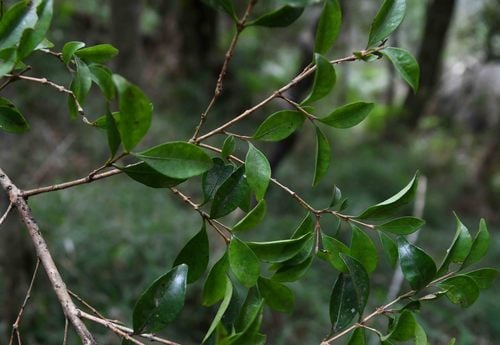
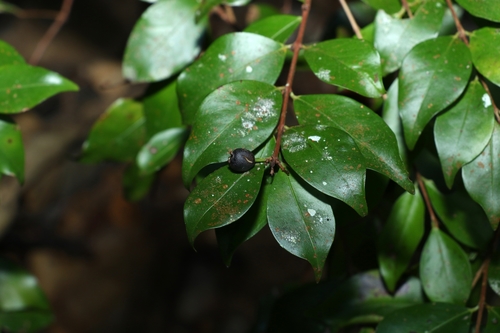
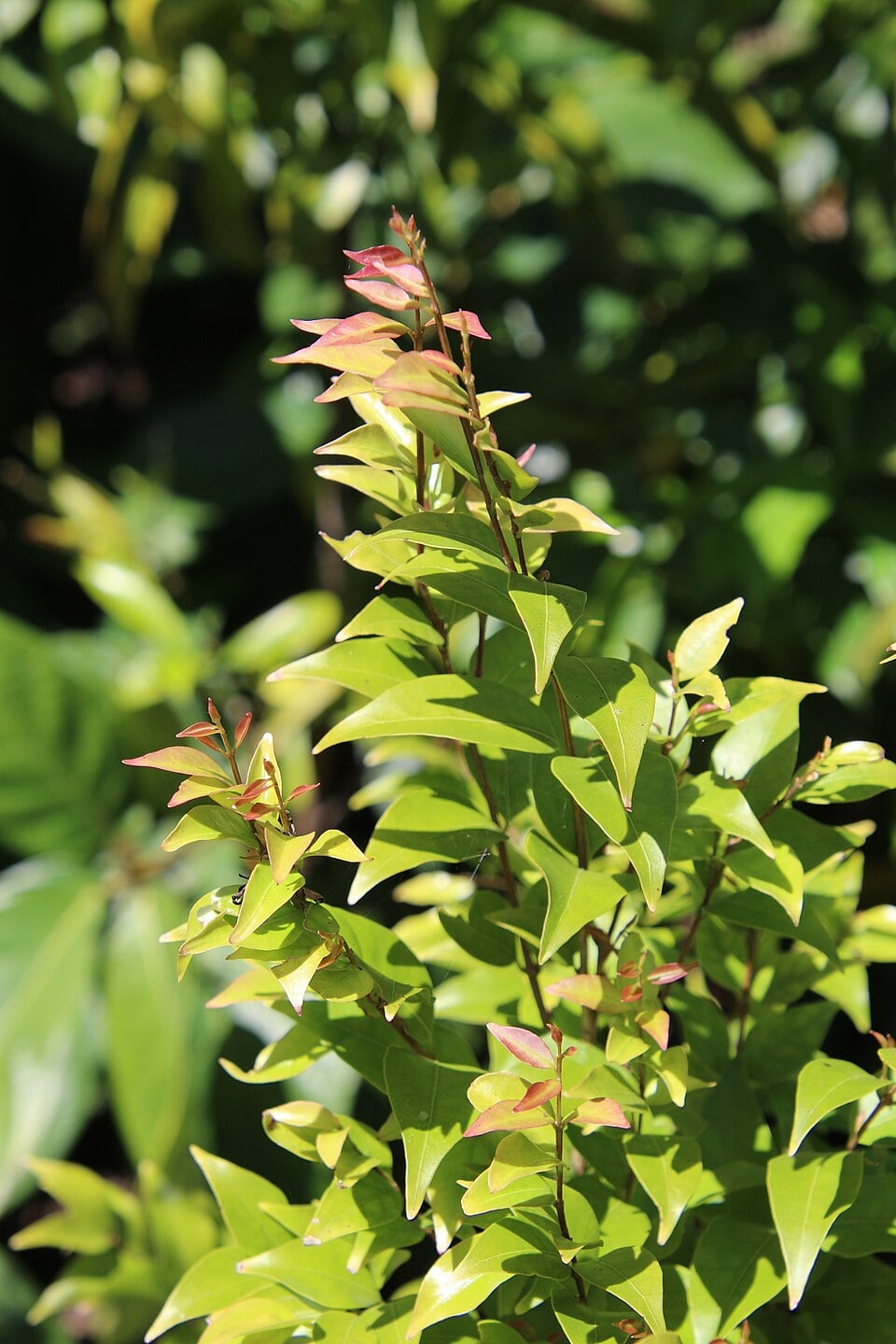
Source: WikipediaSyzygium erythrocalyx, commonly known as Johnstone River satinash, is a rainforest tree native to North Queensland, Australia. The tree is up to 30 ft (10 m) in height, with large, broad elliptical leaves to 20 cm long, prominent veined, and red new growth. The edible red fruit is up to 4 cm wide. It is cultivated in Australia to a limited extent as a feature tree. The edible fruit have a wild apple-like flavour and can be used in preserves, sauces and beverages.
Description
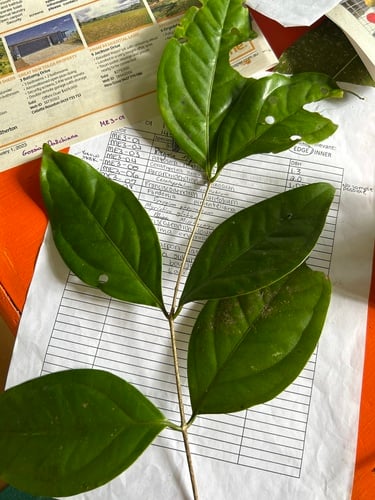
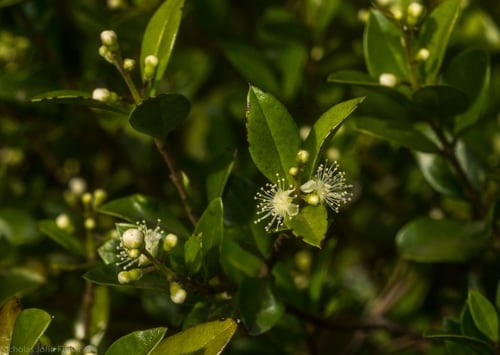
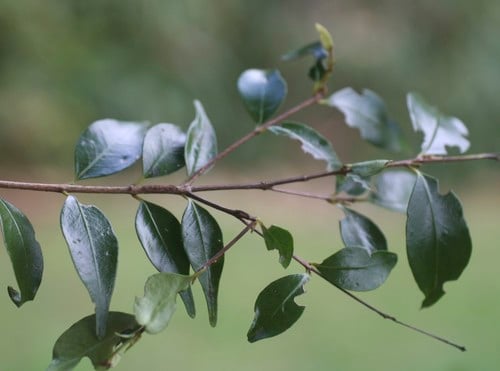
A tree up to 8 m tall. It has a sparse rounded crown of leaves. The new shoots are purple. The leaves are large, thin and stiff. They are 30 cm long by 10 cm wide. They are dark green on top and paler underneath. The veins are easily seen. The flowers occur in small clusters or singly. They are yellow. They occur on the trunk, branches and in the angles where leaves join as well as at the ends of branches. The fruit is large and can be 6-8 cm long and 3-7 cm across. Fruit can be white or bright red. There are several seeds inside (1-6). The seeds are 1.2 cm across. The fruit are edible.
Edible Uses
Fruit - raw or cooked. The succulent flesh is somewhat acid. The white, pink or red fruit is borne on bumps on the trunk and also on the twigs and branches; it is depressed globular in shape, around 50 - 70mm in diameter.
Distribution
A tropical plant. It occurs in northeast Queensland in Australia. It is a tropical rainforest species. It grows between 80-720 m altitude. Plants adapt to a wide range of soils. Plants do best in a shady position.
Where It Grows
Australia*, Brazil, South America,
Cultivation
Plants are grown from fresh seed. Cuttings can probably be used.
Propagation
Seed - needs to be sown fresh, when it can germinate within a few weeks. The seed is very easily infested with insects.
Other Uses
This species does not produce useful logs and is of no commercial value for its wood.
Production
Flowering occurs from July to August and fruit are ripe September to February.
Nutrition
| Part | Moisture | kJ | kcal | Protein | Vit A | Vit C | Iron | Zinc |
|---|---|---|---|---|---|---|---|---|
| Fruit | 80 | 337 | 81 | 5.9 | — | — | — | — |
Synonyms
Also Known As
Daintree satinash, Scarlet Satinash
References (8)
- Cooper W & Cooper W T, 1994, Fruits of the Rain Forest. RD Press p 270
- Cooper, W. and Cooper, W., 2004, Fruits of the Australian Tropical Rainforest. Nokomis Editions, Victoria, Australia. p 362
- e-jardim.com
- Hibbert, M., 2002, The Aussie Plant Finder 2002, Florilegium. p 296
- Jones D, L, 1986, Ornamental Rainforest Plants in Australia, Reed Books, p 77, 340
Show all 8 references Hide references
- Nicholson, N & H., 1996, Australian Rainforest Plants 3, Terania Rainforest Publishing. NSW. p 59
- Radke, P & A, Sankowsky, G & N., 1993, Growing Australian Tropical Plants. Frith & Frith, Australia. p 60
- Townsend, K., 1994, Across the Top. Gardening with Australian Plants in the tropics. Society for Growing Australian Plants, Townsville Branch Inc. p 345