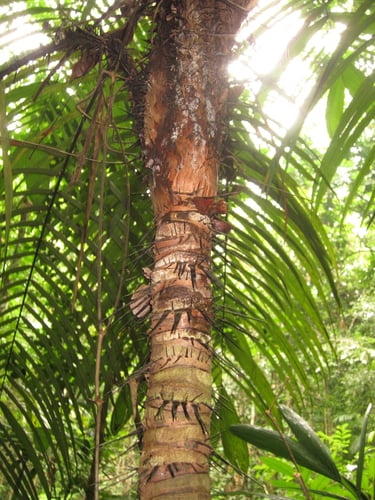
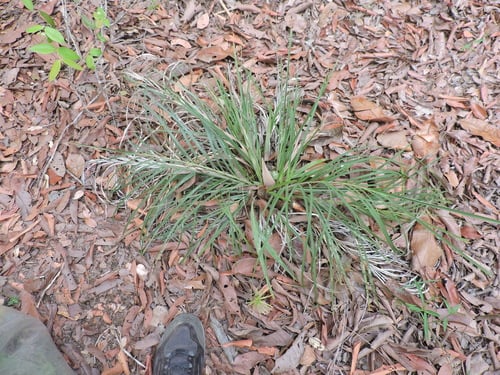
Manicaria saccifera
Gaertn.
Ubussu, Troolie Palm
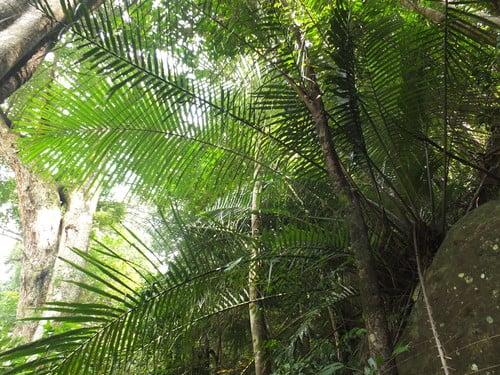
iNaturalist· cc-by-nc
(c) Merav Vonshak, some rights reserved (CC BY-NC), uploaded by Merav Vonshak
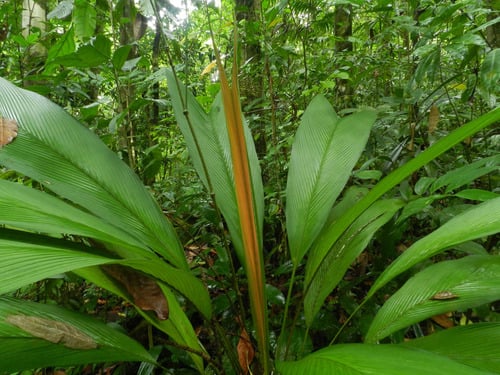
iNaturalist· cc-by-nc
(c) Jan Meerman, some rights reserved (CC BY-NC), uploaded by Jan Meerman
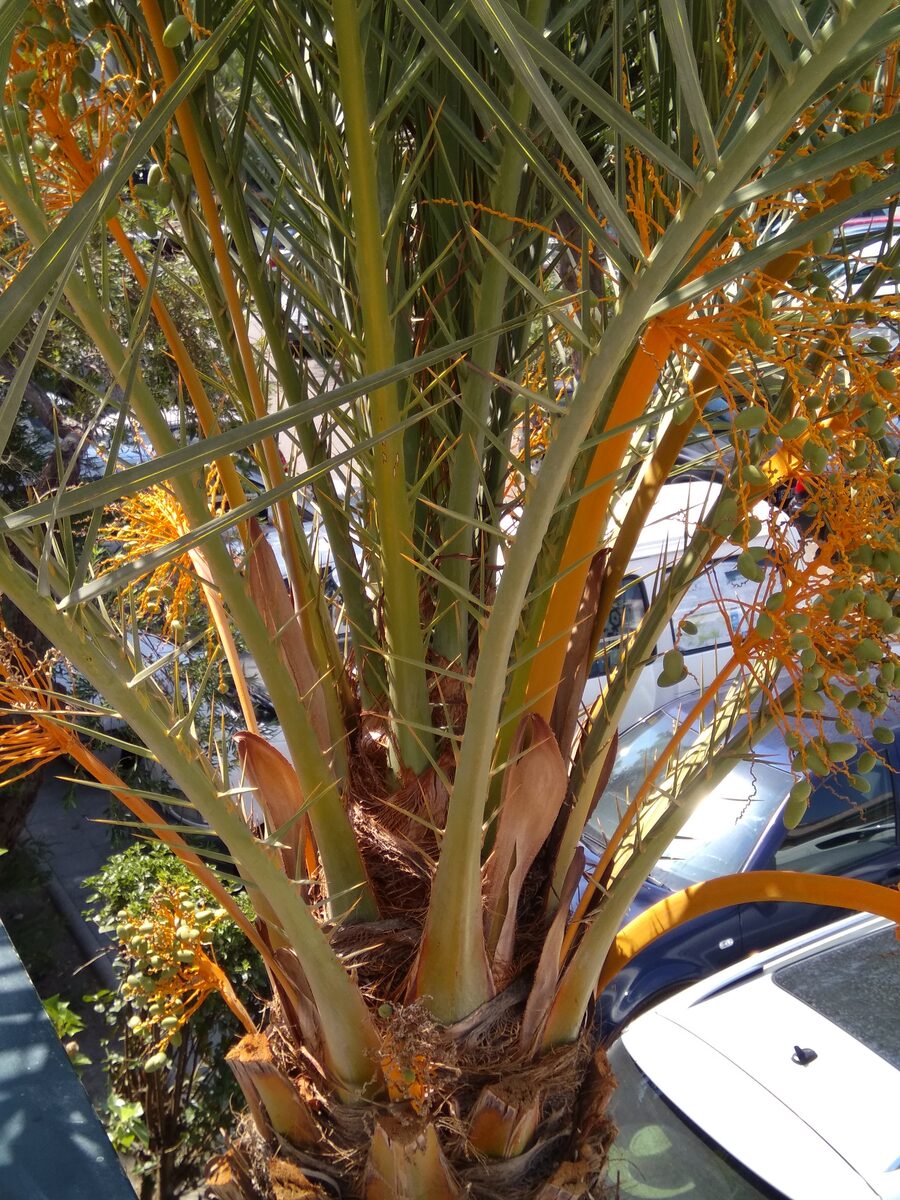
iNaturalist· cc-by-nc
(c) Merav Vonshak, some rights reserved (CC BY-NC), uploaded by Merav Vonshak
Description
Manicaria saccifera is an evergreen Tree growing to 10 m (32ft) by 10 m (32ft) at a medium rate. See above for USDA hardiness. It is hardy to UK zone 10. Suitable for: light (sandy), medium (loamy) and heavy (clay) soils. Suitable pH: mildly acid and neutral soils. It can grow in semi-shade (light woodland) or no shade. It prefers moist or wet soil.
Edible Uses
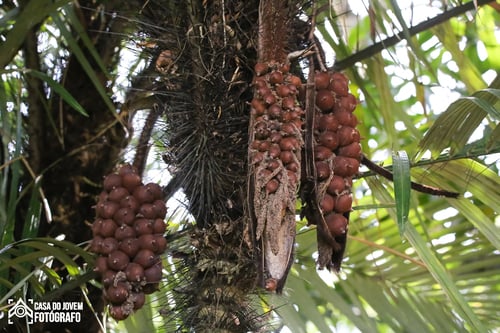
An edible oil is obtained from the seeds. The liquid endosperm of unripe fruits is drunk. The fruit is 4 - 6cm in diameter. Sago is obtained from the starchy stems.
Medicinal Uses
Antiasthmatic Antidiarrhoeal Antitussive Diuretic. Several parts of the palm, including the apical bud, serve medicinal purposes. A decoction of the root, combined with bamboo leaves and a decoction of Euterpe precatoria roots, is used to treat asthma and coughs. The liquid from immature, green fruits is employed as a diuretic, and remedy for coughs, asthma and thrush. It is also used to treat diarrhoea.
Distribution
S. America - Brazil, Peru, Ecuador, Colombia, Venezuela, the Guyanas; north to Trinidad; and through Central America to Guatemala.
Where It Grows
SOUTHERN AMERICA: Trinidad and Tobago (Trinidad), Belize, Costa Rica, Guatemala, Honduras, Nicaragua, Panama, French Guiana, Guyana, Suriname, Venezuela (Amazonas, Monagas, Sucre, Delta Amacuro), Brazil (Amazonas, Pará), Colombia (Valle del Cauca, Chocó, Amazonas, Vaupés, Vichada), Ecuador (Esmeraldas), Peru (Loreto)
Cultivation
A plant of the lowland, moist tropics. It cannot tolerate any frost. Spacing: 8-10 ft. (2.4-3 m) 10-12 ft. (3-3.6 m).
Propagation
Seed -
Other Uses
Containers Fibre Thatching. Other Uses The leaves are utilized as thatch and sails. This species produces the largest entire leaves of any known palm, and for this reason, as well as on account of their firm and rigid texture, they form the very best and most durable thatch. The leaves are split down the midrib and the halves laid obliquely on the rafters, so that the furrows formed by the veins lie in a nearly vertical direction and serve as so many little gutters to carry off the water more rapidly. A well-made thatch will last ten or twelve years, and an indigenous person will often take a week's voyage in order to get a canoe-load of the leaves to cover his house. The fibres, obtained from the peduncular bracts of the inflorescences, are used for making caps, bags and mats.
Synonyms
Also Known As
Ubussu, Troolie Palm, Busso, Sleeve palm, Temiche palm, Jiquera, Ubi, Palmier toulouri, Yolillo, Troolie, Escomfra, Guagara, Truli, Temiche, Manaco, Silico