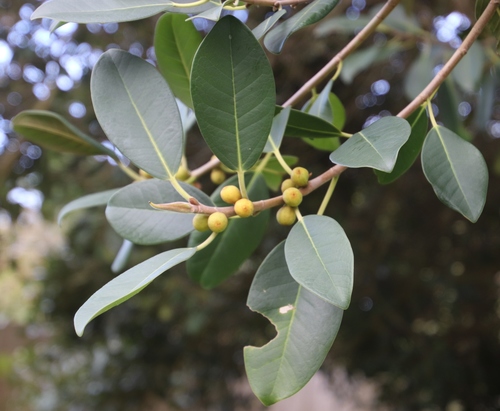
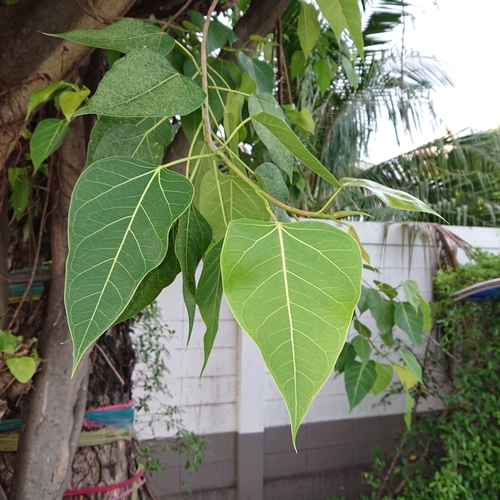
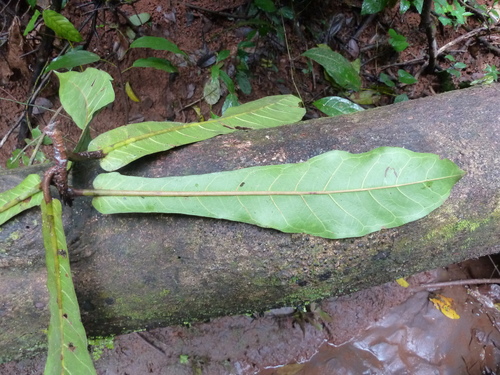
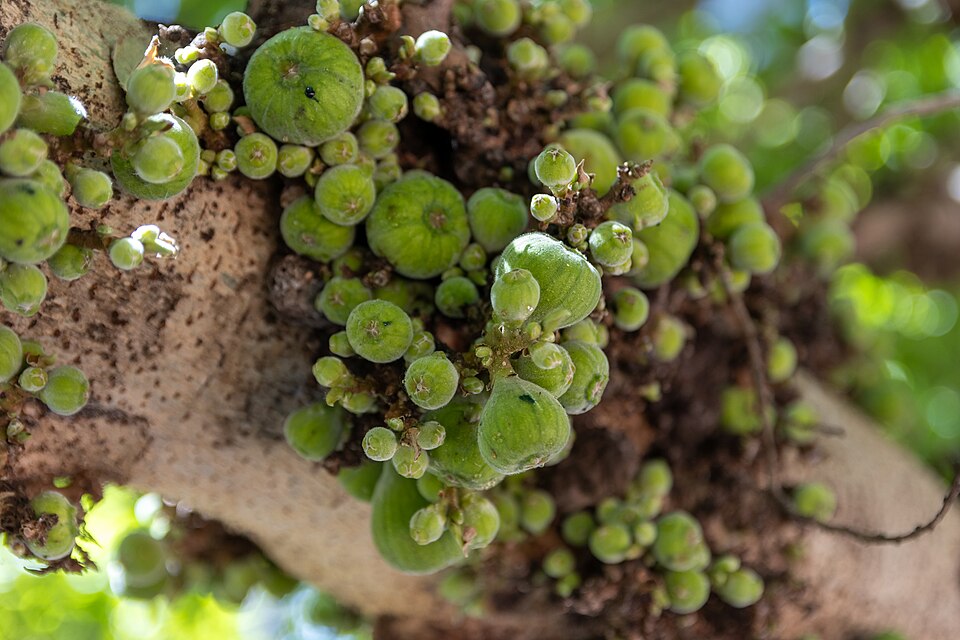
Maclura tinctoria - (L.) D.Don ex Steud.
(L.) D.Don ex Steud.
Fustic Tree
gbif· cc-by
Thomaz Ricardo Favreto Sinani
gbif· cc-by
Thomaz Ricardo Favreto Sinani
gbif· cc-by
Thomaz Ricardo Favreto Sinani
Description
Maclura tinctoria is a deciduous Tree growing to 20 m (65ft) by 15 m (49ft) at a medium rate. See above for USDA hardiness. It is hardy to UK zone 10. The plant is not self-fertile. Suitable for: light (sandy), medium (loamy) and heavy (clay) soils and prefers well-drained soil. Suitable pH: mildly acid, neutral and basic (mildly alkaline) soils. It cannot grow in the shade. It prefers dry or moist soil.
Edible Uses
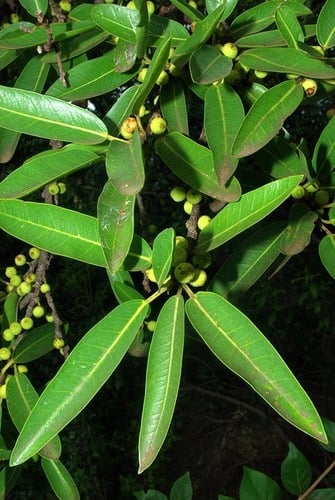
Fruit - raw. A succulent, sweet tasting pulp. The fruit is about 2cm in diameter.
Medicinal Uses
Astringent Purgative Tonic Vermifuge. The bark is astringent, tonic and vermifuge, in large doses it is purgative.
Distribution
S. America - Argentina, Paraguay north to the Caribbean and through Central America to Mexico.
Where It Grows
NORTHERN AMERICA: Mexico (San Luis Potosí, Sinaloa, Tamaulipas, Campeche, Chiapas, Hidalgo, Oaxaca, Quintana Roo, Tabasco, Veracruz de Ignacio de la Llave, Yucatán) SOUTHERN AMERICA: Hispaniola, Barbados, Cuba, Cayman Islands, Grenada, Jamaica, St. Lucia, Martinique, Trinidad and Tobago (Trinidad), United States (Puerto Rico), St. Vincent and Grenadines, Belize, Costa Rica, Guatemala, Honduras, Nicaragua, Panama, El Salvador, Guyana, Venezuela, Brazil (Acre, Amazonas, Bahia, Ceará, Distrito Federal, Espírito Santo, Maranhão, Mato Grosso, Mato Grosso do Sul, Minas Gerais, Pará, Paraná, Pernambuco, Piauí, Rio de Janeiro, Rio Grande do Sul, Rondônia, Santa Catarina, São Paulo), Bolivia, Colombia, Ecuador (Bolívar, Esmeraldas, Loja, Los Ríos, Manabí, Morona Santiago, Pichincha, Zamora Chinchipe), Peru (Amazonas, Cajamarca, Cusco, Huánuco, Junín, Lambayeque, Loreto, San Martín, Tumbes, Ucayali), Argentina (Chaco, Corrientes, Formosa, Jujuy, Misiones, Salta), Paraguay
Cultivation
Requires a sunny position. Prefers a moist soil. Succeeds in most soils. Young plants have a moderate rate of growth. A dioecious tree, both male and female forms need to be grown if seed is required.
Propagation
Seed - best sown as soon as it is ripe in a partially shaded position in a nursery seedbed. A low germination rate can be expected, with the seed sprouting within 10 - 20 days. Cuttings of half-ripe wood.
Other Uses
Dye Furniture Latex Pioneer Wood. Agroforestry Uses: A natural pioneer plant in its native range, and supplying food, medicines and commodities, this species should be a good choice as a pioneer for establishing a woodland garden, although its growth rate is only moderate. Other Uses The wood is valued as a source of dyes. The colouring principle, maclurin, gives a yellowish brown or khaki colour much used for military uniforms. With other dyes it gives various colours for cotton and silk materials, and also a permanent black. All parts of the plant exude a yellow latex when wounded. The heartwood is of various shades of yellow to light green, lustrous, becoming reddish or brownish on exposure; it is clearly demarcated from the white sapwood. The texture is usually fine; the grain variable, often interlocked; luster is high; odour and taste are lacking or not distinctive. The wood is hard, heavy, tough, strong, and durable with a fairly straight or somewhat interwoven close grain. It is not very difficult to work, finishes smoothly, and takes a good polish. It is sometimes used in regions where it is plentiful for interior finish, cart wheels, furniture and other purposes[46 , 316 , 331 , 551 ].
Synonyms
Also Known As
Fustic Tree, Amarillo, Ishuk, Macano, Mora, Mora grande, Moro, Sota, Tatajuba, Tata yegua, Tsejenet